Psalm 88/Diagrams
V. 1
Macula
שִׁ֥יר מִזְמ֗וֹר לִבְנֵ֫י קֹ֥רַח לַמְנַצֵּ֣חַ עַל־מָחֲלַ֣ת לְעַנּ֑וֹת מַ֝שְׂכִּ֗יל לְהֵימָ֥ן הָאֶזְרָחִֽי׃
Preferred
(Preferred, but not confirmed); edit diagram
SimpleGrammar
DiscourseUnit [v. 1]
      Fragment
        noun: שִׁיר song
      Fragment
        noun: מִזְמוֹר psalm
      Fragment
        PrepositionalPhrase
          Preposition
            preposition: לִ by
          Object
            ConstructChain <gloss="the sons of Korah">
              noun: בְנֵי sons
              noun: קֹרַח Korah
      Fragment
        PrepositionalPhrase
          Preposition
            preposition: לַ for
          Object
            article: הַ the <status="elided">
            verb-participle: מְנַצֵּחַ director
      Fragment
        PrepositionalPhrase
          Preposition
            preposition: עַל about
          Object
            noun: מָחֲלַת illness
      Fragment
        PrepositionalPhrase
          Preposition
            preposition: לְ for
          Object
            Clause
              Predicate
                verb-infinitive: עַנּוֹת self-affliction
      Fragment
        noun: מַשְׂכִּיל maskil
      Fragment
        PrepositionalPhrase
          Preposition
            preposition: לְ by
          Object
            noun: הֵימָן Heman
            Adjectival
              article: הָ the
              adjective: אֶזְרָחִי Ezrahite
 DiscourseUnit [v. 1]
      Fragment
        noun: שִׁיר song
      Fragment
        noun: מִזְמוֹר psalm
      Fragment
        PrepositionalPhrase
          Preposition
            preposition: לִ by
          Object
            ConstructChain <gloss="the sons of Korah">
              noun: בְנֵי sons
              noun: קֹרַח Korah
      Fragment
        PrepositionalPhrase
          Preposition
            preposition: לַ for
          Object
            article: הַ the <status="elided">
            verb-participle: מְנַצֵּחַ director
      Fragment
        PrepositionalPhrase
          Preposition
            preposition: עַל about
          Object
            noun: מָחֲלַת illness
      Fragment
        PrepositionalPhrase
          Preposition
            preposition: לְ for
          Object
            Clause
              Predicate
                verb-infinitive: עַנּוֹת self-affliction
      Fragment
        noun: מַשְׂכִּיל maskil
      Fragment
        PrepositionalPhrase
          Preposition
            preposition: לְ by
          Object
            noun: הֵימָן Heman
            Adjectival
              article: הָ the
              adjective: אֶזְרָחִי Ezrahite
{{Diagram/Display | Chapter=88|DiagramID=V-1-None }}
Grammar Notes
No Grammar notes to display for this diagram.
Lexical Notes
No Lexical notes to display for this diagram.
Phrase-Level
Phrase-Level Notes
- v. 1: עַל-מָחֲלַת לְעַנּוֹת
- "The meaning of mahalath-leannoth is uncertain, but it is often assumed to be a tune or chanting pattern to be used with the psalm" (Tate 1990, 394).
- Mowinckel (1962, 2:210) suggests that mahalath is equal to “song” or “playing instrument” (probably a “reed-pipe”) and suggests the reference is to the flute or “flute playing,” which he argues would indicate a psalm of lament (reed pipes/flutes were played at lamentation ceremonies (cf. Jer 48:36). However, he argues that in 88:1 the עַל-מָחֲלַת means “in connection with (properly ‘over’) illness” and relates to purification from illness. Most modern translations as well as LXX keep mahalath; Jerome reads "chorus" (namely, 'to the musical director over the chorus'); Targum has "according to the prayer"; BDB understands it as a name of a tune. We will take Mowinckel's reading as the preferred one, as it fits with the content of our psalm. Eerdmans' (1947, 138) interesting theory supports this reading. He notes that in Assyrian incantation texts for healing, the name of the patient had to be mentioned when they were recited, and he supposes that such is the case in the use of Pss 53 and 88. The עַל-מָחֲלַת... לְעַנּוֹת would mean “on account of the sickness of ...” , with the name of the sufferer added in each case.
- As for לְעַנּוֹת, Mowinckel takes it as “for penance” (properly “to humiliate / abase ; a piel inf. const. from עני) and argues that it indicates that the psalm was used as a psalm of penitence and lamentation, probably in rituals associated with purification from illness (Tate 1990, 395). This purpose, however, does not seem to be matched by the psalm itself, where the psalmist does not show penitence or profess a sin. LXX reads לענות in qal (“to answer”), which does not make much sense in the context, while Jerome reads in the same way morphologically, but chooses a different polysemous meaning of the root (“to sing“). It seems, however, that the kind of singing related to the root עני has to do with mass festivities and praises (Ex 15:21, 1Sam 21:12), which does not suit the general tone of the psalm. We prefer to read this infinitive form as for self-affliction, a possible ellipsis of the idiom עִנָּה נֶפֶשׁ "to humble oneself" (cf. Ps 35:13).
- v. 1: Heman the Ezrahite
- The adjective Ezrahite (LXX has 'Israelite') may be understood as either a gentilic reference to Heman's being a progeny of Zerah (1Chr 2:6) or as "native" (i.e. “from a pre-Israelite family”), derived from the noun אֶזְרָח. There seems to be a confusion between two figures called Heman, one from Judah (see above) and one who was among the Korahite Levite singers in the temple, c.f. 1Chr 6:18, 22. "There seems to be no real answer to all this confusion. We are probably dealing with more than one Heman in the traditions... The inscription is probably a double one, perhaps derived from two different sources, possibly indicating that a Heman psalm has been taken into a Korahite collection, regardless of the lineage of Heman" (Tate 1990, 395).
- v. 1: הָאֶזְרָחִי
- An attributive adjective must agree with the noun its modifying in terms of definiteness. In our case the noun is a proper name, naturally definite (הֵימָן). Additionally, the article identifies this Heman as a particular historical figure known to the hearers, probably a Levite singer.
Verbal Notes
Verbal Notes
- The infinitive לְעַנּוֹת is read as a purpose clause indicating the religious function of the psalm: "it indicates that the psalm was used as a psalm of penitence and lamentation, probably in rituals associated with purification from illness." (Tate 1990:395); cf. note in Lexical Semantics. Under this reading, we take the infinitive as indicating a continuous action reflecting the process of purification. Since the English simple infinitive is unmarked in terms of aspect, the continuous aspect is not reflected in our CBC.
Textual Notes
No Textual notes to display for this diagram.
Add Exegetical Note
V. 2
Macula
יְ֭הוָה אֱלֹהֵ֣י יְשׁוּעָתִ֑י יוֹם־צָעַ֖קְתִּי בַלַּ֣יְלָה נֶגְדֶּֽךָ׃
Preferred
(Preferred, but not confirmed); edit diagram
SimpleGrammar
DiscourseUnit [v. 2]
      Fragment
        Vocative
          Apposition
            noun: יְהוָה YHWH
            ConstructChain <gloss="the god that saves me >> the God of my salvation">
              noun: אֱלֹהֵי God
              ConstructChain
                noun: יְשׁוּעָת salvation
                suffix-pronoun: ִי me
      Fragment
        Clause
          Predicate
            verb: צָעַקְתִּי I have been crying out
            Adverbial <gloss="in the day" y="-20">
              noun: יוֹם day
      Fragment
        Clause
          Predicate
            verb: צָעַקְתִּי I have been crying out <status="elided">
            Adverbial
              PrepositionalPhrase
                Preposition
                  preposition: נֶגְדֶּ before
                Object
                  suffix-pronoun: ךָ you
            Adverbial
              PrepositionalPhrase <gloss="at night">
                Preposition
                  preposition: בַ in
                Object
                  article: הַ the <status="elided">
                  noun: לַּיְלָה night
 DiscourseUnit [v. 2]
      Fragment
        Vocative
          Apposition
            noun: יְהוָה YHWH
            ConstructChain <gloss="the god that saves me >> the God of my salvation">
              noun: אֱלֹהֵי God
              ConstructChain
                noun: יְשׁוּעָת salvation
                suffix-pronoun: ִי me
      Fragment
        Clause
          Predicate
            verb: צָעַקְתִּי I have been crying out
            Adverbial <gloss="in the day" y="-20">
              noun: יוֹם day
      Fragment
        Clause
          Predicate
            verb: צָעַקְתִּי I have been crying out <status="elided">
            Adverbial
              PrepositionalPhrase
                Preposition
                  preposition: נֶגְדֶּ before
                Object
                  suffix-pronoun: ךָ you
            Adverbial
              PrepositionalPhrase <gloss="at night">
                Preposition
                  preposition: בַ in
                Object
                  article: הַ the <status="elided">
                  noun: לַּיְלָה night
{{Diagram/Display | Chapter=88|DiagramID=V-2-None }}
Grammar Notes
Grammar Notes
- v. 2b The preferred reading follows the one found in most modern translations and which sounds more plausible content-wise being a merism (‘day and night’). It is still a difficult reading for two reasons: (a) יוֹם used adverbially without a preposition, which does not seem to be attested elsewhere in the Bible; (b) יוֹם... לַיְלָה are asyndetic and separated from each other, a very unusual construction. We therefore analyse this hard verse as made of two asyndetic clauses, with the verb elided in the second one, to get "I have been crying out by day [and I have been crying] at night before you". For the sake of simplicity though, we rendered this verse in the CBC as "I have been crying out day and night before you". BHS emends MT to אֱלֹהַי שִׁוַּעְתִּי יוֹמָ֑ם צַעֲקָתִי בַלַּיְלָה נֶגְדֶּךָ with dittography assumed in יְשׁוּעָתִי and haplography in יוֹם, but that reading is not supported by any of the Ancient Versions.

- v. 2b alt #1 This alternative is similar in meaning to the preferred reading, but assuming one clause, with יום and לילה being separated and asyndetic, and yet forming one phrase, which is less plausible than our preferred reading.

- v. 2b alt #2 This reading is suggested by NLT, GNT and ZÜR, and may also be understood that way in LXX. It considers this verse as made of two asyndetic clauses, with the second one being a nominal one with an adverbial predicate ("I am before you at night"). It is less preferable semantically, as it abolishes the elegant merism and in general makes less sense ("crying in the day while [standing] in front of YHWH at night"). Another fact that speaks against this reading (namely, two distinct clauses) is the absence in MT of a dagesh lene in the ב of בלילה and the conjunctive accent (טרחא) in preceding word צָעַקְתִּי.

- v. 2b alt #3 Alternative is suggested by both Targum and NET, but not supported by either the MT or LXX and may therefore be a case of intentional emendation or harmonisation with the next verse, that has the explicit noun תְּפִלָּתִי in both MT and LXX.

- v. 2b & v. 3a alt #4 Alternative is suggested by CEV and NRSV. This reading assumes 2b to be a subordinate temporal clause of the main clause in 3a. It is thus understood as "When at night I cry out before you, may my prayer come before you!" The syntactic structure underlying this reading is of a construct chain with a verb, namely a predicate, as the nomen rectum. This particular usage of the construct chain is very common with time-determinators as nomen regens, and particularly following בְּיוֹם (N.B. our verse lacks the preposition), cf. Gesenius §131d. Interesting similar cases in Psalms are 102:3 and 56:10.
Lexical Notes
No Lexical notes to display for this diagram.
Phrase-Level
Phrase-Level Notes
- v. 2: בַלַּיְלָה
- This prepositional phrase refers here not to one night in particular, but by virtue of the article to all nights (in an habitual sense).
Verbal Notes
Verbal Notes
- The lack of movement and the context, which indicates an habitual process, prompts us to render צָעַקְתִּי in English as a present perfect progressive.
Textual Notes
No Textual notes to display for this diagram.
Add Exegetical Note
Vv. 3-4
Macula
תָּב֣וֹא לְ֭פָנֶיךָ תְּפִלָּתִ֑י הַטֵּֽה־אָ֝זְנְךָ֗ לְרִנָּתִֽי׃
Preferred
(Preferred, but not confirmed); edit diagram
SimpleGrammar
DiscourseUnit [vv. 3-4]
      Fragment
        ClauseCluster
          Clause
            Subject
              ConstructChain <gloss="my prayer">
                noun: תְּפִלָּתִ prayer
                suffix-pronoun: י me
            Predicate <gloss="may find favor with you">
              verb: תָּבוֹא may come
              Adverbial
                PrepositionalPhrase
                  Preposition
                    preposition: לְפָנֶי before
                  Object
                    suffix-pronoun: ךָ you
          Clause
            Predicate
              verb: הַטֵּה incline
              Object
                ConstructChain <gloss="your ear">
                  noun: אָזְנְ ear
                  suffix-pronoun: ךָ you
              Adverbial
                PrepositionalPhrase
                  Preposition
                    preposition: לְ to
                  Object
                    ConstructChain <gloss="my cry">
                      noun: רִנָּתִ shout >> cry
                      suffix-pronoun: י me
            SubordinateClause
              Conjunction
                conjunction: כִּי for
              ClauseCluster
                Clause
                  Subject
                    ConstructChain <gloss="I">
                      noun: נַפְשִׁ soul >> 'personal pronoun'
                      suffix-pronoun: י me
                  Predicate
                    verb: שָׂבְעָה has one's fill >> is weary
                    Adverbial
                      PrepositionalPhrase <gloss="of troubles" >
                        Preposition
                          preposition: בְ in
                        Object
                          noun: רָעוֹת troubles
                Conjunction
                  conjunction: וְ and
                Clause
                  Subject
                    ConstructChain <gloss="my life">
                      noun: חַיַּ life
                      suffix-pronoun: י me
                  Predicate
                    verb: הִגִּיעוּ has reached
                    Adverbial
                      PrepositionalPhrase <gloss="Sheol">
                        Preposition
                          preposition: לִ to
                        Object
                          noun: שְׁאוֹל Sheol
 DiscourseUnit [vv. 3-4]
      Fragment
        ClauseCluster
          Clause
            Subject
              ConstructChain <gloss="my prayer">
                noun: תְּפִלָּתִ prayer
                suffix-pronoun: י me
            Predicate <gloss="may find favor with you">
              verb: תָּבוֹא may come
              Adverbial
                PrepositionalPhrase
                  Preposition
                    preposition: לְפָנֶי before
                  Object
                    suffix-pronoun: ךָ you
          Clause
            Predicate
              verb: הַטֵּה incline
              Object
                ConstructChain <gloss="your ear">
                  noun: אָזְנְ ear
                  suffix-pronoun: ךָ you
              Adverbial
                PrepositionalPhrase
                  Preposition
                    preposition: לְ to
                  Object
                    ConstructChain <gloss="my cry">
                      noun: רִנָּתִ shout >> cry
                      suffix-pronoun: י me
            SubordinateClause
              Conjunction
                conjunction: כִּי for
              ClauseCluster
                Clause
                  Subject
                    ConstructChain <gloss="I">
                      noun: נַפְשִׁ soul >> 'personal pronoun'
                      suffix-pronoun: י me
                  Predicate
                    verb: שָׂבְעָה has one's fill >> is weary
                    Adverbial
                      PrepositionalPhrase <gloss="of troubles" >
                        Preposition
                          preposition: בְ in
                        Object
                          noun: רָעוֹת troubles
                Conjunction
                  conjunction: וְ and
                Clause
                  Subject
                    ConstructChain <gloss="my life">
                      noun: חַיַּ life
                      suffix-pronoun: י me
                  Predicate
                    verb: הִגִּיעוּ has reached
                    Adverbial
                      PrepositionalPhrase <gloss="Sheol">
                        Preposition
                          preposition: לִ to
                        Object
                          noun: שְׁאוֹל Sheol
{{Diagram/Display | Chapter=88|DiagramID=Vv-3-4-None }}
Grammar Notes
Grammar Notes
- v. 4b חַיַּי The noun חַיִּים "life" is pluralia tantum, i.e. a noun used in the plural only, with no singular form attested. Most of these nouns are abstract in meaning (JM §90f); cf. note on תוֹעֵבוֹת in v. 9b.
Lexical Notes
Lexical Notes
- v. 4: נפש as a substitute for personal pronoun
- "The נפשׁ as the essential of man stands for the man himself > paraphrase for pers. pron. especially in poetry and ornate discourse" (BDB), cf. Psa 11:1; 7:3. Most translations keep the literal phrase "my soul" (ESV), some understand it as a personal pronoun (CEV, NIV).
Phrase-Level
Phrase-Level Notes
- v. 3: לְפָנֶיךָ
- The idiom בָּא לִפְנֵי is understood following Gesenius' definition as "find favor / be approved with someone" (Gesenius Hebrew Dictionary on לִפְנֵי: "in the presence of --> Fig. with the approval of (since we only put those things which please us before our eyes)", e.g. יִֽהְי֥וּ לְרָצ֨וֹן׀ אִמְרֵי־פִ֡י וְהֶגְי֣וֹן לִבִּ֣י לְפָנֶ֑יךָ Ps 19:15 "May the words of my mouth and the meditation of my heart be pleasing to you, O LORD," (NLT).
- Still, the preposition here is analyzed in its concrete non-figurative sense from which the idiom is derived.
Verbal Notes
Verbal Notes
- Imperatives and jussives, such as תָּבוֹא and הַטֵּה, default to reference point movement (unless they're imperfective, e.g. 'keep on eating!').
- The verb שָׂבְעָה is morphologically and semantically a stative, and so the qatal' is taken to stand for a present state. BDB understands all instances of this verb as statives, rather than inchoatives.
- The lack of reference-point movement with הִגִּיעוּ prompts us to render this in English as a present perfect (instead of a simple past).
Textual Notes
No Textual notes to display for this diagram.
Add Exegetical Note
V. 5
Macula
נֶ֭חְשַׁבְתִּי עִם־י֣וֹרְדֵי ב֑וֹר הָ֝יִ֗יתִי כְּגֶ֣בֶר אֵֽין־אֱיָֽל׃
Preferred
(Preferred, but not confirmed); edit diagram
SimpleGrammar
DiscourseUnit [v. 5]
Fragment
  Clause
    Predicate
      verb: נֶחְשַׁבְתִּי I have been counted >> I am counted
      Adverbial
        PrepositionalPhrase
          Preposition
            preposition: עִם with
          Object
            ConstructChain <gloss="those who go down to the Pit">
              Nominal
                verb-participle: יוֹרְדֵי  going down
              Nominal
                noun: בוֹר Pit
Fragment
  Clause
    Predicate
      verb: הָיִיתִי I have become
      Complement
        Adjectival
          PrepositionalPhrase <gloss="just like a man">
            Preposition
              preposition: כְּ as
            Object
              Nominal
                noun: גֶבֶר man
                RelativeClause
                  RelativeParticle <status="elided">
                    particle: אֲשֵׁר that
                  Clause
                    Subject
                      noun: אֱיָל strength
                    Predicate <gloss="who has no strength">
                      adverb: אֵין there is no
                      Adverbial
                        PrepositionalPhrase <status="elided">
                          Preposition
                            preposition: ל to
                          Object
                            suffix-pronoun: וֹ him <located="relative clause head">
 DiscourseUnit [v. 5]
Fragment
  Clause
    Predicate
      verb: נֶחְשַׁבְתִּי I have been counted >> I am counted
      Adverbial
        PrepositionalPhrase
          Preposition
            preposition: עִם with
          Object
            ConstructChain <gloss="those who go down to the Pit">
              Nominal
                verb-participle: יוֹרְדֵי  going down
              Nominal
                noun: בוֹר Pit
Fragment
  Clause
    Predicate
      verb: הָיִיתִי I have become
      Complement
        Adjectival
          PrepositionalPhrase <gloss="just like a man">
            Preposition
              preposition: כְּ as
            Object
              Nominal
                noun: גֶבֶר man
                RelativeClause
                  RelativeParticle <status="elided">
                    particle: אֲשֵׁר that
                  Clause
                    Subject
                      noun: אֱיָל strength
                    Predicate <gloss="who has no strength">
                      adverb: אֵין there is no
                      Adverbial
                        PrepositionalPhrase <status="elided">
                          Preposition
                            preposition: ל to
                          Object
                            suffix-pronoun: וֹ him <located="relative clause head">
{{Diagram/Display | Chapter=88|DiagramID=V-5-None }}
Grammar Notes
Grammar Notes
- v. 5b The relative clause here is asyndetic, with the retrospective pronoun לוֹ being omitted, common in poetry (JM §158c).
Lexical Notes
Lexical Notes
- v. 5a: בּוֹר
- Many translations take בור literally as pit, translating the phrase as "those who go down to the pit" (NIV,ESV), some capitalize the word "those who go down to the Pit" (ISV), and some understand it metaphorically as "those who go down to the grave" (NET). Here the explicit translation is preferred.
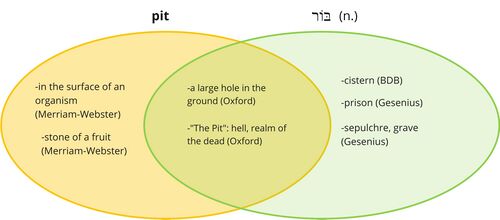

- v. 5: The meaning of אֱיָל
- The noun אֱיָל is a hapax legomenonThat is, the term only occurs once in Biblical Hebrew. in the Bible. It is derived of the root אול with the primary polysemous meanings of "to be in front"/"to be strong"; comp. אֵל "god"; Arb. ʾawwal "first" (HALOT). BDB takes this noun as a loan-word from Aramaic with the meaning "help" (comp. Syr. ʾiyālā "help"). Also noteworthy is the derived noun אֱיָלוּת (Ps 22:20), also a hapax legomenon, which in the context of its psalm probably means "help". The noun אֱיָל is read as such in LXX (ἄνθρωπος ἀβοήθητος "a helpless man") and Peshitta (see ʾiyālā above). On the other hand, The Vulgate iuxta Hebr. has invalidus ("impotent") so as Targum which has בר נש דלית ליה חילא ("a man who has no strength").
- We prefer to follow Tate 1990, 396 who, like the Vulgate and Targum, reads אֱיָל as "strength". This reading, etymologically justified (see above), fits in better with the direct context: the noun גֶּבֶר (in contrast to אִישׁ) is often marked in terms of qualities of manhood such as courage and strength (see Venn Diagram below). The reading of אֱיָל as strength is backed by most modern translations (NIV, NLT, ESV, NKJV et alia).
- v. 5: גֶּבֶר

Phrase-Level
No Phrasal notes to display for this diagram.
Verbal Notes
Verbal Notes
- Verbs of perception in qatal often have present tense stative value. Modern translations all render נֶחְשַׁבְתִּי as a present state.
- The attributive participle יוֹרְדֵי is not marked in terms of tense or aspect, and since the context is not decisive enough here, there are various options. Tate (1990:396) suggests an attractive reading of the participle as an imminent future ('those about to go to the Pit'). Nevertheless we take the consensual choice among Modern Translations to read that participle as a present gnomic one. This is further backed by the Greek and Latin present participle καταβαινόντων and descendentibus.
- The verb הָיָה is either stative ('to be') or dynamic-inchoative ('to become'). A qatal present stative is rare (cf. JM §111i, Gen 42:31), therfore we choose the inchoative reading, supported by Goldingay:2007; Dahood:1974. Cf. also Gen 3:22.
Textual Notes
No Textual notes to display for this diagram.
Add Exegetical Note
V. 6
Macula
בַּמֵּתִ֗ים חָ֫פְשִׁ֥י כְּמ֤וֹ חֲלָלִ֨ים׀שֹׁ֥כְבֵי קֶ֗בֶר אֲשֶׁ֤ר לֹ֣א זְכַרְתָּ֣ם ע֑וֹד וְ֝הֵ֗מָּה מִיָּדְךָ֥ נִגְזָֽרוּ׃
Preferred
(Preferred, but not confirmed); edit diagram
SimpleGrammar
DiscourseUnit [v. 6]
      Fragment
        Clause
          Subject
            noun: אֲנִי I <status="elided">
          Predicate
            Complement
              adjective: חָפְשִׁי free >> outcast
              Adverbial
                PrepositionalPhrase <gloss="among the dead">
                  Preposition
                    preposition: בַּ in
                  Object
                    article: הַ the <status="elided">
                    noun: מֵּתִים dead ones
            Adverbial
              PrepositionalPhrase <gloss="just like the slain">
                Preposition
                  preposition: כְּמוֹ as
                Object
                  Nominal
                    noun: חֲלָלִים slain ones
                    Adjectival
                      ConstructChain <gloss="who are lying in the tomb">
                        verb-participle: שֹׁכְבֵי lying
                        noun: קֶבֶר tomb
                    RelativeClause
                      RelativeParticle
                        particle: אֲשֵׁר that
                      ClauseCluster
                        Clause
                          Predicate <gloss="whom you do not remember anymore">
                            verb: זְכַרְתָּ you have remembered >> you remember
                            Object
                              suffix-pronoun: ם them <located="relative clause head">
                            adverb: לֹא not
                            adverb: עוֹד anymore
                        Conjunction
                          conjunction: וְ and
                        Clause
                          Subject
                            noun: הֵמָּה they
                          Predicate <gloss="and [who] have been cut off">
                            verb: נִגְזָרוּ have been cut off
                            Adverbial
                              PrepositionalPhrase <gloss="from your care">
                                Preposition
                                  preposition: מִ from
                                Object
                                  Nominal
                                    ConstructChain
                                      noun: יָּדְ hand >> care
                                      suffix-pronoun: ךָ you
 DiscourseUnit [v. 6]
      Fragment
        Clause
          Subject
            noun: אֲנִי I <status="elided">
          Predicate
            Complement
              adjective: חָפְשִׁי free >> outcast
              Adverbial
                PrepositionalPhrase <gloss="among the dead">
                  Preposition
                    preposition: בַּ in
                  Object
                    article: הַ the <status="elided">
                    noun: מֵּתִים dead ones
            Adverbial
              PrepositionalPhrase <gloss="just like the slain">
                Preposition
                  preposition: כְּמוֹ as
                Object
                  Nominal
                    noun: חֲלָלִים slain ones
                    Adjectival
                      ConstructChain <gloss="who are lying in the tomb">
                        verb-participle: שֹׁכְבֵי lying
                        noun: קֶבֶר tomb
                    RelativeClause
                      RelativeParticle
                        particle: אֲשֵׁר that
                      ClauseCluster
                        Clause
                          Predicate <gloss="whom you do not remember anymore">
                            verb: זְכַרְתָּ you have remembered >> you remember
                            Object
                              suffix-pronoun: ם them <located="relative clause head">
                            adverb: לֹא not
                            adverb: עוֹד anymore
                        Conjunction
                          conjunction: וְ and
                        Clause
                          Subject
                            noun: הֵמָּה they
                          Predicate <gloss="and [who] have been cut off">
                            verb: נִגְזָרוּ have been cut off
                            Adverbial
                              PrepositionalPhrase <gloss="from your care">
                                Preposition
                                  preposition: מִ from
                                Object
                                  Nominal
                                    ConstructChain
                                      noun: יָּדְ hand >> care
                                      suffix-pronoun: ךָ you
{{Diagram/Display | Chapter=88|DiagramID=V-6-None }}
Grammar Notes
Grammar Notes
- v. 5b-6 The preferred reading follows the MT division between vv. 5 and 6, the same one that is found in Jerome, Peshitta, TgPs and reflected by almost all Modern translations. We prefer to maintain this division between v.5 and v.6, as the clause במתים חפשי is strongly related to the content of v. 6: חפשי and חללים both designate the lowest rank among the dead (cf. Hossfeld and Zenger 2005, 395). Additionally, 2 Chr 26:21 offers an interesting relation between בית החפשית and the verb נגזר (similarly to what we see in v. 6). For further discussion on v. 6, see The Meaning of חָפְשִׁי in Psalm88:6.

- v. 5b-6 alt #1 Alternative follows the division between vs. 5 and 6 as found in the LXX only and which takes במתים חפשי as part of the previous clause in v. 5b, instead of its own new clause.
Lexical Notes
Lexical Notes
- v. 6: The meaning of חָפְשִׁי
- For a detailed description, see The Meaning of חָפְשִׁי in Psalm88:6.
Phrase-Level
Phrase-Level Notes
- v. 6: The metaphor יַד יהוה
- The "hand of God" is used as an anthropomorphising metaphor, in most cases with relation to strength, power and punishment. In the books of Ezra and Nehemiah in particular we find that metaphor with the meaning of God's aid, care or providence, e.g. בָּא אֶל-יְרוּשָׁלִַם כְּיַד-אֱלֹהָיו הַטּוֹבָה עָלָיו (Ezra 7:9) "he arrived in Jerusalem... since the beneficent hand of his God was upon him." (ISV) . We prefer to read this metaphor in a similar way in our verse too, backed by some of the modern translations as well (NIV, NLT, CSB).
Verbal Notes
Verbal Notes
- The attributive participle שֹׁכְבֵי is not marked in terms of tense or aspect. We take the relative tense here to be simultaneous with a stative aspect, backed by LXX καθεύδοντες and Jerome dormientes present participles.
- Verbs of perception in qatal like זְכַרְתָּם often have present tense stative value. "Active verbs which have a stative or quasi-stative meaning are treated like stative verbs. They are mainly verbs expressing a state of mind... Likewise the verb זָכַר is treated like a stative verb, e.g. זָכַרְנוּ 'we remember'" (JM 2018: 112a). Modern translations also all render it as a present state.
- The lack of movement prompts us to render נִגְזָרוּ in English as a present perfect (instead of a simple past).
Textual Notes
No Textual notes to display for this diagram.
Add Exegetical Note
V. 7
Macula
שַׁ֭תַּנִי בְּב֣וֹר תַּחְתִּיּ֑וֹת בְּ֝מַחֲשַׁכִּ֗ים בִּמְצֹלֽוֹת׃
Preferred
(Preferred, but not confirmed); edit diagram
SimpleGrammar
DiscourseUnit [v. 7]
      Fragment
        Clause
          Predicate
            verb: שַׁתַּ you have put
            Object
              suffix-pronoun: נִי me
            Adverbial
                PrepositionalPhrase
                  Preposition
                    preposition: בְּ in
                  Object
                    ConstructChain <gloss="the lowest pit" x="-120" y="30">
                      noun: בוֹר pit
                      Nominal
                        adjective: תַּחְתִּיּוֹת lowest
              Adverbial
                PrepositionalPhrase
                  Preposition
                    preposition: בְּ in
                  Object
                    noun: מַחֲשַׁכִּים dark places
              Adverbial
                PrepositionalPhrase
                  Preposition
                    preposition: בִּ in
                  Object
                    noun: מְצֹלוֹת watery depths
              Adverbial <status="emendation alternative">
                PrepositionalPhrase
                  Preposition
                    preposition: בְּ in
                  Object
                    noun: צַלְמָוֶת deep shadow
 DiscourseUnit [v. 7]
      Fragment
        Clause
          Predicate
            verb: שַׁתַּ you have put
            Object
              suffix-pronoun: נִי me
            Adverbial
                PrepositionalPhrase
                  Preposition
                    preposition: בְּ in
                  Object
                    ConstructChain <gloss="the lowest pit" x="-120" y="30">
                      noun: בוֹר pit
                      Nominal
                        adjective: תַּחְתִּיּוֹת lowest
              Adverbial
                PrepositionalPhrase
                  Preposition
                    preposition: בְּ in
                  Object
                    noun: מַחֲשַׁכִּים dark places
              Adverbial
                PrepositionalPhrase
                  Preposition
                    preposition: בִּ in
                  Object
                    noun: מְצֹלוֹת watery depths
              Adverbial <status="emendation alternative">
                PrepositionalPhrase
                  Preposition
                    preposition: בְּ in
                  Object
                    noun: צַלְמָוֶת deep shadow
{{Diagram/Display | Chapter=88|DiagramID=V-7-None }}
Grammar Notes
Grammar & Textual Notes
- v. 7 בִּמְצֹלוֹת LXX and Peshitta have the alternative metathetic reading בְּצַלְמָוֶת. Although this reading is viable and fits perfectly within the context, we prefer to keep the MT reading, because of the recurring motif in the psalm of "water" as one of the major elements mentioned in the metaphorical description of the psalmist's miserable condition (cf. vv. 8, 18), neatly complementing the two other elements mentioned in our verse, namely the "pit" and the "darkness." (cf. Poetic Feature "The primordial elements").
Lexical Notes
Lexical Notes
- v. 7: The meaning of תַּחְתִּיּוֹת
- The substantivized adjective תַּחְתִּי, always in abstract feminine form (either singular or plural) is a superlative of place: “the bottom of” (lit. “the lowest/deepest place of”), e.g. תַחְתִּית הָהָר “the foot of the mountain”, Exod 19:17. In our verse it may be understood as “a pit which is situated at the lowest places”. This phrase, as well as the similar אֶרֶץ תַּחְתִּית orאֶרֶץ תַּחְתִּיּוֹת is often a synonym of the Sheol. In Ezek 31:14 the latter stands parallel to יוֹרְדֵי בוֹר (cf. vs. 5).
Phrase-Level
No Phrasal notes to display for this diagram.
Verbal Notes
Verbal Notes
- The lack of movement prompts us to render שַׁתַּנִי in English as a present perfect (instead of a simple past).
Textual Notes
No Textual notes to display for this diagram.
Add Exegetical Note
V. 8
Macula
עָ֭לַי סָמְכָ֣ה חֲמָתֶ֑ךָ וְכָל־מִ֝שְׁבָּרֶ֗יךָ עִנִּ֥יתָ סֶּֽלָה׃
Preferred
(Preferred, but not confirmed); edit diagram
SimpleGrammar
DiscourseUnit [v. 8]
      Fragment
        Clause
          Subject
            ConstructChain  <gloss="your outbursts of wrath">
              noun: חֲמָתֶ wrath >> outbursts of wrath
              suffix-pronoun: ךָ you
          Predicate
            verb: סָמְכָה has been lying heavily >> have been lying heavily
            Adverbial
              PrepositionalPhrase
                Preposition
                  preposition: עָלַ on
                Object
                  suffix-pronoun: י me
        Conjunction
          conjunction: וְ and
        Clause
          Predicate
            verb: עִנִּיתָ you have been afflicting
            Adverbial
              Nominal <gloss="with all your waves">
                quantifier: כָל all
                ConstructChain <gloss="your waves">
                  noun: מִשְׁבָּרֶי waves
                  suffix-pronoun: ךָ you
      Fragment
        particle: סֶּלָה selah
 DiscourseUnit [v. 8]
      Fragment
        Clause
          Subject
            ConstructChain  <gloss="your outbursts of wrath">
              noun: חֲמָתֶ wrath >> outbursts of wrath
              suffix-pronoun: ךָ you
          Predicate
            verb: סָמְכָה has been lying heavily >> have been lying heavily
            Adverbial
              PrepositionalPhrase
                Preposition
                  preposition: עָלַ on
                Object
                  suffix-pronoun: י me
        Conjunction
          conjunction: וְ and
        Clause
          Predicate
            verb: עִנִּיתָ you have been afflicting
            Adverbial
              Nominal <gloss="with all your waves">
                quantifier: כָל all
                ConstructChain <gloss="your waves">
                  noun: מִשְׁבָּרֶי waves
                  suffix-pronoun: ךָ you
      Fragment
        particle: סֶּלָה selah
{{Diagram/Display | Chapter=88|DiagramID=V-8-None }}
Grammar Notes
No Grammar notes to display for this diagram.
Lexical Notes
Lexical Notes
- v. 8: חֲמָתֶךָ
- The whole clause depicts a very material picture in which the wrath of YHWH weighs (or lies heavily) upon the psalmist. That requires a rephrasing of the simple "wrath" into "the outbursts of wrath", namely the "materialistic" form that YHWH's wrath assumes. Same comment for חֲרוֹנֶיךָ in v. 17.
- v. 8: סָמְכָה
- The most common use of this verb is in the collocation סָמַךְ יָדוֹ עַל said of the priest laying or leaning his hand on the sacrifice (e.g. Exod 29:10). Our verse has an intransitive occurrence of that verb, which is also found in Ezek 24:2, in which it is said that the king of Babylon "leaned" against Jerusalem, namely started a siege over it. Both Ezek 24:2 and our verse have in common the oppressive nature of the leaning, and we therefore gloss the verb in our verse as "lies heavily on" (cf. Ps 32.4).
- v. 8: ענה

Phrase-Level
No Phrasal notes to display for this diagram.
Verbal Notes
Verbal Notes
- The lack of movement and an habitual process prompts us to render סָמְכָה in English as a present perfect progressive.
- The lack of movement and an habitual process prompts us to render עִנִּיתָ in English as a present perfect progressive.
Textual Notes
No Textual notes to display for this diagram.
Add Exegetical Note
V. 9
Macula
הִרְחַ֥קְתָּ מְיֻדָּעַ֗י מִ֫מֶּ֥נִּי שַׁתַּ֣נִי תוֹעֵב֣וֹת לָ֑מוֹ כָּ֝לֻ֗א וְלֹ֣א אֵצֵֽא׃
Preferred
(Preferred, but not confirmed); edit diagram
SimpleGrammar
DiscourseUnit [v. 9]
      Fragment
        Clause
          Predicate <gloss="you have caused to shun me">
            verb: הִרְחַקְתָּ you have made distant >> you have caused to shun
            Object
              ConstructChain <gloss="my acquaintances">
                verb-participle: מְיֻדָּעַ acquaintances
                suffix-pronoun: י me
            Adverbial
              PrepositionalPhrase
                Preposition
                  preposition: מִמֶּ from
                Object
                  suffix-pronoun: נִּי me
      Fragment
        Clause
          Predicate
            verb: שַׁתַּ you have made
            Object
              suffix-pronoun: נִי me
            Complement
              noun: תוֹעֵבוֹת abominations >> repulsive
              Adjectival
                PrepositionalPhrase
                  Preposition
                    preposition: לָ to
                  Object
                    suffix-pronoun: מוֹ them
      Fragment
        Clause
          Predicate
            verb: שַׁתַּ you have made <status='elided'>
            Object
              suffix-pronoun: נִי me <status='elided'>
            Complement
              Nominal
                verb-participle: כָּלֻא shut in
        Conjunction
          conjunction: וְ and
        Clause
          Predicate
            verb: אֵצֵא I can get out
            adverb: לֹא not
 DiscourseUnit [v. 9]
      Fragment
        Clause
          Predicate <gloss="you have caused to shun me">
            verb: הִרְחַקְתָּ you have made distant >> you have caused to shun
            Object
              ConstructChain <gloss="my acquaintances">
                verb-participle: מְיֻדָּעַ acquaintances
                suffix-pronoun: י me
            Adverbial
              PrepositionalPhrase
                Preposition
                  preposition: מִמֶּ from
                Object
                  suffix-pronoun: נִּי me
      Fragment
        Clause
          Predicate
            verb: שַׁתַּ you have made
            Object
              suffix-pronoun: נִי me
            Complement
              noun: תוֹעֵבוֹת abominations >> repulsive
              Adjectival
                PrepositionalPhrase
                  Preposition
                    preposition: לָ to
                  Object
                    suffix-pronoun: מוֹ them
      Fragment
        Clause
          Predicate
            verb: שַׁתַּ you have made <status='elided'>
            Object
              suffix-pronoun: נִי me <status='elided'>
            Complement
              Nominal
                verb-participle: כָּלֻא shut in
        Conjunction
          conjunction: וְ and
        Clause
          Predicate
            verb: אֵצֵא I can get out
            adverb: לֹא not
{{Diagram/Display | Chapter=88|DiagramID=V-9-None }}
Grammar Notes
Grammar & Textual Notes
- v. 9b תּוֹעֵבוֹת The noun תּוֹעֵבוֹת in our verse is in plural of abstraction: "An abstract noun is quite often expressed by a plural, which properly speaking aims at the various concrete manifestations of a quality or of a state" (JM §136g-h). LXX has a singular noun for תּוֹעֵבוֹת, perhaps so as to bring about agreement between the subject of the verbal notion of the noun תּוֹעֵבָה and the psalmist (singular).
- v. 9c The last clause (starting with כָּלֻא) is elliptical in terms of subject and verb. The preferred interpretation considers שַׁתַּנִי as the underlying verb, with כָּלֻא an object complement. This interpretation was chosen for the sake of harmony with the first part of the verse, with YHWH serving as subject and active agent of all three actions (cf. also the refuting argument for the alternative just below).

- v. 9c alt The alternative reading assumes a nominal clause with an underlying pronominal subject אֲנִי understood. Although supported by most modern translations (+LXX) it seems less desirable, as a nominal clause with an elided subject is rare when not preceded by הנה and not in third person (JM §154c). This is enhanced by the fact that such a reading would entail a change of subject that would have been expected to be overtly marked (YHWH --> I)
Lexical Notes
No Lexical notes to display for this diagram.
Phrase-Level
Phrase-Level Notes
- v. 9: מִמֶּנִּי
- The English verb "to shun" takes the accusative, but the Hebrew one is derived of the root רחק and thus retains its argument with the preposition מ of alienation (i.e. distance oneself from >> shun; cf. van der Merwe §39.14.3).
Verbal Notes
Verbal Notes
- The lack of movement prompts us to render הִרְחַקְתָּ in English as a present perfect (instead of a simple past).
- The lack of movement prompts us to render שַׁתַּנִי in English as a present perfect (instead of a simple past). "The Qal passive participle mostly denotes a completed action or a state" (cf. JM §121q).
- The combination of the dynamic verb שַׁתַּנִי (read as a present perfect like in the previous line) with the passive participle כָּלֻא, a present simultaneous stative, prompts us to translate the clause as 'you have shut me in [so that until now I am shut in]'."
- The modality of 'possibility' for אֵצֵֽא is understood as a combination of posteriority & reference point movement, since 'possibility' is analyzed as a semantic derivative of futurity ('I will go out at any point in the future' --> 'I am able to go out now').
Textual Notes
No Textual notes to display for this diagram.
Add Exegetical Note
V. 10
Macula
עֵינִ֥י דָאֲבָ֗ה מִנִּ֫י עֹ֥נִי קְרָאתִ֣יךָ בְּכָל־י֑וֹם יְהוָ֣ה שִׁטַּ֖חְתִּי אֵלֶ֣יךָ כַפָּֽי׃
Preferred
(Preferred, but not confirmed); edit diagram
SimpleGrammar
DiscourseUnit [v. 10]
      Fragment
        Clause
          Subject
            ConstructChain <gloss="my eyes">
              noun: עֵינִ eye >> eyes
              suffix-pronoun: י me
          Predicate
            verb: דָאֲבָה has languished >> have languished
            Adverbial
              PrepositionalPhrase
                Preposition
                  preposition: מִנִּי from
                Object
                  noun: עֹנִי misery
      Fragment
        Clause
          Predicate
            verb: קְרָאתִי I have been calling
            Object
              suffix-pronoun: ךָ you
            Adverbial
              PrepositionalPhrase <gloss="every day">
                Preposition
                  preposition: בְּ in
                Object
                  quantifier: כָל every
                  noun: יוֹם day
      Fragment
        Vocative
          noun: יְהוָה YHWH
      Fragment
        Clause
          Predicate
            verb: שִׁטַּחְתִּי I have been spreading out
            Object
              ConstructChain <gloss="my hands">
                noun: כַפָּ hands
                suffix-pronoun: י me
            Adverbial
              PrepositionalPhrase
                Preposition
                  preposition: אֵלֶי to
                Object
                  suffix-pronoun: ךָ you
 DiscourseUnit [v. 10]
      Fragment
        Clause
          Subject
            ConstructChain <gloss="my eyes">
              noun: עֵינִ eye >> eyes
              suffix-pronoun: י me
          Predicate
            verb: דָאֲבָה has languished >> have languished
            Adverbial
              PrepositionalPhrase
                Preposition
                  preposition: מִנִּי from
                Object
                  noun: עֹנִי misery
      Fragment
        Clause
          Predicate
            verb: קְרָאתִי I have been calling
            Object
              suffix-pronoun: ךָ you
            Adverbial
              PrepositionalPhrase <gloss="every day">
                Preposition
                  preposition: בְּ in
                Object
                  quantifier: כָל every
                  noun: יוֹם day
      Fragment
        Vocative
          noun: יְהוָה YHWH
      Fragment
        Clause
          Predicate
            verb: שִׁטַּחְתִּי I have been spreading out
            Object
              ConstructChain <gloss="my hands">
                noun: כַפָּ hands
                suffix-pronoun: י me
            Adverbial
              PrepositionalPhrase
                Preposition
                  preposition: אֵלֶי to
                Object
                  suffix-pronoun: ךָ you
{{Diagram/Display | Chapter=88|DiagramID=V-10-None }}
Grammar Notes
Grammar Notes
- v.10 מֶנִּי The form מֶנִּי, common in the Psalms, is a poetic variant of the preposition מִן with the addition of a paragogic yod (cf. JM §103d).

- v. 10 alt #1 Alternative offers a viable reading not attested by any ancient version or modern translation. In addition to that, the following facts speak against this reading:
- דָאֲבָה and עֹנִי belong to the same contextual domain.
- The root עני is repeated three times, and always in the "complaining" parts, never in the framing statements of appeal (vv. 2-3, 10b-c, 14).
- v. 10a and 10b will be less balanced in terms of poetic words if we take מִנִּי עֹנִי to be part of 10b.
- The atnah at בְּכָל-יוֹם is a strong indication for this phrase to be considered as part of 10b, not 10c.
Lexical Notes
Lexical Notes
- v. 10: singular of עַיִן standing for the plural
- The singular of עַיִן may stand in poetry for both eyes, e.g. פַּלְגֵי-מַיִם תֵּרַד עֵינִי עַל-שֶׁבֶר בַּת-עַמִּי. (Lam 3:48) "Streams of tears flow from my eyes because my people are destroyed." (NIV), in which only one eye crying is obviously impossible. It can also be seen in various idioms such as שָֹם עֵינוֹ עַל (to look to one's good); רָעָה עֵֵינוֹֹ עַל (envy). The plural is therefore the preferred reading in our verse too, supported by LXX.
Phrase-Level
Phrase-Level Notes
- v. 10: עֵינִי דָאֲבָה
- The rare verb דָאַב normally denotes the languishing of the soul (נֶפֶשׁ) (cf. Deut 28:65; Jer 31:11, 24). It is only in our verse that this verb describes the eye. However, "The 'eye(s)' is a synecdoche for the whole person, an indicator of the vitality and health of a person (cf. 1Sam 14:27, 29; Deut 34:7; Ps 19:9; Ezra 9:8) or of the lack of vitality and of depleted strength (Gen 27:1; Job 17:7; Ps 6:8; 38:11; Lam 5:17)" (Goldingay 2007). The choice of eye instead of soul in our verse was probably motivated by the intended pun between עֵינִי and עֹנִי in the same line. Both LXX (ἠσθένησαν) and Jerome (langŭērunt) render this verb with an equivalent of the general verb "to languish" or "to become weak". We therefore prefer the more general "languishes" to the translation suggested by some modern translations with the more specific "grows dim", which is restricted to the eyes only.
Verbal Notes
Verbal Notes
- Morphologically and semantically a stative verb, the qatal דָאֲבָה is taken in this case to stand for a perfect inchoative ('languished'), as is rendered by many modern translations and commentaries.
- The lack of movement & an habitual process (indicated by the context) prompts us to render קְרָאתִיךָ in English as a present perfect progressive.
- The lack of movement & an habitual process (indicated by the context) prompts us to render שִׁטַּחְתִּי in English as a present perfect progressive.
Textual Notes
No Textual notes to display for this diagram.
Add Exegetical Note
V. 11
Macula
הֲלַמֵּתִ֥ים תַּעֲשֶׂה־פֶּ֑לֶא אִם־רְ֝פָאִ֗ים יָק֤וּמוּ׀יוֹד֬וּךָ סֶּֽלָה׃
Preferred
(Preferred, but not confirmed); edit diagram
SimpleGrammar
DiscourseUnit [v. 11]
      Fragment
        particle: הֲ (interrogative particle)
      Fragment
        Clause
          Predicate
            verb: תַּעֲשֶׂה you perform
            Object
              noun: פֶּלֶא wonder >> wonders
            Adverbial
              PrepositionalPhrase
                Preposition
                  preposition: לַ for
                Object
                  Nominal
                    article: הַ the <status="elided">
                    noun: מֵּתִים dead ones
      Fragment
        particle: אִם (interrogative particle)
      Fragment
        Clause
          Subject
            noun: רְפָאִים departed spirits
          Predicate <gloss="rise up to praise you">
            Predicate
              verb: יָקוּמוּ rise up
            Conjunction
              conjunction:
            Predicate
              verb: יוֹדוּ [and] praise >> to praise
              Object
                suffix-pronoun: ךָ you
      Fragment
        particle: סֶּלָה selah
 DiscourseUnit [v. 11]
      Fragment
        particle: הֲ (interrogative particle)
      Fragment
        Clause
          Predicate
            verb: תַּעֲשֶׂה you perform
            Object
              noun: פֶּלֶא wonder >> wonders
            Adverbial
              PrepositionalPhrase
                Preposition
                  preposition: לַ for
                Object
                  Nominal
                    article: הַ the <status="elided">
                    noun: מֵּתִים dead ones
      Fragment
        particle: אִם (interrogative particle)
      Fragment
        Clause
          Subject
            noun: רְפָאִים departed spirits
          Predicate <gloss="rise up to praise you">
            Predicate
              verb: יָקוּמוּ rise up
            Conjunction
              conjunction:
            Predicate
              verb: יוֹדוּ [and] praise >> to praise
              Object
                suffix-pronoun: ךָ you
      Fragment
        particle: סֶּלָה selah
{{Diagram/Display | Chapter=88|DiagramID=V-11-None }}
Grammar Notes
Grammar & Textual Notes
- v. 11: הֲ - אִם construction Both הֲ and אִם are taken as interrogative particles, working on the higher level of discourse. אִם is commonly found in disjunctive yes/no mutually exclusive questions ("is it X or Y?"). In few cases in the Bible we find אִם functioning as an independent interrogative particle, namely neither in a disjunctive nor in a conditional clause setting, but introducing an independent clause of its own (1Kings 1:27; Is 29:16), which strongly suggests that it can function other than as a subordinating conjunction (cf. JM §161d-e). We therefore give it a particle status in our analysis.
- v. 11b The verbal sequence יָקוּמוּ יוֹדוּךָ is analyzed as an (asyndetic) hendiadys.
- The word סֶּלָה is absent in LXX.
- vv. 11-13: The rhetorical function of the disjunctive question of the הֲ... אִם... type
- “A disjunctive question is sometimes a mere stylistic feature, used in cases of synonymous parallelism... especially in poetry” (Joüon-Muraoka §161e). The rhetorical force of such constructions is that of a strong negation implied. This explains the additional “No!” in brackets in the paraphrase. It is important to convey the function of that particular formation to our translator teams.
Lexical Notes
Lexical Notes
- v. 11, 13 : singular of פֶּלֶא as a collective noun
- We find in poetry the singular of פֶּלֶא representing the totality of wonders that have been performed by God, e.g. אֶזְכּוֹר מַעַלְלֵי-יָהּ כִּי-אֶזְכְּרָה מִקֶּדֶם פִּלְאֶךָ (Psa 77:12) "I will remember the deeds of the LORD; yes, I will remember your wonders of old" (ESV), in which פֶּלֶא stands parallel to the plural מַעַלְלֵי-יָהּ. The plural reading is backed by the ancient translations.
Phrase-Level
No Phrasal notes to display for this diagram.
Verbal Notes
Verbal Notes
- The lack of reference point movement and gnomic aspect prompt us to translate תַּעֲשֶׂה in English as a simple present tense. The same analysis applies to the next verses 11b-12.
- The hendiadys יָקוּמוּ יוֹדוּךָ should be rendered in translation by a subordination of the second verb to the first one. In many languages the former may be best rendered by an infinitive ("to praise you").
Textual Notes
No Textual notes to display for this diagram.
Add Exegetical Note
V. 12
Macula
הַיְסֻפַּ֣ר בַּקֶּ֣בֶר חַסְדֶּ֑ךָ אֱ֝מֽוּנָתְךָ֗ בָּאֲבַדּֽוֹן׃
Preferred
(Preferred, but not confirmed); edit diagram
SimpleGrammar
DiscourseUnit [v. 12]
      Fragment
        particle: הַ (interrogative particle)
      Fragment
        ClauseCluster
          Clause
            Subject
              ConstructChain <gloss="your faithful love">
                noun: חַסְדֶּ faithful love
                suffix-pronoun: ךָ you
            Predicate
              verb: יְסֻפַּר is recounted
              Adverbial
                PrepositionalPhrase
                  Preposition
                    preposition: בַּ in
                  Object
                    Nominal
                      article: הַ the <status="elided">
                      noun: קֶּבֶר tomb
          Conjunction
            conjunction: וֶ <status="elided">
          Clause
            Subject
              ConstructChain <gloss="your faithfulness">
                noun: אֱמוּנָתְ faithfulness
                suffix-pronoun: ךָ you
            Predicate
              verb: תְּסֻפַּר is recounted <status="elided">
              Adverbial
                PrepositionalPhrase
                  Preposition
                    preposition: בָּ in
                  Object
                    Nominal
                      article: הָ the <status="elided">
                      noun: אֲבַדּוֹן place of destruction
 DiscourseUnit [v. 12]
      Fragment
        particle: הַ (interrogative particle)
      Fragment
        ClauseCluster
          Clause
            Subject
              ConstructChain <gloss="your faithful love">
                noun: חַסְדֶּ faithful love
                suffix-pronoun: ךָ you
            Predicate
              verb: יְסֻפַּר is recounted
              Adverbial
                PrepositionalPhrase
                  Preposition
                    preposition: בַּ in
                  Object
                    Nominal
                      article: הַ the <status="elided">
                      noun: קֶּבֶר tomb
          Conjunction
            conjunction: וֶ <status="elided">
          Clause
            Subject
              ConstructChain <gloss="your faithfulness">
                noun: אֱמוּנָתְ faithfulness
                suffix-pronoun: ךָ you
            Predicate
              verb: תְּסֻפַּר is recounted <status="elided">
              Adverbial
                PrepositionalPhrase
                  Preposition
                    preposition: בָּ in
                  Object
                    Nominal
                      article: הָ the <status="elided">
                      noun: אֲבַדּוֹן place of destruction
{{Diagram/Display | Chapter=88|DiagramID=V-12-None }}
Grammar Notes
Grammar Notes
- v. 12 Just like in v. 13, the interrogative particle הֲ spans over both parts of the disjunctive question. In fact, the question here is merely rhetoric and not disjunctive: "Double questions... need not always be mutually exclusive; frequently the disjunctive form serves (especially in poetic parallelism) merely to repeat the same question in different words, and thus to express it more emphatically... The second member may, therefore, just as well be connected by a simple וְ" (Gesenius §150h). We therefore assume an elided waw here, like the one explicit in v. 13. This waw is also attested in LXX and some Hebrew manuscripts.
Lexical Notes
Lexical Notes
- v. 12: אֲבַדּוֹן
- The verbal noun אֲבַדּוֹן, literally "destruction" (cf. Job 31:12) is likewise translated in LXX and Jerome. However, in most other places it is metonymically used as "place of destruction" with clear reference to death, and is so translated by Targum as "the house of destruction". We find an ambiguity with some places identifying this "place of destruction" as the underworld (cf. Prov 15:11; Job 26:6), while in our verse it stands parallel to the physical tomb itself. "Physically, it means being in the grave, which is itself visibly the place of destruction. As a term for Sheol, Destruction, too, comes only here in the Psalms (but see Job 28:22; Prov. 15:11)... When you take the rock off a tomb to put another body there, you can see that death is a place of destruction. The body dissolves" (Goldingay 2007).
Phrase-Level
Phrase-Level Notes
- v. 12: בַּקֶּבֶר
- Taking the context into account, בַּקֶּבֶר can be understood metonymically as the "realm of the dead", in which case the definite article is semantically interpreted as "Identifiability - unique referent".
Verbal Notes
Verbal Notes
- The lack of reference point movement & gnomic aspect prompt us to translate יְסֻפַּר in English as a simple present tense.
Textual Notes
No Textual notes to display for this diagram.
Add Exegetical Note
V. 13
Macula
הֲיִוָּדַ֣ע בַּחֹ֣שֶׁךְ פִּלְאֶ֑ךָ וְ֝צִדְקָתְךָ֗ בְּאֶ֣רֶץ נְשִׁיָּֽה׃
Preferred
(Preferred, but not confirmed); edit diagram
SimpleGrammar
DiscourseUnit [v. 13]
      Fragment
        particle: הֲ /interrogative particle\
      Fragment
        Clause
          Subject
            ConstructChain <gloss="your wonders">
              noun: פִּלְאֶ wonder >> wonders
              suffix-pronoun: ךָ you
          Predicate
            verb: יִוָּדַע can be known
            Adverbial
              PrepositionalPhrase
                Preposition
                  preposition: בַּ in
                Object
                  Nominal
                    article: הַ the <status="elided">
                    noun: חֹשֶׁךְ darkness >> dark region
        Conjunction
          conjunction: וְ and
        Clause
          Subject
            ConstructChain <gloss="your righteousness">
              noun: צִדְקָתְ righteousness
              suffix-pronoun: ךָ you
          Predicate
            verb: תִּוָּדַע can be known <status="elided">
            Adverbial
              PrepositionalPhrase
                Preposition
                  preposition: בְּ in
                Object
                  ConstructChain <gloss="the land of oblivion">
                    noun: אֶרֶץ land
                    noun: נְשִׁיָּה oblivion
 DiscourseUnit [v. 13]
      Fragment
        particle: הֲ /interrogative particle\
      Fragment
        Clause
          Subject
            ConstructChain <gloss="your wonders">
              noun: פִּלְאֶ wonder >> wonders
              suffix-pronoun: ךָ you
          Predicate
            verb: יִוָּדַע can be known
            Adverbial
              PrepositionalPhrase
                Preposition
                  preposition: בַּ in
                Object
                  Nominal
                    article: הַ the <status="elided">
                    noun: חֹשֶׁךְ darkness >> dark region
        Conjunction
          conjunction: וְ and
        Clause
          Subject
            ConstructChain <gloss="your righteousness">
              noun: צִדְקָתְ righteousness
              suffix-pronoun: ךָ you
          Predicate
            verb: תִּוָּדַע can be known <status="elided">
            Adverbial
              PrepositionalPhrase
                Preposition
                  preposition: בְּ in
                Object
                  ConstructChain <gloss="the land of oblivion">
                    noun: אֶרֶץ land
                    noun: נְשִׁיָּה oblivion
{{Diagram/Display | Chapter=88|DiagramID=V-13-None }}
Grammar Notes
No Grammar notes to display for this diagram.
Lexical Notes
Lexical Notes
- v. 11, 13: singular of פֶּלֶא as a collective noun
- See note under v. 11.
- v. 13: חֹשֶׁךְ used figuratively
- The direct context of חֹשֶׁךְ, namely vv. 12-13 each of which appear in parallel, reveals a sequence of places which serve as the locations of each its respective clauses: בקבר, באבדון and בארץ נשיה. It therefore calls for a similar reading of בחשך, metonymically, as "place of darkness" or "dark region" referring to the world of the dead, rather than as a natural phenomenon in our world, namely "at night, when it's dark". This reading is backed by NET and NIV.
Phrase-Level
Phrase-Level Notes
- v. 13: אֶרֶץ נְשִׁיָּה
- LXX has a passive participle "a forgotten land" (καὶ ἡ δικαιοσύνη σου ἐν γῇ ἐπιλελησμένῃ;), which strengthens the semantic analysis of this construct chain as of a verb with its object. The Hebrew noun נְשִׁיָּה itself is a verbal noun of the קְטִילָה pattern derived from the root נשי ('forget').
Verbal Notes
Verbal Notes
- The modality of 'possibility' for יִוָּדַע is understood as a combination of posteriority & reference point movement, since 'possibility' is analyzed as a semantic derivative of futurity ('Your wonders will be known at any point in the future' --> 'Your wonders are able to be known now').
Textual Notes
No Textual notes to display for this diagram.
Add Exegetical Note
V. 14
Macula
וַאֲנִ֤י׀אֵלֶ֣יךָ שִׁוַּ֑עְתִּי יְהוָ֣ה וּ֝בַבֹּ֗קֶר תְּֽפִלָּתִ֥י תְקַדְּמֶֽךָּ׃
Preferred
(Preferred, but not confirmed); edit diagram
SimpleGrammar
DiscourseUnit [v. 14]
      Fragment
        particle: וַ but
      Fragment
        Vocative
          noun: יְהוָה YHWH
      Fragment
        Clause
          Subject
            noun: אֲנִי I
          Predicate
            verb: שִׁוַּעְתִּי have been crying out for help
            Adverbial
              PrepositionalPhrase
                Preposition
                  preposition: אֵלֶי to
                Object
                  suffix-pronoun: ךָ you
        Conjunction
          conjunction: וּ and
        Clause
          Subject
            ConstructChain <gloss="my prayer">
              noun: תְּֽפִלָּתִ prayer
              suffix-pronoun: י me
          Predicate
            verb: תְקַדְּמֶ will keep welcoming
            Object
              suffix-pronoun: ךָּ you
            Adverbial
              PrepositionalPhrase
                Preposition
                  preposition: בַ in
                Object
                  article: הַ the <status="elided">
                  noun: בֹּקֶר morning
 DiscourseUnit [v. 14]
      Fragment
        particle: וַ but
      Fragment
        Vocative
          noun: יְהוָה YHWH
      Fragment
        Clause
          Subject
            noun: אֲנִי I
          Predicate
            verb: שִׁוַּעְתִּי have been crying out for help
            Adverbial
              PrepositionalPhrase
                Preposition
                  preposition: אֵלֶי to
                Object
                  suffix-pronoun: ךָ you
        Conjunction
          conjunction: וּ and
        Clause
          Subject
            ConstructChain <gloss="my prayer">
              noun: תְּֽפִלָּתִ prayer
              suffix-pronoun: י me
          Predicate
            verb: תְקַדְּמֶ will keep welcoming
            Object
              suffix-pronoun: ךָּ you
            Adverbial
              PrepositionalPhrase
                Preposition
                  preposition: בַ in
                Object
                  article: הַ the <status="elided">
                  noun: בֹּקֶר morning
{{Diagram/Display | Chapter=88|DiagramID=V-14-None }}
Grammar Notes
Note for V. 14
- The waw opening the verse is not understood as a coordinative one connecting v.14 with v.13, but as a marker of a topic-shift (אני), beginning a new section in the psalm. It is therefore represented in the diagram as an element belonging to clause-level.
Lexical Notes
No Lexical notes to display for this diagram.
Phrase-Level
No Phrasal notes to display for this diagram.
Verbal Notes
Note for V. 14
- The lack of movement and an habitual process (indicated by the context) prompts us to render שִׁוַּעְתִּי in English as a present perfect progressive.
- The lack of reference point movement and yiqtol verbal form prompt us to read תְקַדְּמֶךָּ as an imperfective future with implied habituality that is anchored in the present: "my prayer will keep welcoming you, as it has up until now."
Textual Notes
No Textual notes to display for this diagram.
Add Exegetical Note
V. 15
Macula
יְ֭הוָה לָמָ֣ה תִּזְנַ֣ח נַפְשִׁ֑י תַּסְתִּ֖יר פָּנֶ֣יךָ מִמֶּֽנִּי׃
Preferred
(Preferred, but not confirmed); edit diagram
SimpleGrammar
DiscourseUnit [v. 15]
      Fragment
        Vocative
          noun: יְהוָה YHWH
      Fragment
        Clause
          Predicate
            verb: תִּזְנַח you keep rejecting
            adverb: לָמָה why
            Object
              ConstructChain <gloss="me">
                noun: נַפְשִׁ soul >> 'personal pronoun'
                suffix-pronoun: י me
      Fragment
        Clause
          Predicate
            verb: תַּסְתִּיר you keep hiding
            adverb: לָמָה why <status='elided'>
            Object
              ConstructChain <gloss="your face">
                noun: פָּנֶי face
                suffix-pronoun: ךָ you
            Adverbial
              PrepositionalPhrase
                Preposition
                  preposition: מִמֶּ from
                Object
                  suffix-pronoun: נִּי me
 DiscourseUnit [v. 15]
      Fragment
        Vocative
          noun: יְהוָה YHWH
      Fragment
        Clause
          Predicate
            verb: תִּזְנַח you keep rejecting
            adverb: לָמָה why
            Object
              ConstructChain <gloss="me">
                noun: נַפְשִׁ soul >> 'personal pronoun'
                suffix-pronoun: י me
      Fragment
        Clause
          Predicate
            verb: תַּסְתִּיר you keep hiding
            adverb: לָמָה why <status='elided'>
            Object
              ConstructChain <gloss="your face">
                noun: פָּנֶי face
                suffix-pronoun: ךָ you
            Adverbial
              PrepositionalPhrase
                Preposition
                  preposition: מִמֶּ from
                Object
                  suffix-pronoun: נִּי me
{{Diagram/Display | Chapter=88|DiagramID=V-15-None }}
Grammar Notes
No Grammar notes to display for this diagram.
Lexical Notes
No Lexical notes to display for this diagram.
Phrase-Level
No Phrasal notes to display for this diagram.
Verbal Notes
Note for V. 15
The lack of reference point movement and yiqtol verbal forms prompt us to translate תִּזְנַח and תַּסְתִּיר in English as relative imperfective present tenses, with implied continuity (not habituality), to get 'keep doing...'.
Textual Notes
No Textual notes to display for this diagram.
Add Exegetical Note
V. 16
Macula
עָ֘נִ֤י אֲנִ֣י וְגֹוֵ֣עַ מִנֹּ֑עַר נָשָׂ֖אתִי אֵמֶ֣יךָ אָפֽוּנָה׃
Preferred
(Preferred, but not confirmed); edit diagram
SimpleGrammar
DiscourseUnit [v. 16]
      Fragment  [v. 16a]
        Clause
          Subject
            noun: אֲנִי I
          Predicate
            Complement
              adjective: עָנִי am afflicted >> have been afflicted
              conjunction: וְ and
              verb-participle: גוֵעַ am close to death >> have been close to death
              conjunction:
              verb-participle: יָגֵעַ am weary >> have been weary <status="alternative emendation">
            Adverbial
              PrepositionalPhrase
                Preposition
                  preposition: מִ from
                Object
                  noun: נֹּעַר youth
      Fragment  [v. 16b]
        Clause
          Predicate
            verb: נָשָׂאתִי I have been bearing >> I have been suffering
            Object
              ConstructChain <gloss="your terrifying assaults">
                noun: אֵמֶי terrors >> terrifying assaults
                suffix-pronoun: ךָ you
      Fragment [v. 16c]
        Clause
          Predicate
            verb: אֶפּוֹרָה  I keep being torn apart <status="emendation">
            verb: אָפוּגָה  I keep being numb <status="alternative emendation">
            verb: אָפוּנָה  <status="alternative">
 DiscourseUnit [v. 16]
      Fragment  [v. 16a]
        Clause
          Subject
            noun: אֲנִי I
          Predicate
            Complement
              adjective: עָנִי am afflicted >> have been afflicted
              conjunction: וְ and
              verb-participle: גוֵעַ am close to death >> have been close to death
              conjunction:
              verb-participle: יָגֵעַ am weary >> have been weary <status="alternative emendation">
            Adverbial
              PrepositionalPhrase
                Preposition
                  preposition: מִ from
                Object
                  noun: נֹּעַר youth
      Fragment  [v. 16b]
        Clause
          Predicate
            verb: נָשָׂאתִי I have been bearing >> I have been suffering
            Object
              ConstructChain <gloss="your terrifying assaults">
                noun: אֵמֶי terrors >> terrifying assaults
                suffix-pronoun: ךָ you
      Fragment [v. 16c]
        Clause
          Predicate
            verb: אֶפּוֹרָה  I keep being torn apart <status="emendation">
            verb: אָפוּגָה  I keep being numb <status="alternative emendation">
            verb: אָפוּנָה  <status="alternative">
{{Diagram/Display | Chapter=88|DiagramID=V-16-None }}
Grammar Notes
Note for V. 16
- v. 16 יָגֵעַ LXX, Jerome, and Peshitta have יָגֵעַ instead of גֹּוֵעַ. We consider the former a dispreferred emendation, as גוע is lectio difficilior. The reason is that גוע, a perfective glossed as "expire one's last breath" is not attested anywhere in the Bible in its participle form. This would turn it into an imperfective-telic verb ("to be about to expire one's last breath"), a hard but very possible (and highly graphic) reading. In addition to that, since the psalm is obsessive with the idea of death, we take גוע as the preferred reading, also supported by all modern translations.

- v. 16b alt #1 נִשֵֹּאתִי אִמָּךָ Alternative is based on the LXX (ὑψωθεὶς δὲ ἐταπεινώθην) and Peshitta (ܐܬܬܪܝܡܬ ܘܐܬܡܟܟܬ), which can be translated as: ‘I'm lifted up and (then) brought low’. The alternative is made possible through a revocalisation of both words: נִשֵֹּאתִי is read as a Niph'al verb instead of Qal, while אִמָּךָ is read as a Niph'al verb of the root מככ (‘be brought low, humiliated’) instead of the noun אֵמֶיךָ, with an omission of the mater lectionis in the MT. This reading is dispreferred as it is not clear how ‘being lifted up’ is compatible with the message of the psalm, especially as the preceding line is emphasizing how he's been afflicted since youth. The MT text, on the other hand, fits well with the psalm's message.

- v. 16c אָפוּנָה The MT reading אָפוּנָה from the unattested root פונ is emended here to אֶפּוֹרָה from the root פור (cognate to פרר "tear/break") to get "I keep being torn apart") in Niphal. This text is attested in 4Q98c, which Longacre and Strawn (2022) argue is part of the proto-Massoretic 4Q85. Skehan et al. (2000) explains LXX ἐξηπορήθην "I am desperate" as onomatopoeia for the 4Q98c reading, although the meaning is different. BHS suggests an emendation to אָפוּגָה "I keep being numb" from the root פוג, which otherwise it not supported by any version and fits in less with the context. For a full analysis of this line, see The Text and Meaning of Psalm 88:16b.
Lexical Notes
Note for V. 16
- v. 16: אֵמָיךָ
- In a similar way to the analysis of חֲמָתֶךָ in v. 8, the general term אֵמִים "terrors" could be better rephrased in a materialistic and countable form of e.g. "terrifying assaults". The same goes for בִּעוּתֶיךָ in the next verse, a synonym of אֵמָיךָ.
- v. 16b: The form and meaning of the verb אֶפּוֹרָה
- For a detailed analysis, see The Text and Meaning of Psalm 88:16b.
Phrase-Level
No Phrasal notes to display for this diagram.
Verbal Notes
Note for V. 16
- A nominal clause in v. 16a has the implied semantics in grey (see next line for an explanation of the analysis).
- The participle גֹוֵעַ indicates an on-going state that started in the past and has been extending continuously until the present point. It is best rendered in English with a present perfect continuos tense, but may be rendered with other tenses in other languages (for example, with a present tense)
- The lack of movement and an habitual process (indicated by the context) prompts us to render נָשָׂאתִי in English as a present perfect progressive.
- Formally identical to a cohortative form, we understand אֶפּוֹרָה semantically as a yiqtol one and prefer to take the paragogic ה as a stylistic coloring, rather than a cohortative marker: "... forms chosen merely for euphony... due to considerations of rhythm" (Gesenius §108g); cf. also JM §114c, footnote #3). Similar instances, all from poetry, are Jer 4:21, 6:10, Ps 57:5. ** for emendation see exegetical issue on v. 16d (MT: אָפֽוּנָה)
Textual Notes
No Textual notes to display for this diagram.
Add Exegetical Note
V. 17
Macula
עָ֭לַי עָבְר֣וּ חֲרוֹנֶ֑יךָ בִּ֝עוּתֶ֗יךָ צִמְּתוּתֻֽנִי׃
Preferred
(Preferred, but not confirmed); edit diagram
SimpleGrammar
DiscourseUnit [v. 17]
    Fragment
      Clause
        Subject
          ConstructChain <gloss="your outbursts of wrath">
            noun: חֲרוֹנֶי wrath >> outbursts of wrath
            suffix-pronoun: ךָ you
        Predicate <gloss="have been sweeping over me" x="-130" y="-60">
          verb: עָבְרוּ have been sweeping over
          Adverbial
            PrepositionalPhrase
              Preposition
                preposition: עָלַ on
              Object
                suffix-pronoun: י me
    Fragment
      Clause
        Subject
          ConstructChain <gloss="your terrifying assaults">
            noun: בִּעוּתֶי terrors >> terrifying assaults
            suffix-pronoun: ךָ you
        Predicate
          verb: צִמְּתוּ have been destroying <status="emendation" suffix="נִי">
          verb: צִמְּתוּתֻ <status="alternative" suffix="נִי">
          Object
            suffix-pronoun: נִי me
 DiscourseUnit [v. 17]
    Fragment
      Clause
        Subject
          ConstructChain <gloss="your outbursts of wrath">
            noun: חֲרוֹנֶי wrath >> outbursts of wrath
            suffix-pronoun: ךָ you
        Predicate <gloss="have been sweeping over me" x="-130" y="-60">
          verb: עָבְרוּ have been sweeping over
          Adverbial
            PrepositionalPhrase
              Preposition
                preposition: עָלַ on
              Object
                suffix-pronoun: י me
    Fragment
      Clause
        Subject
          ConstructChain <gloss="your terrifying assaults">
            noun: בִּעוּתֶי terrors >> terrifying assaults
            suffix-pronoun: ךָ you
        Predicate
          verb: צִמְּתוּ have been destroying <status="emendation" suffix="נִי">
          verb: צִמְּתוּתֻ <status="alternative" suffix="נִי">
          Object
            suffix-pronoun: נִי me
{{Diagram/Display | Chapter=88|DiagramID=V-17-None }}
Grammar Notes
Note for V. 17
- v. 17 צִמְּתוּתֻנִי MT has an anomalous form, which Gesenius calls "barbarous"(cf. §55d). Seemingly a Pilel" form (with its second ת), the shuruq vowel at the first ת, is not compatible with the expected morphology of Pilel. The MT form seems to be a corruption of the 3rd person plural qatal ending. We therefore go with the emendation of BHS (supported by some medieval Hebrew manuscripts) and prefer to read the form as the basic Piel צִמְּתוּנִי.
Note for V. 17
- v. 17 צִמְּתוּתֻנִי MT has an anomalous form, which Gesenius calls "barbarous"(cf. §55d). Seemingly a Pilel form (with its second ת), the shuruq vowel at the first ת, is not compatible with the expected morphology of Pilel. The MT form seems to be a corruption of the 3rd person plural qatal ending. We therefore go with the emendation of BHS (supported by some medieval Hebrew manuscripts) and prefer to read the form as the basic Piel צִמְּתוּנִי.
Lexical Notes
No Lexical notes to display for this diagram.
Phrase-Level
Note for V. 17
- v. 17: חֲרוֹנֶיךָ
- For the paraphrase "outbursts of wrath", cf. comment for חֲמָתֶךָ in v. 8 above.
- v. 17: עָלַי
- In addition to the concrete spatial sense of the preposition על, definitely an element in the picture depicted in this verse, it often has a nuance of hostility, e.g., עָלָיו עָלָה שַׁלְמַנְאֶסֶר מֶלֶךְ אַשּׁוּר in 2 Kgs 17:3 (cf. Waltke & O’Conner §11.2.13.14).
Verbal Notes
Note for V. 17
- The lack of movement and an habitual process prompts us to render עָבְרוּ in English as a present perfect progressive.
- The lack of movement and an habitual process prompts us to render צִמְּתוּנִי in English as a present perfect progressive. ** for emendation verse-by-verse note v. 17b (MT: צִמְּתוּתֻֽנִי)
Textual Notes
No Textual notes to display for this diagram.
Add Exegetical Note
V. 18
Macula
סַבּ֣וּנִי כַ֭מַּיִם כָּל־הַיּ֑וֹם הִקִּ֖יפוּ עָלַ֣י יָֽחַד׃
Preferred
(Preferred, but not confirmed); edit diagram
SimpleGrammar
DiscourseUnit [v. 18]
      Fragment
        Clause
          Predicate
            verb: סַבּוּ they have been surrounding
            Object
              suffix-pronoun: נִי me
            Adverbial
              PrepositionalPhrase
                Preposition
                  preposition: כַ like
                Object
                  article: הַ the <status="elided">
                  noun: מַּיִם water
            Adverbial <gloss="all the time >> constantly" x="-90" y="-20">
              Nominal
                quantifier: כָּל all
                article: הַ the
                noun: יּוֹם day
      Fragment
        Clause
          Predicate
            verb: הִקִּיפוּ they have been closing in
            Adverbial
              PrepositionalPhrase
                Preposition
                  preposition: עָלַ on
                Object
                  suffix-pronoun: י me
              Adverbial
                adverb: יָחַד together
 DiscourseUnit [v. 18]
      Fragment
        Clause
          Predicate
            verb: סַבּוּ they have been surrounding
            Object
              suffix-pronoun: נִי me
            Adverbial
              PrepositionalPhrase
                Preposition
                  preposition: כַ like
                Object
                  article: הַ the <status="elided">
                  noun: מַּיִם water
            Adverbial <gloss="all the time >> constantly" x="-90" y="-20">
              Nominal
                quantifier: כָּל all
                article: הַ the
                noun: יּוֹם day
      Fragment
        Clause
          Predicate
            verb: הִקִּיפוּ they have been closing in
            Adverbial
              PrepositionalPhrase
                Preposition
                  preposition: עָלַ on
                Object
                  suffix-pronoun: י me
              Adverbial
                adverb: יָחַד together
{{Diagram/Display | Chapter=88|DiagramID=V-18-None }}
Grammar Notes
No Grammar notes to display for this diagram.
Lexical Notes
Note for V. 18
- v. 18: יָחַד
- The noun יָחַד ("unitednees) is, bar one instance, always used adverbially with the sense of "together, in union", cf. JM §126d
Phrase-Level
Note for V. 18
- v. 18: כַּמַּיִם
- The definite article here identifies "water" as the natural element. As such, the reference here is to a general characteristic of water, namely that of "swirling around". English has no definite article in such cases, hence the translation.
- v. 18: כָּל־הַיּוֹם
- When כל- is attached to a singular definite noun, the definiteness of this noun can be understood as either inclusive (denoting a class) or identifiable (denoting a specific referent), which in turn may influence the way we understand the entire כל construction as denoting, respectively, each member in the group (e.g. כל-העיר "each of all cities") or entirety of one entity (e.g. כל-העיר "the entire city"). In the case of the particular phrase כל-היום, we can therefore have two options, namely "each of all days" --> "all the time, constantly" (Gen 6:5) or "the entire day" --> "all day long" (Nu 11:32). JM §139, footnote 2, has a whole discussion of this particular phrase, where the environments which condition each of these readings are listed. According to their definitions, our כל-היום should be understood as "all the time". Although LXX, Jerome, Targum and the modern translations take it as "the whole day", we prefer to read it as JM suggests, also because it fits in better with the message of the psalmist who emphasizes his ongoing misery from youth, his praying to God every day, etc.
Verbal Notes
Note for V. 18
- The lack of movement and a continuous process prompts us to render סַבּוּנִי in English as a present perfect progressive, with the notion of graduality.
- The lack of movement and a continuous process (indicated by the context) prompts us to render הִקִּיפוּ in English as a present perfect progressive.
Textual Notes
No Textual notes to display for this diagram.
Add Exegetical Note
V. 19
Macula
הִרְחַ֣קְתָּ מִ֭מֶּנִּי אֹהֵ֣ב וָרֵ֑עַ מְֽיֻדָּעַ֥י מַחְשָֽׁךְ׃
Preferred
(Preferred, but not confirmed); edit diagram
SimpleGrammar
DiscourseUnit [v. 19]
      Fragment
        Clause
          Predicate <gloss="you have caused to shun me">
            verb: הִרְחַקְתָּ you have made distant >> you have caused to shun
            Object <gloss="all my friends and companions">
              Nominal
                verb-participle: אֹהֵב friend
              Conjunction
                conjunction: וָ and
              noun: רֵעַ companion
            Adverbial
              PrepositionalPhrase
                Preposition
                  preposition: מִמֶּ from
                Object
                  suffix-pronoun: נִּי me
      Fragment
        Clause
          Predicate <gloss="you have caused to shun distres">
            verb: הִרְחַקְתָּ you have made distant >> you have caused to shun <status="elided">
            Object
              ConstructChain <gloss="my acquaintances">
                verb-participle: מְיֻדָּעַ acquaintances
                suffix-pronoun: י me
            Adverbial
              PrepositionalPhrase <status="revocalization">
                Preposition
                  preposition: מֵ from
                Object
                  noun: חֹשֶׁךְ darkness >> distress
            Adverbial <status="alternative">
              noun: מַחְשָׁךְ into darkness
 DiscourseUnit [v. 19]
      Fragment
        Clause
          Predicate <gloss="you have caused to shun me">
            verb: הִרְחַקְתָּ you have made distant >> you have caused to shun
            Object <gloss="all my friends and companions">
              Nominal
                verb-participle: אֹהֵב friend
              Conjunction
                conjunction: וָ and
              noun: רֵעַ companion
            Adverbial
              PrepositionalPhrase
                Preposition
                  preposition: מִמֶּ from
                Object
                  suffix-pronoun: נִּי me
      Fragment
        Clause
          Predicate <gloss="you have caused to shun distres">
            verb: הִרְחַקְתָּ you have made distant >> you have caused to shun <status="elided">
            Object
              ConstructChain <gloss="my acquaintances">
                verb-participle: מְיֻדָּעַ acquaintances
                suffix-pronoun: י me
            Adverbial
              PrepositionalPhrase <status="revocalization">
                Preposition
                  preposition: מֵ from
                Object
                  noun: חֹשֶׁךְ darkness >> distress
            Adverbial <status="alternative">
              noun: מַחְשָׁךְ into darkness
{{Diagram/Display | Chapter=88|DiagramID=V-19-None }}
Grammar Notes
Note for V. 19
- v. 19b מְיֻדָּעַי מֵחֹשֶׁךְ The preferred reading is based on a revocalisation of the text which matches both LXX and Jerome. This reading suggests a parallelism between 19a and 19b, with the verb implied in 19b, and מֵחֹשֶׁךְ parallel to מִמֶּנִּי, to get: You have caused my beloved and my friend to shun me, (and you have caused) my acquaintances (to shun) distress (which is my condition)." "Darkness" can figuratively be used for "distress" as can be seen in passages such as Ps 18:29. The reason for this reading to have been chosen as the preferred one is that, in addition to requiring no emendation, it results in an elegant parallelism and unproblematic grammar. An alternative reading takes מַחְשָׁךְ as an adverbial indicating directionality ("you pushed my acquaintances into darkness"), but that reading is not viable grammatically and contextually. For the full argumentation, see exegetical issue on v. 19b.

- v. 19b alt #1 The explicit MT version, represented by ESV, lit. "My acquaintances are darkness" involves no emendation, but is a hard reading. Some understand it as "My acquaintances have become darkness," i.e. "I cannot see my acquaintances anymore". The problem with this reading is that מַחְשָׁךְ means "a dark place" and not "darkness".

- v. 19b alt #2 This alternative reading takes מַחְשָׁךְ as an adverbial locative ("my acquaintances are in darkness"), but that reading is not viable grammatically and contextually.

- v. 19b alt #3 Many modern translations read this line as "darkness is my closest friend." This requires changing the plural possessive suffix into a singular one through a simple revocalization. Dahood 1968, 307 reads this line in the same way, but with no revocalisation, explaining מידעי as pluralis majestatis, which seems less likely for an entity of unauthoritative nature such as a friend. Additionally, a different word order would have been expected in this case (see exegetical issue The Text and Meaning of Psalm 88:19b).

- v. 19b alt #4 This reading is suggested by Rashi and some manuscripts, and assumes a שֹ instead of a שׁ so as to get a different noun derived from the root חשֹך "spare." The translation should be "My acquaintances are withheld (from me)." This reading is not represented by any modern translation and is less preferred because it abolishes the reading with the root חשׁך, which is a repeated root across the psalm with a poetic significance. It could, however, be an intentional pun playing on the equivocal reading of the ש letter; cf. analysis of Ps. 5, where a similar ambiguity arises in the very last word of the psalm.

- v. 19b alt #5 This reading involves an anacoluthon: it starts with a continuation of the parallelism initiated in the previous line, which is then immediately interrupted, switching into an exclamatory fragment מַחְשָׁךְ: "[you caused] my acquaintances [to stay away from me]... darkness!". This strong and plausible reading is suggested by some exegetes. For the full argumentation, see exegetical issue on v. 19b.

- v. 19b alt #6 This reading follows Vulgate's "abstulisti" assuming, along the same lines of alternative #4, the root חשֹך, to get the translation "You have withheld my acquaintances (from me)". In addition to the reasons against alt #4, which apply here as well, this reading is not preferred as it involves an emendation of the text.
Lexical Notes

Phrase-Level
No Phrasal notes to display for this diagram.
Verbal Notes
Note for V. 19
- The lack of movement and a continuous process (indicated by the context) prompts us to render הִרְחַקְתָּ in English as a present perfect progressive.
Textual Notes
No Textual notes to display for this diagram.
Add Exegetical Note
Appendix
Files
Diagrams
Notes
- Grammar.V. 1.352144
- Grammar.V. 10.662710
- Grammar.V. 11.159029
- Grammar.V. 12.489918
- Grammar.V. 14.35814
- Grammar.V. 16.41254
- Grammar.V. 17.328514
- Grammar.V. 17.976297
- Grammar.V. 19.99421
- Grammar.V. 2.825823
- Grammar.V. 5.783845
- Grammar.V. 6.820020
- Grammar.V. 7.764418
- Grammar.V. 9.493102
- Grammar.Vv. 3-4.738629
- Lexical.V. 10.73300
- Lexical.V. 11.601491
- Lexical.V. 12.150183
- Lexical.V. 13.28277
- Lexical.V. 16.474064
- Lexical.V. 18.168245
- Lexical.V. 19.710482
- Lexical.V. 5.221613
- Lexical.V. 6.89256
- Lexical.V. 7.722250
- Lexical.V. 8.384767
- Lexical.Vv. 3-4.954087
- Phrasal.V. 1.903373
- Phrasal.V. 10.513568
- Phrasal.V. 12.767887
- Phrasal.V. 13.182069
- Phrasal.V. 17.416653
- Phrasal.V. 18.491557
- Phrasal.V. 2.207668
- Phrasal.V. 6.695501
- Phrasal.V. 9.712560
- Phrasal.Vv. 3-4.257383
- Verbal.V. 10.632491
- Verbal.V. 11.350747
- Verbal.V. 12.450895
- Verbal.V. 13.146004
- Verbal.V. 14.30564
- Verbal.V. 15.973767
- Verbal.V. 16.9414
- Verbal.V. 17.386051
- Verbal.V. 18.793164
- Verbal.V. 19.552488
- Verbal.V. 2.704778
- Verbal.V. 5.250267
- Verbal.V. 6.150240
- Verbal.V. 7.355481
- Verbal.V. 8.183670
- Verbal.V. 9.100465
- Verbal.Vv. 3-4.543973
Approvals
Current Grammar status is Approved for version 1.0. Current Lexical status is Approved for version 1.0.