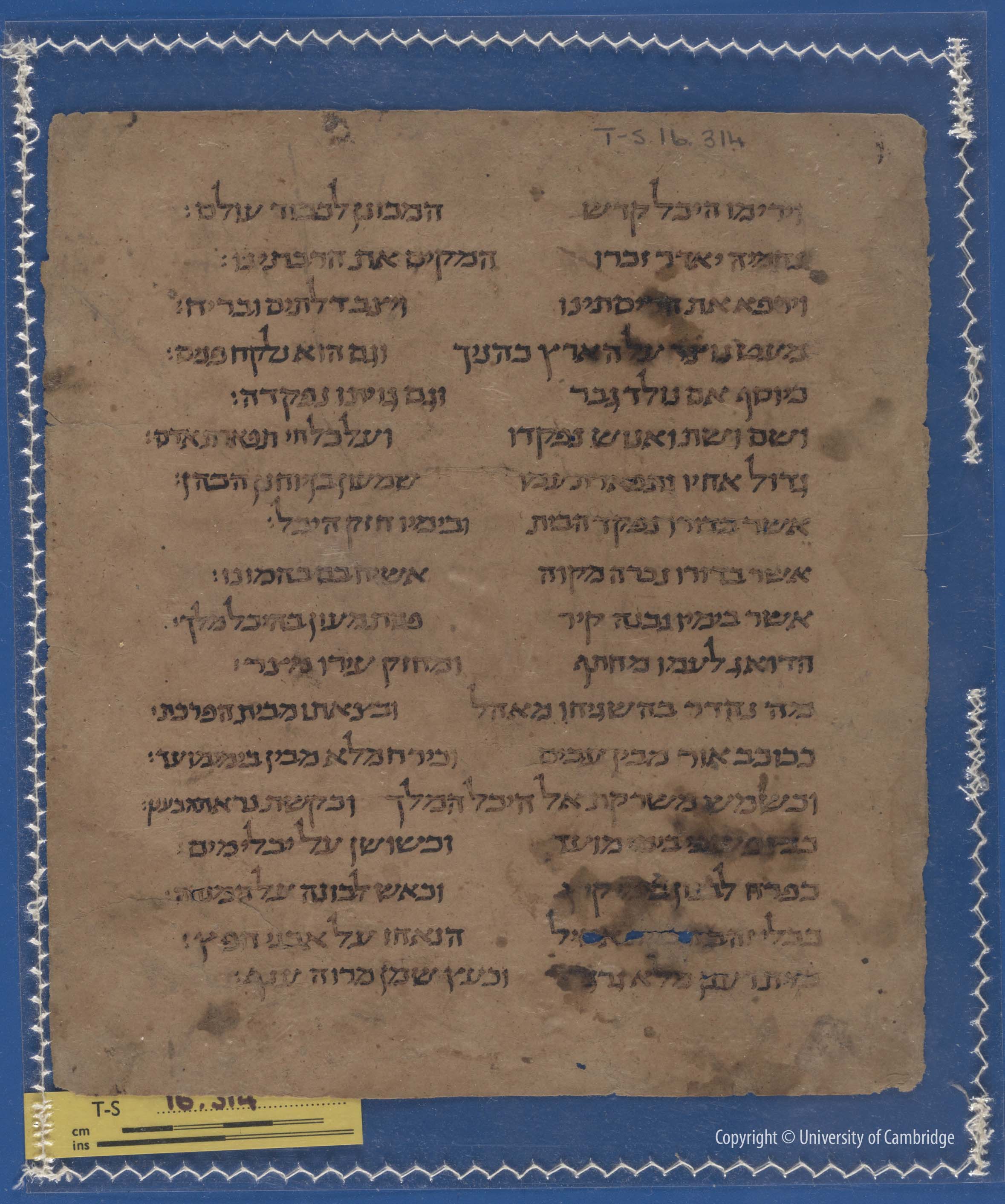
Psalm 32/Diagrams
v. 1
| Hebrew | Verse | English |
|---|---|---|
| לְדָוִ֗ד מַ֫שְׂכִּ֥יל | v. 1a | By David. A maskil. |
| אַשְׁרֵ֥י נְֽשׂוּי־פֶּ֗שַׁע | v. 1b | How happy is the one whose offense is taken away, |
| כְּס֣וּי חֲטָאָֽה׃ | v. 1c | whose sin is covered! |
Macula
לְדָוִ֗ד מַ֫שְׂכִּ֥יל אַשְׁרֵ֥י נְֽשׂוּי־פֶּ֗שַׁע כְּס֣וּי חֲטָאָֽה׃
Preferred
(Preferred, but not confirmed); edit diagram
SimpleGrammar
DiscourseUnit [v. 1]
    Fragment
      Nominal
      Adjectival
        PrepositionalPhrase
          Preposition
            preposition: לְ by
          Object
            noun: דָוִד David
    Fragment
      noun: מַשְׂכִּיל a maskil
    Fragment
      Nominal <gloss="How happy is the one whose offense is taken away, whose sin is covered">
        ConstructChain
          noun: אַשְׁרֵי the happiness
          Nominal
            Apposition
              ConstructChain
                verb-participle: נְשׂוּי borne >> taken away
                noun: פֶּשַׁע offense
              ConstructChain
                verb-participle: כְּסוּי *covered >> forgiven
                noun: חֲטָאָה sin
 DiscourseUnit [v. 1]
    Fragment
      Nominal
      Adjectival
        PrepositionalPhrase
          Preposition
            preposition: לְ by
          Object
            noun: דָוִד David
    Fragment
      noun: מַשְׂכִּיל a maskil
    Fragment
      Nominal <gloss="How happy is the one whose offense is taken away, whose sin is covered">
        ConstructChain
          noun: אַשְׁרֵי the happiness
          Nominal
            Apposition
              ConstructChain
                verb-participle: נְשׂוּי borne >> taken away
                noun: פֶּשַׁע offense
              ConstructChain
                verb-participle: כְּסוּי *covered >> forgiven
                noun: חֲטָאָה sin
{{Diagram/Display | Chapter=32|DiagramID=v-1-None }}
Textual Notes
No Textual notes.
Grammar Notes
Note for v. 1
v. 1 – The construct chain אַשְׁרֵי is a Biblical Hebrew idiom, literally: "The happiness of x." It is an exclamative fragment, though has been translated more idiomatically as "Happy is" as early as the Septuagint.[1] We follow this implied copular reading, though maintain the exclamative flavor of the Hebrew idiom.
Lexical Notes
Note for v. 1
It must be recognized that the terms belonging to the lexical domain of "sin" in Psalm 32 contain significant semantic overlap (see the accompanying Hebrew-to-Hebrew Venn diagram),[2] though they may be found in other passages of the Bible. For example, regarding the two forms of the root √חטא found in our psalm (חֲטָאָה and חַטָּאת), TDOT notes that "it appears that the feminine form derived from the simple stem with the open ending, chaṭāʾāh, refers to the individual deed, whereas the feminine form based on the intensive with closed ending, chaṭṭāʾth, refers to the enduring sphere of conduct observed by Yahweh, which he will one day punish or which must be atoned for." Thus, in Exodus 32:30-32, just as in Psalm 32, we have the distinction between חֲטָאָה and חַטָּאת: "The next day Moses said to the people, “You have committed a great sin (חֲטָאָ֣ה). But now I will go up to the Lord; perhaps I can make atonement for your sin (חַטַּאתְכֶֽם).” 31 So Moses went back to the Lord and said, “Oh, what a great sin (חֲטָאָ֣ה) these people have committed! They have made themselves gods of gold. 32 But now, please forgive their sin (חַטָּאתָ֑ם)" (NIV). This distinction does not seem to hold in Psalm 32, however, since חֲטָאָה is "covered" (כְּס֣וּי) in v. 1, whereas חַטָּאת is confessed and forgiven in v. 5. Thus, it is difficult to appreciate a significant semantic difference between the two forms. Indeed, the variants of the root √חטא in Psalm 32 seem to be the least descriptive (see the accompanying Hebrew-to-Hebrew Venn diagram). Further, for verbal parallels of the root √עוה (from which the nominal עָוֹן is derived) and √חטא, see Ps 106:6 חָטָ֥אנוּ עִם־אֲבוֹתֵ֗ינוּ הֶעֱוִ֥ינוּ הִרְשָֽׁעְנוּ׃.
On the other hand, though SDBH defines פֶּשַׁע as "action by which humans or groups defy an authority or a standard of behavior; by extension, can also refer to the punishment or guilt incurred from a transgression," generally speaking "pešaʿ, unlike either ʿāwōn or ḥaṭṭāʾṯ, refers only to the offense itself rather than simultaneously also to the sanction" (TDOT, פֶּשַׁע), though there are exceptions (see, e.g., Ps 39:9). Indeed, see the specific differentiation between פֶּשַׁע as the offense and עָוֹן as the punishment in 1 Samuel 25:24, 28: "On me alone, my lord, be the guilt (הֶֽעָוֺ֑ן) ... Please forgive the trespass (שָׂ֥א נָ֖א לְפֶ֣שַׁע) of your servant" (ESV). Thus, we have preferred guilt as the gloss for עָוֹן, offense for פֶּשַׁע and the generic sin for both חֲטָאָה and חַטָּאת.
Note for v. 1
v. 1 – The verb נשׂא comes from "a common Semitic root referring to the physical movement of raising, lifting up, and carrying, along with every conceivable association" (TDOT). In the current context of sin (cf. v. 5), this concrete physical sense could entail "lifting up" ➞ "carrying away." The image is similar to that of Psalm 103:12, though there the hiphil רחק is used: "as far as the east is from the west, so far has he removed (הִֽרְחִ֥יק) our transgressions from us" (NIV). One of the fundamental images of the verb נשׂא being used in the context of forgiveness of sins is that of the scapegoat in Leviticus 16, where v. 22 says "The goat will carry (וְנָשָׂ֨א) on itself (עָלָ֛יו) all their sins (אֶת־כָּל־עֲוֺנֹתָ֖ם) to a remote place; and the man shall release it in the wilderness" (NIV).[3] In light of the nominal uses of this root (see, e.g., מַשָּׂא and מַשְׂאֵת "load, burden," BDB), there seems to be more to the root נשׂא in this context than simply removal. Indeed, SDBH defines the verb as "literally: to bear; hence: = action by which humans or deities let go of any anger or resentment with regard to the wrongdoing or sin of (other) humans." Thus, more so than simply carrying away (which is true in the case of the scapegoat of Lev 16 and Ps 103:12), the forgiving entity carries upon itself (see עָלָ֛יו in Lev 16:22) the shame, guilt or punishment (TDOT) without enacting just retribution, as shown by parallel contexts containing √עבר: "Who is a God like you, who pardons sin (נֹשֵׂ֤א עָוֺן֙) and forgives transgression (וְעֹבֵ֣ר עַל־פֶּ֔שַׁע)" (Mic 7:18; NIV).[4] For a similar sense, see Psalm 25:18 with forgiveness of חַטָּאת and Psalm 85:3 with forgiveness of עָוֹן.
Phrase-Level Notes
Note for v. 1
v. 1 The initial construct phrase (both here and in the following verse) headed by אַשְׁרֵ֥י is a Hebrew idiom communicating an exclamative fragment: [Oh, look at] the happiness of those who... It has been translated as a verbless clause from a very early stage, as exemplified by the LXX: "Happy are those whose lawless behavior was forgiven."[5]
Note for v. 1
v. 1 – Both construct phrases of this verse (נְֽשׂוּי־פֶּ֗שַׁע and כְּס֣וּי חֲטָאָֽה) communicate a relationship of specification, that is, characteristic with regard to. Those that are considered happy, then, are taken away ➞ forgiven with regard to offense and covered with regard to sin. In other words, their offense has been taken away and their sin covered.
Verbal Notes
Preliminary analysis
The verbal_analysis.json table needs to be built first.
No Verbal notes.
Add Exegetical Note
v. 2
| Hebrew | Verse | English |
|---|---|---|
| אַ֥שְֽׁרֵי אָדָ֗ם לֹ֤א יַחְשֹׁ֬ב יְהוָ֣ה ל֣וֹ עָוֺ֑ן | v. 2a | How happy is the person against whom YHWH does not count guilt |
| וְאֵ֖ין בְּרוּח֣וֹ רְמִיָּה׃ | v. 2b | and in whose mind there is no deceit! |
Macula
אַ֥שְֽׁרֵי אָדָ֗ם לֹ֤א יַחְשֹׁ֬ב יְהוָ֣ה ל֣וֹ עָוֺ֑ן וְאֵ֖ין בְּרוּח֣וֹ רְמִיָּה׃
Preferred
(Preferred, but not confirmed); edit diagram
SimpleGrammar
DiscourseUnit [v. 2]
    Fragment
      Nominal <gloss="How happy is the person against whom YHWH does not count guilt and in whose mind there is no deceit">
        ConstructChain
          noun: אַשְׁרֵי the happiness
          Nominal
            noun: אָדָם person
            RelativeClause
              RelativeParticle
                particle: who
              ClauseCluster
                Clause
                  Subject
                    noun: יְהוָה YHWH
                  Predicate
                    verb: יַחְשֹׁב count
                    adverb: לֹא not
                    Adverbial
                      PrepositionalPhrase
                        Preposition
                          preposition: ל against
                        Object
                          suffix-pronoun: וֹ him
                    Object
                      noun: עָוֺן guilt
                Conjunction
                  conjunction: וְ and
                Clause
                  Subject
                    noun: רְמִיָּה deceit
                  Predicate
                    Adverbial
                      particle: אֵין there is not
                    Adverbial
                      PrepositionalPhrase
                        Preposition
                          preposition: בְּ in
                        Object
                          ConstructChain <gloss="his mind">
                            noun: רוּח mind
                            suffix-pronoun: וֹ him
 DiscourseUnit [v. 2]
    Fragment
      Nominal <gloss="How happy is the person against whom YHWH does not count guilt and in whose mind there is no deceit">
        ConstructChain
          noun: אַשְׁרֵי the happiness
          Nominal
            noun: אָדָם person
            RelativeClause
              RelativeParticle
                particle: who
              ClauseCluster
                Clause
                  Subject
                    noun: יְהוָה YHWH
                  Predicate
                    verb: יַחְשֹׁב count
                    adverb: לֹא not
                    Adverbial
                      PrepositionalPhrase
                        Preposition
                          preposition: ל against
                        Object
                          suffix-pronoun: וֹ him
                    Object
                      noun: עָוֺן guilt
                Conjunction
                  conjunction: וְ and
                Clause
                  Subject
                    noun: רְמִיָּה deceit
                  Predicate
                    Adverbial
                      particle: אֵין there is not
                    Adverbial
                      PrepositionalPhrase
                        Preposition
                          preposition: בְּ in
                        Object
                          ConstructChain <gloss="his mind">
                            noun: רוּח mind
                            suffix-pronoun: וֹ him
{{Diagram/Display | Chapter=32|DiagramID=v-2-None }}
Textual Notes
No Textual notes.
Grammar Notes
No Grammar notes.
Lexical Notes
Note for v. 2
v. 2 – For the sense of רוּחַ as mind, see SDBH. In Psalm 32, having one's sin forgiven (vv. 1, 5c) follows confessing one's sin (v. 5a–b), such that a mind that is not deceitful is one that confesses its sin. The implicature is that someone with deceit in their mind is someone who decides not to confess their sin (see vv. 3–4), either because they do not think there is anything to confess or because they consider themselves better off without confessing. These decisions are made in the mind.
Phrase-Level Notes
No Phrasal notes.
Verbal Notes
Preliminary analysis
The verbal_analysis.json table needs to be built first.
No Verbal notes.
Add Exegetical Note
v. 3
| Hebrew | Verse | English |
|---|---|---|
| כִּֽי־הֶ֭חֱרַשְׁתִּי בָּל֣וּ עֲצָמָ֑י | v. 3a | When I kept silent, my bones began to waste away |
| בְּ֝שַׁאֲגָתִ֗י כָּל־הַיּֽוֹם׃ | v. 3b | in my groaning all day. |
Macula
כִּֽי־הֶ֭חֱרַשְׁתִּי בָּל֣וּ עֲצָמָ֑י בְּ֝שַׁאֲגָתִ֗י כָּל־הַיּֽוֹם׃
Preferred
(Preferred, but not confirmed); edit diagram
SimpleGrammar
DiscourseUnit [v. 3]
    Fragment
      Clause
        Subject
          ConstructChain <gloss="my bones">
            noun: עֲצָמ bones
            suffix-pronoun: ָי me
        Predicate
          verb: בָּלוּ began to wear out >> began to waste away
          verb: כָּלוּ began to fade <status="alternative emendation">
          Adverbial
            PrepositionalPhrase
              Preposition
                preposition: בְּ in
              Object
                Nominal <gloss="my groaning">
                  ConstructChain
                    noun: שַׁאֲגָת groaning
                    suffix-pronoun: ִי me
                Adjectival
                  Adverbial
                    Nominal <gloss="all day">
                      quantifier: כָּל all
                      article: הַ the
                      noun: יּוֹם day
        SubordinateClause
          Conjunction
            conjunction: כִּי since >> when
          Clause
            Predicate
              verb: הֶחֱרַשְׁתִּי I kept silent
 DiscourseUnit [v. 3]
    Fragment
      Clause
        Subject
          ConstructChain <gloss="my bones">
            noun: עֲצָמ bones
            suffix-pronoun: ָי me
        Predicate
          verb: בָּלוּ began to wear out >> began to waste away
          verb: כָּלוּ began to fade <status="alternative emendation">
          Adverbial
            PrepositionalPhrase
              Preposition
                preposition: בְּ in
              Object
                Nominal <gloss="my groaning">
                  ConstructChain
                    noun: שַׁאֲגָת groaning
                    suffix-pronoun: ִי me
                Adjectival
                  Adverbial
                    Nominal <gloss="all day">
                      quantifier: כָּל all
                      article: הַ the
                      noun: יּוֹם day
        SubordinateClause
          Conjunction
            conjunction: כִּי since >> when
          Clause
            Predicate
              verb: הֶחֱרַשְׁתִּי I kept silent
{{Diagram/Display | Chapter=32|DiagramID=v-3-None }}
Textual Notes
Note for v. 3
v. 3 – For the alternative emendation כָּלוּ "they were consumed" in place of the MT's בָּלוּ "they wasted away," see the numerous manuscripts listed both in VTH (330) and de-Rossi (vol. 4, 23), perhaps influenced by Ps 31:11 (see the phrase-level note).
Grammar Notes
Note for v. 3
v. 3 – The initial כִּי in these verses, preceding the main clause, indicates the presupposition of its content ➞ "since, when," (cf. Gen 3:14). Note the same grammaticalization in English "since," developing a causal sense from the temporal sense. Similarly, "In some contexts [of כִּי] it is not clear whether a temporal or causal relation is involved" (BHRG 434, n. 66).
Lexical Notes
No Lexical notes.
Phrase-Level Notes
Note for v. 3
v. 3 – The prepositional phrase בְּ֝שַׁאֲגָתִ֗י introduces localization, though within a temporal frame (BHRG §39.6(2)), as made explicit by the following phrase "all day" (כָּל־הַיּֽוֹם). Similar periods of time are described in Psalm 39:4's "while I meditated" (NIV; בַּהֲגִיגִ֥י) and possibly Psalm 31:11's בַּאֲנָ֫חָ֥ה, if not read as manner: [fade away] with groaning.[6]
Verbal Notes
Preliminary analysis
The verbal_analysis.json table needs to be built first.
Note for v. 3
For the clause "בָּל֣וּ עֲצָמָ֑י בְּ֝שַׁאֲגָתִ֗י כָּל־הַיּֽוֹם׃," the temporal reference point has already been made explicit by the preceding כִּי clause and is further modified by the following "all day" (כָּל־הַיּֽוֹם). We are left, thus, without a concrete beginning and end of the action, so we have preferred an inchoative reading ("began to") of the qatal בָּל֣וּ, as is commonly found with change-of-state verbs.[7] See, similarly, the participle בליין in Targum Psalms and imperfect in modern French and Spanish translations: dépérissait (SG21), s'épuisait (TOB), se consumaient (NBS), and iba decayendo (DHH).
Add Exegetical Note
v. 4
| Hebrew | Verse | English |
|---|---|---|
| כִּ֤י ׀ יוֹמָ֣ם וָלַיְלָה֮ תִּכְבַּ֥ד עָלַ֗י יָ֫דֶ֥ךָ | v. 4a | For day and night your hand was weighing down upon me. |
| נֶהְפַּ֥ךְ לְשַׁדִּ֑י בְּחַרְבֹ֖נֵי קַ֣יִץ סֶֽלָה׃ | v. 4b | My vigor was changed like in the drought of summer. Selah. |
Macula
כִּ֤י ׀ יוֹמָ֣ם וָלַיְלָה֮ תִּכְבַּ֥ד עָלַ֗י יָ֫דֶ֥ךָ נֶהְפַּ֥ךְ לְשַׁדִּ֑י בְּחַרְבֹ֖נֵי קַ֣יִץ סֶֽלָה׃
Preferred
(Preferred, but not confirmed); edit diagram
SimpleGrammar
DiscourseUnit [v. 4]
    Fragment
      particle: כִּי For
    Fragment
      Clause
        Subject
          ConstructChain <gloss="your hand">
            noun: יָד hand
            suffix-pronoun: ֶךָ you
        Predicate
          verb: תִּכְבַּד was weighing down
          Adverbial
            PrepositionalPhrase
              Preposition
                preposition: עָל upon
              Object
                suffix-pronoun: ַי me
          Adverbial
            adverb: יוֹמָם day
            Conjunction
              conjunction: וָ and
            adverb: לַיְלָה night
    Fragment
      Clause
        Subject
          ConstructChain <gloss="my vigor">
            noun: לְשַׁדּ moisture >> vigor
            suffix-pronoun: ִי me
        Predicate
          verb: נֶהְפַּךְ was changed
          Adverbial <gloss="like in the drought of summer">
            PrepositionalPhrase
              Preposition
                preposition: בְּ in
              Object
                Nominal
                  ConstructChain
                    noun: חַרְבֹנֵי the drought
                    noun: קַיִץ summer
          Adverbial <status="alternative">
            PrepositionalPhrase
              Preposition
                preposition: כְּ like <status="emendation">
              Object
                Nominal
                  ConstructChain
                    noun: חַרְבֹנֵי the heat
                    noun: קַיִץ summer
    Fragment
      particle: סֶלָה Selah
 DiscourseUnit [v. 4]
    Fragment
      particle: כִּי For
    Fragment
      Clause
        Subject
          ConstructChain <gloss="your hand">
            noun: יָד hand
            suffix-pronoun: ֶךָ you
        Predicate
          verb: תִּכְבַּד was weighing down
          Adverbial
            PrepositionalPhrase
              Preposition
                preposition: עָל upon
              Object
                suffix-pronoun: ַי me
          Adverbial
            adverb: יוֹמָם day
            Conjunction
              conjunction: וָ and
            adverb: לַיְלָה night
    Fragment
      Clause
        Subject
          ConstructChain <gloss="my vigor">
            noun: לְשַׁדּ moisture >> vigor
            suffix-pronoun: ִי me
        Predicate
          verb: נֶהְפַּךְ was changed
          Adverbial <gloss="like in the drought of summer">
            PrepositionalPhrase
              Preposition
                preposition: בְּ in
              Object
                Nominal
                  ConstructChain
                    noun: חַרְבֹנֵי the drought
                    noun: קַיִץ summer
          Adverbial <status="alternative">
            PrepositionalPhrase
              Preposition
                preposition: כְּ like <status="emendation">
              Object
                Nominal
                  ConstructChain
                    noun: חַרְבֹנֵי the heat
                    noun: קַיִץ summer
    Fragment
      particle: סֶלָה Selah
{{Diagram/Display | Chapter=32|DiagramID=v-4-None }}
Textual Notes
Note for v. 4
v. 4 – For the alternative emendation כְּ "like" in place of the MT's בְּ "in, by," see Symmachus, Sexta, Targum Psalms, and the Peshitta. While the sense of the clause requires a comparison (as would be communicated by כְּ), often either בְּ or כְּ are employed to fulfill the role of both (cf. Ps 95:8), and there is no textual evidence for כְּ in any Hebrew manuscripts.
Note for v. 4
v. 4 – Due to the paucity of לָשָׁד in the Bible (appearing only here and Num 11:8), the majority of the ancient versions (see the LXX—cf. Vulgate, Origen's Quinta, CPA Psalms—Jerome's Iuxta Hebraeos, Aquila, Symmachus, and Theodotion) understand the ל to be an independent preposition followed by the noun שֹׁד "destruction, wretchedness," and provide a first-person verb. This interpretation involves the common construction נהפך ל "to become" (see, e.g., Exod 7:15, 17, 20; Lev 13:16, 17; 1 Sam 10:16; Isa 34:9; 63:10; Jer 30:6; Joel 3:4; Job 30:21; 41:20; Lam 5:15). Nevertheless, in this case, the MT's qatal נֶהְפַּ֥ךְ would need to be revocalized to a participle נֶהְפָּךְ in order to accommodate the first-person verb (as indicated in the alternative diagram above). Further, as pointed out by Barthélemy (2005, 186), the difficulty to account for the suffix ִי on the MT's לְשַׁדִּ֑י is highly problematic for this reading (see, e.g., Jerome's attempt with versatus sum in miseria mea "I was transformed in my misery"),[8] as is the questionable function of a predicative participle נֶהְפָּךְ following YHWH as the agent of the previous clause—minimally we would expect a personal pronoun "I" to accompany such a predicative participle. Targum Psalms retains the MT's syntax,[9] whose difficulty is more lexical than grammatical (see the lexical notes for full discussion).
Grammar Notes
Note for v. 4
v. 4 – The כִּי at the beginning of this verse grounds the entire content of v. 3 (see, e.g., the intentional choices in Targum Psalms, Jerome, and Symmachus).[10]
Lexical Notes
Note for v. 4
v. 4 – The head noun of the prepositional phrase בְּחַרְבֹ֖נֵי קַ֣יִץ, only occurring here in the Bible, is quite unambiguously derived from the root חרב, "to be dry, dry up." Though Targum Psalms employs שרבא "heat," with the root √חרב, dryness is most likely in view. Morphologically, the noun belongs to the qiṭṭālōn pattern (Blau 2010, §4.4.6.7), similar to other abstract nouns (cf. e.g., זִכָּרוֹן 'memory'), such that its independent form is most likely חֵרָבוֹן (so BDB, DCH) and the sense of drought is most plausible (see the CJB, JPS, KJV, REB).
Note for v. 4
v. 4 – The noun לָשָׁד only occurs here and Numbers 11:8 (if indeed the same lexeme—see SDBH). If לָשָׁד in Psalm 32:4 and לָשָׁד in Numbers 11:8 are the same word, then the use of this word in Numbers 11:8 can shed light on its meaning in Psalm 32:4.
In Numbers 11:8, it apparently refers to "a cake" of oil, in the comparison of the taste of manna as: "And the taste of it was like the taste of cakes baked with oil (לְשַׁ֥ד הַשָּֽׁמֶן)" (ESV), though this is not a certainty. The lexicons offer "fatty cake, butter cake" (HALOT), "juice" (BDB), and "cake, delicacy" (DCH) for the word in Num 11:8. Both Aramaic translations (Targum Psalms and the Peshitta) have "like the taste of kneading with oil."[11] At least in the case of the Peshitta, it has been noted that the translator, when he did not understand a word, often replaced it with a similar-sounding Syriac lexeme (Weitzman 1999, 37), in this case liš for the MT's lǝšad (cf. Hebr. לושׁ). The LXX has "[a type of] cake of oil" and the Vulgate "bread of oil."[12] Targum Neofiti varies between "cake" and "moisture, juice" of oil,[13] while Fragment Targums contains "a cake with honey."[14] The Samaritan translator was apparently not familiar with the word לשׁד in Num 11:8 since the Samaritan Targum simply provides the same word: "[lšd] of oil",[15] though the Samaritan Arabic Versions read "the sowing/cultivation? of oil/fat," while some manuscripts contain the equally obscure "the threshing [of oil/fat],"[16] perhaps influenced by the Arabic root lšš (لشش ; cf. Ugar. l-š, 'to soil, plaster'). Finally, the Old Babylonian lišdu apparently means "cream" (CAD vol 9, 215), which would support the sense of 'moisture." In sum, the head noun of the construct chain לְשַׁ֥ד הַשָּֽׁמֶן in Num 11:8 refers either to a cake-like product containing oil, or the physical consistency of oil (i.e., "moisture"). The latter appears most plausible in connection with our present psalm, unless we are to posit two different lexemes.
For the difficulties of the ancient versions of Ps 32:4, see the grammar notes. Targum Psalms is the only version to render the word according to the MT's syntax, with "my juice/moisture was changed,"[17] probably on analogy with Numbers 11:8. With bones "wearing out" in the previous verse, the "drying out" effect of one's moisture (vigor) being changed like "drought of summer" (see the following phrase, בְּחַרְבֹ֖נֵי קַ֣יִץ), one can draw the parallel with Ps 22:16: "My strength has dried up like a potsherd and my tongue clings to the roof of my mouth."[18]
Phrase-Level Notes
Note for v. 4
v. 4 – The prepositional phrase בְּחַרְבֹ֖נֵי קַ֣יִץ introduces a temporal frame (BHRG §39.6(2)), as made explicit by the construct dependent "summer" (קַ֣יִץ). Compare the בְּ preposition in בימי קיץ (Ben Sira (B) 50:8).[19] As occurs elsewhere in terse Biblical Hebrew poetry, either בְּ or כְּ can stand in for the sense of both prepositions (though this is typically only observed for overt כְּ requiring the local sense of בְּ—JM §133h; cf. Ps 95:8), such that בְּחַרְבֹ֖נֵי קַ֣יִץ introduces a simile "as in the summer drought" (JPS; cf. most modern translations). Alternatively, the בְּ could be interpreted as causal, as the ESV's "as by the heat of summer."
Verbal Notes
Preliminary analysis
The verbal_analysis.json table needs to be built first.
Note for v. 4
Since for a stative reading כבד we expect the qatal (cf. 1 Sam 5:11; Job 23:2), the yiqtol here signifies a dynamic weighing down (JM §113a; contra הָיָה כָבֵד—Rashi).
Add Exegetical Note
Alternative
(Alternative); edit diagram
SimpleGrammar
DiscourseUnit [v. 4b alternative]
    Fragment
      Clause
        Predicate
          verb: נֶהְפָּךְ I, being turned <status="revocalization">
          Adverbial
            PrepositionalPhrase
              Preposition
                preposition: לְ into <status="revocalization">
              Object
                ConstructChain
                  noun: שֹׁד wretchedness <status="revocalization">
                  suffix-pronoun: ִי me
          Adverbial <status="alternative">
            PrepositionalPhrase
              Preposition
                preposition: בְּ when
              Object
                Clause
                  Subject
                    noun: קוֹץ a thorn <status="emendation">
                  Predicate
                    verb-infinitive: חָרְב piereced <status="revocalization">
                    Object
                      suffix-pronoun: ֵנִי me <status="revocalization">
 DiscourseUnit [v. 4b alternative]
    Fragment
      Clause
        Predicate
          verb: נֶהְפָּךְ I, being turned <status="revocalization">
          Adverbial
            PrepositionalPhrase
              Preposition
                preposition: לְ into <status="revocalization">
              Object
                ConstructChain
                  noun: שֹׁד wretchedness <status="revocalization">
                  suffix-pronoun: ִי me
          Adverbial <status="alternative">
            PrepositionalPhrase
              Preposition
                preposition: בְּ when
              Object
                Clause
                  Subject
                    noun: קוֹץ a thorn <status="emendation">
                  Predicate
                    verb-infinitive: חָרְב piereced <status="revocalization">
                    Object
                      suffix-pronoun: ֵנִי me <status="revocalization">
{{Diagram/Display | Chapter=32|DiagramID=v-4-Alternative }}
Textual Notes
Note for v. 4
v. 4 – For the alternative emendation "when a thorn pierced me," see the LXX, which has read קוֹץ "thorn" for the MT's קַיִץ and, judging by the consonantal text, understood חר׳׳ב as a verb relating to a sword (though ἐμπήγνυμι most typically translates טבע—see Pss 9:16; 68:3, 15; Lam 2:9), such as found in Jer 50:21, 27.
Grammar Notes
No Grammar notes.
Lexical Notes
No Lexical notes.
Phrase-Level Notes
No Phrasal notes.
Verbal Notes
Preliminary analysis
The verbal_analysis.json table needs to be built first.
No Verbal notes.
Add Exegetical Note
v. 5
| Hebrew | Verse | English |
|---|---|---|
| חַטָּאתִ֨י אוֹדִ֪יעֲךָ֡ וַעֲוֺ֘נִ֤י לֹֽא־כִסִּ֗יתִי | v. 5a | "I will make known my sin to you." I did not cover my guilt; |
| אָמַ֗רְתִּי אוֹדֶ֤ה עֲלֵ֣י פְ֭שָׁעַי לַיהוָ֑ה | v. 5b | I decided: "I will confess to YHWH about my offenses," |
| וְאַתָּ֨ה נָ֘שָׂ֤אתָ עֲוֺ֖ן חַטָּאתִ֣י סֶֽלָה׃ | v. 5c | and you took away the guilt of my sin. Selah. |
Macula
חַטָּאתִ֨י אוֹדִ֪יעֲךָ֡ וַעֲוֺ֘נִ֤י לֹֽא־כִסִּ֗יתִי אָמַ֗רְתִּי אוֹדֶ֤ה עֲלֵ֣י פְ֭שָׁעַי לַיהוָ֑ה וְאַתָּ֨ה נָ֘שָׂ֤אתָ עֲוֺ֖ן חַטָּאתִ֣י סֶֽלָה׃
Preferred
(Preferred, but not confirmed); edit diagram
SimpleGrammar
DiscourseUnit [v. 5]
    Fragment
      ClauseCluster
        Clause
          Predicate
            verb: אוֹדִיעֲ I will make known
            Object
              suffix-pronoun: ךָ to you
            SecondObject
              ConstructChain <gloss="my sin">
                noun: חַטָּאת sin
                suffix-pronoun: ִי me
        Conjunction
          conjunction: וַ and
        Clause
          Predicate
            verb: כִסִּיתִי I covered
            adverb: לֹא not
            Object
              ConstructChain <gloss="my guilt">
                noun: עֲוֹנ guilt
                suffix-pronoun: ִי me
    Fragment
      ClauseCluster
        Clause
          Predicate
            verb: אָמַרְתִּי I said >> I decided
            Object
              ComplementClause
                Clause
                  Predicate
                    verb: אוֹדֶה I will confess
                    Adverbial <status="alternative">
                      PrepositionalPhrase
                        Preposition
                          preposition: עָל against <status="revocalization">
                        Object
                          suffix-pronoun: ַי  me<status="revocalization">
                    Adverbial
                      PrepositionalPhrase
                        Preposition
                          preposition: עֲלֵי about
                        Object
                          ConstructChain <gloss="my offenses">
                            noun: פְשָׁע offenses
                            suffix-pronoun: ַי me
                    Adverbial
                      PrepositionalPhrase
                        Preposition
                          preposition: לַ to
                        Object
                          noun: יהוָה YHWH
                    Object <status="alternative">
                      ConstructChain
                        noun: פִשְׁע offense<status="revocalization">
                        suffix-pronoun: ִי me <status="revocalization">
        Conjunction
          conjunction: וְ and
        Clause
          Subject
            pronoun: אַתָּה you
          Predicate
            verb: נָשָׂאתָ lifted up >> took away
            Object
              ConstructChain <gloss="the guilt of my sin">
                noun: עֲוֺן guilt
                ConstructChain
                  noun: חַטָּאת sin
                  suffix-pronoun: ִי me
    Fragment
      particle: סֶלָה Selah
 DiscourseUnit [v. 5]
    Fragment
      ClauseCluster
        Clause
          Predicate
            verb: אוֹדִיעֲ I will make known
            Object
              suffix-pronoun: ךָ to you
            SecondObject
              ConstructChain <gloss="my sin">
                noun: חַטָּאת sin
                suffix-pronoun: ִי me
        Conjunction
          conjunction: וַ and
        Clause
          Predicate
            verb: כִסִּיתִי I covered
            adverb: לֹא not
            Object
              ConstructChain <gloss="my guilt">
                noun: עֲוֹנ guilt
                suffix-pronoun: ִי me
    Fragment
      ClauseCluster
        Clause
          Predicate
            verb: אָמַרְתִּי I said >> I decided
            Object
              ComplementClause
                Clause
                  Predicate
                    verb: אוֹדֶה I will confess
                    Adverbial <status="alternative">
                      PrepositionalPhrase
                        Preposition
                          preposition: עָל against <status="revocalization">
                        Object
                          suffix-pronoun: ַי  me<status="revocalization">
                    Adverbial
                      PrepositionalPhrase
                        Preposition
                          preposition: עֲלֵי about
                        Object
                          ConstructChain <gloss="my offenses">
                            noun: פְשָׁע offenses
                            suffix-pronoun: ַי me
                    Adverbial
                      PrepositionalPhrase
                        Preposition
                          preposition: לַ to
                        Object
                          noun: יהוָה YHWH
                    Object <status="alternative">
                      ConstructChain
                        noun: פִשְׁע offense<status="revocalization">
                        suffix-pronoun: ִי me <status="revocalization">
        Conjunction
          conjunction: וְ and
        Clause
          Subject
            pronoun: אַתָּה you
          Predicate
            verb: נָשָׂאתָ lifted up >> took away
            Object
              ConstructChain <gloss="the guilt of my sin">
                noun: עֲוֺן guilt
                ConstructChain
                  noun: חַטָּאת sin
                  suffix-pronoun: ִי me
    Fragment
      particle: סֶלָה Selah
{{Diagram/Display | Chapter=32|DiagramID=v-5-None }}
Textual Notes
Note for v. 5
v. 5 – The LXX, Jerome, and Aquila provide a singular noun for the MT's פְ֭שָׁעַי "my transgressions," reflected in the revocalization פִשְׁעִי.
Grammar Notes
Note for v. 5
v. 5 – The revocalization of עֲלֵ֣י פְ֭שָׁעַי "concerning my sin" to עָלַי פְ֭שָׁעַי "against me my sin" reflects the LXX's κατʼ ἐμοῦ τὴν ἀνομίαν μου,[20] which results in פְ֭שָׁעַי being read as the direct object: "I will declare to the Lord, against myself, my lawlessness," NETS).
Lexical Notes
Note for v. 5
v. 5 – For the function of אמר as "decide" see also Jer 48:8; Joel 3:5 (Eng. 2:32); 1 Chr 23:27, though typically such a construction of will or intention is accompanied by a לְ infinitive construct (see Ps 119:57 and the notes there). Compare, especially, Ruth 4:4: "So I thought (אָמַ֜רְתִּי) I would tell you" (ESV) ➞ "I decided to tell you."
Note for v. 5
v. 5 – For discussion of the "sin" terminology in this verse, see the lexical note at v. 1.
Phrase-Level Notes
No Phrasal notes.
Verbal Notes
Preliminary analysis
The verbal_analysis.json table needs to be built first.
Note for v. 5
Translations and commentators have struggled with the yiqtol אוֹדִ֪יעֲךָ֡, since it seems to be governed by the past reference point and similarity to the following clauses. Modern translations typically render it with a past perfective, as also the LXX's aorist ἐγνώρισα "I made known" (NETS). One possibility, then, could be to interpret the yiqtol as a preterite yiqtol. Since this phenomenon is not found unambiguously elsewhere in the psalm, however, it is not to be preferred. Alternatively, since the agent-oriented modality of wish/desire is common with yiqtol verb forms, אוֹדִ֪יעֲךָ֡ could contain this modality, as "I wanted to make known my sin." Aquila and Symmachus, however, provide a future form (γνωρίσω σοι and γνωστὴν ποιήσω σοι, respectively), as expected from the yiqtol. The difficulty has also been noted by Rashi (cf. Menachem Meiri), who claims the form is "present tense" (לְשׁוֹן הֹוֶה הוּא), though that analysis does not fit the co-text of "not hiding" and "deciding" to confess, which follows (Radak glosses the verb in the future, however: אתודה "I will confess").
Our preferred interpretation involves the natural and expected reading of the yiqtol as future, within the context of inner speech. Although this is explicit in the second half of the verse (see "I decided" אָמַ֗רְתִּי), lines 2 and 3, the same structure can be found in the first line, where we also have a yiqtol followed by a qatal.
Add Exegetical Note
v. 6
| Hebrew | Verse | English |
|---|---|---|
| עַל־זֹ֡את יִתְפַּלֵּ֬ל כָּל־חָסִ֨יד ׀ | v. 6a | Because of this, every faithful person should pray |
| אֵלֶיךָ֮ לְעֵ֪ת מְ֫צֹ֥א | v. 6b | to you at the time of discovery [of his sin]. |
| רַ֗ק לְ֭שֵׁטֶף מַ֣יִם רַבִּ֑ים | v. 6c | But in the flood of many waters, |
| אֵ֝לָ֗יו לֹ֣א יַגִּֽיעוּ׃ | v. 6d | they will not reach him. |
Macula
עַל־זֹ֡את יִתְפַּלֵּ֬ל כָּל־חָסִ֨יד ׀ אֵלֶיךָ֮ לְעֵ֪ת מְ֫צֹ֥א רַ֗ק לְ֭שֵׁטֶף מַ֣יִם רַבִּ֑ים אֵ֝לָ֗יו לֹ֣א יַגִּֽיעוּ׃
Preferred
(Preferred, but not confirmed); edit diagram
SimpleGrammar
DiscourseUnit [v. 6]
    Fragment
      Clause
        Subject
          Nominal
            quantifier: כָּל every
            noun: חָסִיד faithful person
        Predicate
          verb: יִתְפַּלֵּל should pray
          Adverbial
            PrepositionalPhrase
              Preposition
                preposition: עַל because of
              Object
                pronoun: זֹאת this
          Adverbial
            PrepositionalPhrase
              Preposition
                preposition: אֵלֶי to
              Object
                suffix-pronoun: ךָ you
          Adverbial <gloss="at the time of discovery [of his sin]">
            PrepositionalPhrase
              Preposition
                preposition: לְ in
              Object
                ConstructChain
                  noun: עֵת time
                  verb-infinitive: מְצֹא finding
    Fragment
      particle: רַק but
    Fragment
      Clause
        Subject <status="elided">
          Nominal
            noun: מַיִם waters
            adjective: רַבִּים many
        Predicate
          verb: יַגִּיעוּ will reach
          adverb: לֹא not
          Adverbial
            PrepositionalPhrase
              Preposition
                preposition: אֵלָי
              Object
                suffix-pronoun: ו him
          Adverbial
            PrepositionalPhrase
              Preposition
                preposition: לְ in
              Object
                ConstructChain
                  Nominal
                    noun: שֵׁטֶף flood
                  Nominal
                    noun: מַיִם waters
                    adjective: רַבִּים many
 DiscourseUnit [v. 6]
    Fragment
      Clause
        Subject
          Nominal
            quantifier: כָּל every
            noun: חָסִיד faithful person
        Predicate
          verb: יִתְפַּלֵּל should pray
          Adverbial
            PrepositionalPhrase
              Preposition
                preposition: עַל because of
              Object
                pronoun: זֹאת this
          Adverbial
            PrepositionalPhrase
              Preposition
                preposition: אֵלֶי to
              Object
                suffix-pronoun: ךָ you
          Adverbial <gloss="at the time of discovery [of his sin]">
            PrepositionalPhrase
              Preposition
                preposition: לְ in
              Object
                ConstructChain
                  noun: עֵת time
                  verb-infinitive: מְצֹא finding
    Fragment
      particle: רַק but
    Fragment
      Clause
        Subject <status="elided">
          Nominal
            noun: מַיִם waters
            adjective: רַבִּים many
        Predicate
          verb: יַגִּיעוּ will reach
          adverb: לֹא not
          Adverbial
            PrepositionalPhrase
              Preposition
                preposition: אֵלָי
              Object
                suffix-pronoun: ו him
          Adverbial
            PrepositionalPhrase
              Preposition
                preposition: לְ in
              Object
                ConstructChain
                  Nominal
                    noun: שֵׁטֶף flood
                  Nominal
                    noun: מַיִם waters
                    adjective: רַבִּים many
{{Diagram/Display | Chapter=32|DiagramID=v-6-None }}
Textual Notes
No Textual notes.
Grammar Notes
Note for v. 6
v. 6 – The prepositional phrase לְ֭שֵׁטֶף מַ֣יִם רַבִּ֑ים could be understood as one of specification, i.e., concerning, and thus left-dislocated (GKC §143e). This is perhaps supported by the accents, which place an atnakh on רַבִּ֑ים, and the Peshitta, which provides a conjunction ܘ after "heavy" left-dislocation: lit. "but the rush of many waters, and will not come near to him" (adapted from Taylor 2020, 113; ܚܐܦܐ ܕܝܢ ܕܡ̈ܝܐ ܣ̈ܓܝܐܐ ܘܠܘܬܗ ܠܐ ܢܬܩܪܒܘܢ).[21] Nevertheless, the plural verb in the main clause, יַגִּֽיעוּ, leads one to expect a plural subject, though שֵׁטֶף מַ֣יִם רַבִּ֑ים is grammatically singular, so cannot stand in apposition to a singular subject. Our preferred reading understands לְ֭שֵׁטֶף מַ֣יִם רַבִּ֑ים as an adverbial, though the implied grammatical subject is "many waters" (מַ֣יִם רַבִּ֑ים), as indicated by the plural verb.
Lexical Notes
Note for v. 6
v. 6 – Also found as a metaphor for anger (Prov 27:4: "anger is overwhelming"), the noun שֶׁטֶף is found in the context of waters in Job 38:25: "Who has split open a channel for the flood (לַשֶּׁ֣טֶף)?" (NASB) and implied in Nah 1:8: "But with an overflowing flood (בְשֶׁ֣טֶף) he will make a complete end of the adversaries" (ESV).
Phrase-Level Notes
Note for v. 6
v. 6 – The prepositional phrase עַל־זֹ֡את functions as the landmark (זֹ֡את) grounding the following action.[22] The feminine singular is the prototypical choice of demonstrative for discourse anaphora. In other words, it does not refer to one feminine entity, but to the previous section of discourse, namely: "that you take away guilt" (שאתה נושא עון; Ibn Ezra).[23] Its functional equivalent is often translated as a logical conjunction Because of this ➞ Therefore (CSB, ESV, JPS, NABRE, NASB, NIV), So (GNT, REB).
Note for v. 6
v. 6 – Both לְ prepositional phrases in this verse are temporal. The first phrase (לְעֵ֪ת מְ֫צֹ֥א), indicates the time specifications with limited intervals (see The meaning of מְצֹא in Psalm32:6),[24] and the second phrase (לְ֭שֵׁטֶף מַ֣יִם רַבִּ֑ים) indicates the time determination based on events.[25]
Verbal Notes
Preliminary analysis
The verbal_analysis.json table needs to be built first.
Note for v. 6
It is possible that the infinitive construct מְ֫צֹ֥א contains modality of possibility, as reflected in the CEV: "whenever we find out that we have sinned." Because of the complications caused by the exegetical issue The Meaning of מְצֹא in Psalm 32:6, however, such an interpretation is not generally reflected in modern translations.
Note for v. 6
The yiqtol of יִתְפַּלֵּ֬ל most likely contains agent-oriented modality of obligation: "That’s why all the faithful should pray to you" (CEB; cf. CJB, GNT, NABRE, NET, PDV). Alternatively, though very similarly, the yiqtol could be interpreted as a jussive: "Therefore let everyone who is godly offer prayer to you" (ESV).
Add Exegetical Note
v. 7
| Hebrew | Verse | English |
|---|---|---|
| אַתָּ֤ה ׀ סֵ֥תֶר לִי֮ מִצַּ֪ר תִּ֫צְּרֵ֥נִי | v. 7a | You are a shelter for me; you will protect me from distress. |
| רָנֵּ֥י פַלֵּ֑ט תְּס֖וֹבְבֵ֣נִי סֶֽלָה׃ | v. 7b | With celebrations of deliverance you will surround me. Selah. |
Macula
אַתָּ֤ה ׀ סֵ֥תֶר לִי֮ מִצַּ֪ר תִּ֫צְּרֵ֥נִי רָנֵּ֥י פַלֵּ֑ט תְּס֖וֹבְבֵ֣נִי סֶֽלָה׃
Preferred
(Preferred, but not confirmed); edit diagram
SimpleGrammar
DiscourseUnit [v. 7]
    Fragment
      Clause
        Subject
          pronoun: אַתָּה you
        Predicate
          verb: are
          Complement
            noun: סֵתֶר shelter
            Adjectival
              PrepositionalPhrase
                Preposition
                  preposition: ל for
                Object
                  suffix-pronoun: ִי me
          Adverbial <status="alternative">
            PrepositionalPhrase
              Preposition
                preposition: מִ from
              Object
                suffix-pronoun: צַּר distress
                RelativeClause
                  RelativeParticle
                    particle: which
                  Clause
                    Predicate
                      verb: תִּצְּר watches for
                      Object
                        suffix-pronoun: ֵנִי me
    Fragment
      Clause
        Predicate
          verb: תִּצְּר you will protect
          Adverbial
            PrepositionalPhrase
              Preposition
                preposition: מִ from
              Object
                noun: צַּר distress
          Object
            suffix-pronoun: ֵנִי me
    Fragment
      Clause
        Predicate
          verb: תְּסוֹבְב you will surround
          Adverbial
            Nominal <gloss="with celebrations of deliverance">
              ConstructChain
                noun: רָנֵּי shouts >> celebrations
                verb-infinitive: פַלֵּט to deliver
          Object
            suffix-pronoun: ֵנִי me
    Fragment
      particle: סֶלָה Selah
 DiscourseUnit [v. 7]
    Fragment
      Clause
        Subject
          pronoun: אַתָּה you
        Predicate
          verb: are
          Complement
            noun: סֵתֶר shelter
            Adjectival
              PrepositionalPhrase
                Preposition
                  preposition: ל for
                Object
                  suffix-pronoun: ִי me
          Adverbial <status="alternative">
            PrepositionalPhrase
              Preposition
                preposition: מִ from
              Object
                suffix-pronoun: צַּר distress
                RelativeClause
                  RelativeParticle
                    particle: which
                  Clause
                    Predicate
                      verb: תִּצְּר watches for
                      Object
                        suffix-pronoun: ֵנִי me
    Fragment
      Clause
        Predicate
          verb: תִּצְּר you will protect
          Adverbial
            PrepositionalPhrase
              Preposition
                preposition: מִ from
              Object
                noun: צַּר distress
          Object
            suffix-pronoun: ֵנִי me
    Fragment
      Clause
        Predicate
          verb: תְּסוֹבְב you will surround
          Adverbial
            Nominal <gloss="with celebrations of deliverance">
              ConstructChain
                noun: רָנֵּי shouts >> celebrations
                verb-infinitive: פַלֵּט to deliver
          Object
            suffix-pronoun: ֵנִי me
    Fragment
      particle: סֶלָה Selah
{{Diagram/Display | Chapter=32|DiagramID=v-7-None }}
Textual Notes
No Textual notes.
Grammar Notes
Note for v. 7
v. 7 – The incorporation of מִצַּ֪ר into the first phrase, with תִּ֫צְּרֵ֥נִי modifying it as an asyndetic relative clause, reflects the LXX (cf. Symmachus).[26] Nevertheless, the negative use of נצ׳׳ר as "watch" (maliciously) is not well attested, if at all, while צַר is masculine, so should not occur with the (presumably) third-person feminine verb תִּ֫צְּרֵ֥נִי. Thus, this reading is dispreferred.[27] Our preferred clausal division is also supported by the added conjunction in the Peshitta "You have sheltered me and you have protected me from my enemies" (ܐܢܬ ܣܬܪܝܢܝ ܘܡܢ ܒ̈ܥܠܕܒܒܝ ܢܛܪܝܢܝ).
Lexical Notes
Note for v. 7
v. 7 – Though only occurring here in the Bible, it is quite certain that רָנֵּ֥י in רָנֵּ֥י פַלֵּ֑ט belongs to the root √רנן "shout" with either joy or lament (cf. רִנָּה and רְנָנָה). Indeed, one finds support for this sense in Targum Psalms: "[with] joy of salvation."[28] Although the qal of √רנן can involve either positive or negative connotations, the piel (from which the nominal is most likely derived—see the gemination of נ)[29] is dominated by positive shouts of joy. For a similar sense of the communal relief, cf. Psalm 118:15: "A voice of rejoicing (ק֤וֹל׀ רִנָּ֬ה) and salvation is in the tents of the righteous."[30] This analogous passage implies that here the psalmist appeals to the shouts for deliverance / shouts caused by deliverance, which would surround one in the appeal for deliverance or after the act of deliverance. The adverbial could be understood as comparative: "just like shouts of deliverance," or as instrumental with.
Phrase-Level Notes
Note for v. 7
v. 7 – The construct chain רָנֵּ֥י פַלֵּ֑ט communicates an activity and its cause/reason: joyful shouts caused by deliverance. The construct dependent could also constitute the content of the shouts, i.e., shouts of "deliverance," in the sense "shouts of ' you have delivered '!"[31]
Verbal Notes
Preliminary analysis
The verbal_analysis.json table needs to be built first.
Note for v. 7
Though most modern translations understand the yiqtols in this verse as present (see, e.g., JPS), as also the verbless clause at the beginning of the verse, it is preferable to interpret them as a future conviction that YHWH will protect the praying person. As discussed in the exegetical issue The Participants of Psalm 32:7-9, as the faithful person discovers his sin and turns to YHWH in prayer, he declares YHWH to be the one who will restore him (see also the following verse). Compare the NIV: "You are my hiding place; you will protect me from trouble and surround me with songs of deliverance" (cf. Jerome, Aquila, Quinta).
Add Exegetical Note
Alternative
(Alternative); edit diagram
SimpleGrammar
DiscourseUnit [v. 7 alternative]
    Fragment <status="alternative">
      Vocative
        ConstructChain
          noun: רָנּ joy <status="revocalization">
          suffix-pronoun: ִי me <status="revocalization">
    Fragment <status="alternative">
      Clause
        Subject
          noun: you
        Predicate
          verb: are
        Complement
          ConstructChain
            noun: רָנּ praise <status="revocalization">
            suffix-pronoun: ִי me <status="revocalization">
    Fragment <status="alternative">
      Clause
        Predicate
          verb: פַלֵּט save (me)
          Adverbial <gloss="from the one who surrounds me">
            Nominal
              noun: the one
              RelativeClause
                RelativeParticle
                  particle: who
                Clause
                  Predicate
                    verb: יְסוֹבְב surrounds <status="emendation">
                    Object
                      suffix-pronoun: ֵנִי me
 DiscourseUnit [v. 7 alternative]
    Fragment <status="alternative">
      Vocative
        ConstructChain
          noun: רָנּ joy <status="revocalization">
          suffix-pronoun: ִי me <status="revocalization">
    Fragment <status="alternative">
      Clause
        Subject
          noun: you
        Predicate
          verb: are
        Complement
          ConstructChain
            noun: רָנּ praise <status="revocalization">
            suffix-pronoun: ִי me <status="revocalization">
    Fragment <status="alternative">
      Clause
        Predicate
          verb: פַלֵּט save (me)
          Adverbial <gloss="from the one who surrounds me">
            Nominal
              noun: the one
              RelativeClause
                RelativeParticle
                  particle: who
                Clause
                  Predicate
                    verb: יְסוֹבְב surrounds <status="emendation">
                    Object
                      suffix-pronoun: ֵנִי me
{{Diagram/Display | Chapter=32|DiagramID=v-7-Alternative }}
Textual Notes
No Textual notes.
Grammar Notes
Note for v. 7
v. 7 – For the interpretation of the MT's רָנֵּ֥י "songs/shouts of" as the vocative רָנִי "my joy," see the LXX's τὸ ἀγαλλίαμά μου (supported by Origen and Quinta) and Aquila's "my praise" (αἴνεσίς μου). Similarly, Symmachus reads the fragment as a verbless clause: "you are my praise" (εὐφημία μου σύ). In the case of the LXX, this results in the interpretation of the following פַלֵּ֑ט as an imperative (instead of the MT's infinitive) with the object "save [me]" implied. Further, תְּס֖וֹבְבֵ֣נִי belonging in a headless relative clause, literally "save me from those who surround me." It is difficult to reconstruct the apparent Hebrew text the LXX translated from, though just one consontantal emendation would result in the third-singular יְסוֹבְבֵנִי, perhaps read as a collective group in the LXX's "those who surround me." See, however, the second-person singular in Aquila, Symmachus, and the Secunda.
Lexical Notes
No Lexical notes.
Phrase-Level Notes
No Phrasal notes.
Verbal Notes
Preliminary analysis
The verbal_analysis.json table needs to be built first.
Note for v. 7
In contrast to the present reading of יְסוֹבְבֶֽנּוּ in v. 10, the form תְּס֖וֹבְבֵ֣נִי in v. 7 is best understood as future yiqtol (contra Rashi, who claims this is also present tense; cf. v. 4a).
Add Exegetical Note
v. 8
| Hebrew | Verse | English |
|---|---|---|
| אַשְׂכִּֽילְךָ֨ ׀ וְֽאוֹרְךָ֗ בְּדֶֽרֶךְ־ז֥וּ תֵלֵ֑ךְ | v. 8a | I will give you understanding and I will teach you about the way in which you should walk. |
| אִֽיעֲצָ֖ה עָלֶ֣יךָ עֵינִֽי׃ | v. 8b | I will advise [you] with my eye upon you. |
Macula
אַשְׂכִּֽילְךָ֨ ׀ וְֽאוֹרְךָ֗ בְּדֶֽרֶךְ־ז֥וּ תֵלֵ֑ךְ אִֽיעֲצָ֖ה עָלֶ֣יךָ עֵינִֽי׃
Preferred
(Preferred, but not confirmed); edit diagram
SimpleGrammar
DiscourseUnit [v. 8]
    Fragment
      ClauseCluster
        Clause
          Predicate
            verb: אַשְׂכִּילְ I will give understanding
            Object
              suffix-pronoun: ךָ you
        Conjunction
          conjunction: וְ and
        Clause
          Predicate
            verb: אוֹרְ I will teach
            Object
              suffix-pronoun: ךָ you
            Adverbial
              PrepositionalPhrase
                Preposition
                  preposition: בְּ in >> about
                Object
                  noun: דֶרֶךְ the way
                  RelativeClause
                    RelativeParticle
                      particle: זוּ in which
                    Clause
                      Predicate
                        verb: תֵלֵךְ you should walk
                        Object <located="relative clause head">
    Fragment
      Clause
        Predicate
          verb: אִיעֲצָה I will advise [you]
          Adverbial <gloss="with my eye upon you">
            Clause
              Subject
                ConstructChain
                  noun: עֵינ eye
                  suffix-pronoun: ִי me
              Predicate
                verb: being
              Complement
                Adverbial
                  PrepositionalPhrase
                    Preposition
                      preposition: עָלֶי upon
                    Object
                      suffix-pronoun: ךָ you
 DiscourseUnit [v. 8]
    Fragment
      ClauseCluster
        Clause
          Predicate
            verb: אַשְׂכִּילְ I will give understanding
            Object
              suffix-pronoun: ךָ you
        Conjunction
          conjunction: וְ and
        Clause
          Predicate
            verb: אוֹרְ I will teach
            Object
              suffix-pronoun: ךָ you
            Adverbial
              PrepositionalPhrase
                Preposition
                  preposition: בְּ in >> about
                Object
                  noun: דֶרֶךְ the way
                  RelativeClause
                    RelativeParticle
                      particle: זוּ in which
                    Clause
                      Predicate
                        verb: תֵלֵךְ you should walk
                        Object <located="relative clause head">
    Fragment
      Clause
        Predicate
          verb: אִיעֲצָה I will advise [you]
          Adverbial <gloss="with my eye upon you">
            Clause
              Subject
                ConstructChain
                  noun: עֵינ eye
                  suffix-pronoun: ִי me
              Predicate
                verb: being
              Complement
                Adverbial
                  PrepositionalPhrase
                    Preposition
                      preposition: עָלֶי upon
                    Object
                      suffix-pronoun: ךָ you
{{Diagram/Display | Chapter=32|DiagramID=v-8-None }}
Textual Notes
No Textual notes.
Grammar Notes
No Grammar notes.
Lexical Notes
No Lexical notes.
Phrase-Level Notes
Note for v. 8
v. 8 – As other instances of the preposition בְּ as "figurative contact by means of mental process" (BHRG §39.6.1.b.ii), hiphil ירה can also be interpreted as "cause to pay attention to" when accompanied by בְּ,[32] rather than being accompanied by a direct object. See also 1 Sam 12:23; Ps 25:8, 12; Job 27:11, in contrast, for example, to ה֘וֹרֵ֤נִי יְהוָ֨ה׀ דַּרְכֶּ֗ךָ (Ps 86:11; cf. 27:11).
Verbal Notes
Preliminary analysis
The verbal_analysis.json table needs to be built first.
No Verbal notes.
Add Exegetical Note
Alternative
(Alternative); edit diagram
SimpleGrammar
DiscourseUnit [v. 8 alternative]
    Fragment <status="alternative">
      Clause
        Predicate
          verb: אִיעֲצָה I will advise
    Fragment <status="alternative">
      Clause
        Subject
          ConstructChain
            noun: עֵינ eye
            suffix-pronoun: ִי me
        Predicate
          verb: is
          Complement
          Adverbial
            PrepositionalPhrase
              Preposition
                preposition: עָלֶי upon
              Object
                suffix-pronoun: ךָ you
    Fragment
      Clause
        Predicate
          verb: אִיעֲצָה I will advise
          Adverbial
            PrepositionalPhrase
              Preposition
                preposition: עָלֶי concerning
              Object
                suffix-pronoun: ךָ you
          Adverbial <status="alternative">
            Nominal <gloss="with my eye">
              ConstructChain
                noun: עֵינ eye
                suffix-pronoun: ִי me
          Object
            ConstructChain
              noun: עֵינ eye
              suffix-pronoun: ִי me
          Object <status="alternative">
            ConstructChain
              noun: עֵינ eyes
              suffix-pronoun: ָי  me <status="revocalization">
 DiscourseUnit [v. 8 alternative]
    Fragment <status="alternative">
      Clause
        Predicate
          verb: אִיעֲצָה I will advise
    Fragment <status="alternative">
      Clause
        Subject
          ConstructChain
            noun: עֵינ eye
            suffix-pronoun: ִי me
        Predicate
          verb: is
          Complement
          Adverbial
            PrepositionalPhrase
              Preposition
                preposition: עָלֶי upon
              Object
                suffix-pronoun: ךָ you
    Fragment
      Clause
        Predicate
          verb: אִיעֲצָה I will advise
          Adverbial
            PrepositionalPhrase
              Preposition
                preposition: עָלֶי concerning
              Object
                suffix-pronoun: ךָ you
          Adverbial <status="alternative">
            Nominal <gloss="with my eye">
              ConstructChain
                noun: עֵינ eye
                suffix-pronoun: ִי me
          Object
            ConstructChain
              noun: עֵינ eye
              suffix-pronoun: ִי me
          Object <status="alternative">
            ConstructChain
              noun: עֵינ eyes
              suffix-pronoun: ָי  me <status="revocalization">
{{Diagram/Display | Chapter=32|DiagramID=v-8-Alternative }}
Textual Notes
Note for v. 8
v. 8 – For the alternative plural עֵינַי "my eyes" in place of the MT's singular עֵינִֽי "my eye," see the LXX, Origen and Quinta.
Grammar Notes
Note for v. 8
v. 8 – We prefer to read the final two words of this verse עָלֶ֣יךָ עֵינִֽי as a predicative adjunct ("circumstantial clause," GKC §156c) on the matrix verb אִֽיעֲצָ֖ה (see the preferred diagram above and the majority of modern translations). The alternative verbless clause "my eye is upon you" is found in the JPS (cf. the ELB, EÜ, ZÜR).
If we read עֵינִֽי as the direct object of the clause אִֽיעֲצָ֖ה עָלֶ֣יךָ עֵינִֽי, as reflected in the syntax of the LXX, it is not clear how one can "advise their eyes concerning someone."[33] For the adverbial reading of עֵינִֽי "my eye," see Jerome's (Hebr.) ablative cogitabo de te oculo meo "I will consider concerning you with my eye" and Aquila and Symmachus' dative (τῷ) ὀφθαλμῷ μου (cf. Lutherbibel 2017's ich will dich mit meinen Augen leiten "I will guide you with my eyes").
Lexical Notes
No Lexical notes.
Phrase-Level Notes
No Phrasal notes.
Verbal Notes
Preliminary analysis
The verbal_analysis.json table needs to be built first.
No Verbal notes.
Add Exegetical Note
v. 9
| Hebrew | Verse | English |
|---|---|---|
| אַל־תִּֽהְי֤וּ ׀ כְּס֥וּס כְּפֶרֶד֮ אֵ֤ין הָ֫בִ֥ין | v. 9a | Do not be like a horse, like a mule in whom there is no understanding. |
| בְּמֶֽתֶג־וָרֶ֣סֶן עֶדְי֣וֹ לִבְל֑וֹם | v. 9b | One must restrict its walking with a bit and reins, |
| בַּ֝֗ל קְרֹ֣ב אֵלֶֽיךָ׃ | v. 9c | otherwise it will not come near you. |
Macula
אַל־תִּֽהְי֤וּ ׀ כְּס֥וּס כְּפֶרֶד֮ אֵ֤ין הָ֫בִ֥ין בְּמֶֽתֶג־וָרֶ֣סֶן עֶדְי֣וֹ לִבְל֑וֹם בַּ֝֗ל קְרֹ֣ב אֵלֶֽיךָ׃
Preferred
(Preferred, but not confirmed); edit diagram
SimpleGrammar
DiscourseUnit [v. 9]
    Fragment
      Clause
        Predicate
          verb: תִּהְיוּ be
          adverb: אַל do not
          Adverbial
            PrepositionalPhrase
              Preposition
                preposition: כְּ like
              Object
                noun: סוּס a horse
          Adverbial
            PrepositionalPhrase
              Preposition
                preposition: כְּ like
              Object
                noun: פֶרֶד mule
                RelativeClause
                  RelativeParticle
                    particle: in whom
                  ClauseCluster
                    Clause
                      Subject
                        Clause
                          Predicate
                            verb-infinitive: הָבִין understanding
                      Predicate
                        Adverbial
                          particle: אֵין there is not
  Fragment
    Clause
      Subject
      Predicate
        Adverbial <gloss="one must restrict">
          PrepositionalPhrase
            Preposition
              preposition: לִ to
            Object
              Nominal
                noun: בְלוֹם restrict
        Object
          ConstructChain <gloss="its walking">
            noun: עֶדְי walking
            suffix-pronoun: וֹ him
        Adverbial
          PrepositionalPhrase
            Preposition
              preposition: בְּ with
            Object
              Nominal
                noun: מֶתֶג a bit
                Conjunction
                  conjunction: וָ and
                noun: רֶסֶן reins
        Adverbial
          Clause <gloss="otherwise it will not come near to you">
            Predicate
              verb-infinitive: קְרֹב come near
              adverb: בַּל without
              Adverbial
                PrepositionalPhrase
                  Preposition
                    preposition: אֵלֶי to
                  Object
                    suffix-pronoun: ךָ you
    Fragment <status="alternative">
      Clause
        Predicate
          verb-infinitive: קְרֹב may it come near
          adverb: בַּל not
          Adverbial
            PrepositionalPhrase
              Preposition
                preposition: אֵלֶי to
              Object
                suffix-pronoun: ךָ you
 DiscourseUnit [v. 9]
    Fragment
      Clause
        Predicate
          verb: תִּהְיוּ be
          adverb: אַל do not
          Adverbial
            PrepositionalPhrase
              Preposition
                preposition: כְּ like
              Object
                noun: סוּס a horse
          Adverbial
            PrepositionalPhrase
              Preposition
                preposition: כְּ like
              Object
                noun: פֶרֶד mule
                RelativeClause
                  RelativeParticle
                    particle: in whom
                  ClauseCluster
                    Clause
                      Subject
                        Clause
                          Predicate
                            verb-infinitive: הָבִין understanding
                      Predicate
                        Adverbial
                          particle: אֵין there is not
  Fragment
    Clause
      Subject
      Predicate
        Adverbial <gloss="one must restrict">
          PrepositionalPhrase
            Preposition
              preposition: לִ to
            Object
              Nominal
                noun: בְלוֹם restrict
        Object
          ConstructChain <gloss="its walking">
            noun: עֶדְי walking
            suffix-pronoun: וֹ him
        Adverbial
          PrepositionalPhrase
            Preposition
              preposition: בְּ with
            Object
              Nominal
                noun: מֶתֶג a bit
                Conjunction
                  conjunction: וָ and
                noun: רֶסֶן reins
        Adverbial
          Clause <gloss="otherwise it will not come near to you">
            Predicate
              verb-infinitive: קְרֹב come near
              adverb: בַּל without
              Adverbial
                PrepositionalPhrase
                  Preposition
                    preposition: אֵלֶי to
                  Object
                    suffix-pronoun: ךָ you
    Fragment <status="alternative">
      Clause
        Predicate
          verb-infinitive: קְרֹב may it come near
          adverb: בַּל not
          Adverbial
            PrepositionalPhrase
              Preposition
                preposition: אֵלֶי to
              Object
                suffix-pronoun: ךָ you
{{Diagram/Display | Chapter=32|DiagramID=v-9-None }}
Textual Notes
No Textual notes.
Grammar Notes
Note for v. 9
v. 9 – For the infinitive לִבְל֑וֹם as expressing deontic modality of "must" (cf. the KJV: whose mouth must be held in with bit and bridle) see also 2 Kgs 4:13, 14; Isa 5:4; Jer 51:49; Hos 12:3; Ps 49:15; Job 30:6; Eccl 3:15 (as discussed in Sjörs, forthcoming, "The Infinitive Construct"). Though most modern translations recognize the impersonal nature of the clause, they render the infinitive in the passive voice, "must be x-ed." Nevertheless, the infinitive לִבְל֑וֹם is in the qal stem, so we have preferred to avoid the passive reading with "one must, people must."
Note for v. 9
v. 9 – For the independent clause of the final three words, בַּ֝֗ל קְרֹ֣ב אֵלֶֽיךָ, see the JPS's suggestion: "far be it from you!" and the CEB's "Don’t be anything like that!" For a full discussion and our preferred reading, see the exegetical issue: https://psalms.scriptura.org/w/The_Syntax_and_Meaning_of_Ps_32:9c.
Lexical Notes
Note for v. 9
v. 9 – While a מֶתֶג is a "short bar, ◄ usually made of metal, ► placed in the mouth of a horse; its ends, which project from the mouth of the animal, are attached to ropes or leather straps that fit over the head" (SDBH), a רֶסֶן is the "set of ropes or leather straps; ► fitted over the head of a horse and connected to the bit; used to steer the horse" (SDBH).
Note for v. 9
v. 9 – For the infinitive לִבְל֑וֹם, only occurring here in the Bible, the LXX provides "to squeeze," or "to strangle, throttle" (ἄγχω ; LSJ), while Aquila contains "to turn" (whether transitive and intransitive).[34] Jerome provides constringe "squeeze" in both of his translations,[35] while Targum Psalms has "to be silenced ➞ muzzled" (לאיתחסמא). Likewise, the lexicons supply appropriate glosses, according to the context, of "curb, hold in" (BDB), "bind" (DCH), "restrain" (HALOT), and "to block, obstruct" (לַחְסוֹם; Kimḥi, SeferHaShorashim).
The nearest passage we have in the Bible to a similar form is that of Job 26:7: "He it is who stretched out Zaphon over chaos, Who suspended earth over emptiness (עַל־בְּלִי־מָֽה)" (JPS). The maqqef (hyphen) in בְּלִי־מָֽה points unambiguously towards the interpretation of "without something," though there is Talmudic play on this as the same root—silenced/muzzled (as discussed in Jastrow 1903, 173; see Ḥullin 89a). Furthermore, such a sense developed in other Talmudic collections, such as Yalḳuṭ Num. 743: "the mouth of the people of Moses is tied up (we dare not talk); but can he tie up (disable) (יכול הוא לִבְלוֹם) the nail of any of them (the Canaanites)?" (Jastrow 1903, 173), in similar manner to the Modern Hebrew לִבְלוֹם "hold back, stop, obstruct."
Nevertheless, there is a well-attested Aramaic verb of the same root with significant significant historical depth: balāmu is attested even in late Assyrian texts borrowing from Official Aramaic.[36] In the end, although there is very little support within the Biblical Hebrew corpus, later Rabbinic developments and early Aramaic evidence as attested in late Assyrian texts support the sense of "bind, restrict."
Note for v. 9
v. 9 – The common understanding of עֶדְי֣וֹ as from עֲדִי "adornment" has repeatedly been questioned in the scholarly literature, such that the word has been deemed "probably corrupt" (BDB). We consider the word to neither be corrupt, nor related to √עדה "adorn oneself." Castellino notes, "Psalm xxxii is not an easy one ... There is one passage which we deem rather important, and which the critics' guesses and corrections have not succeeded in patching up satisfactorily at all. We refer to v. 9" (1952, 37). Although the conjectural emendations suggested by Castellino are entirely unnecessary and his interpretation of the entire verse is erroneous, we agree entirely with his conclusion on עֶדְי֣וֹ, that "The general meaning of the verb is to be considered the one given in Job xxviii 8" (ibid., 40). This verb is the homophonous root √עדה, "to walk along" (HALOT; cf. "pass over," DCH), is found in parallel with √דרך: "Proud beasts have not set foot on it (הִדְרִיכֻ֥הוּ), and no lion has passed along it (עָדָ֖ה עָלָ֣יו)" (NET), such that עֶדְי֣וֹ is best understood as the horse's walking along (cf. James 3:3).[37]
Phrase-Level Notes
Note for v. 9
v. 9 – For the phrasal glosses, see the grammar notes on the function of the impersonal infinitive, the verbal notes for the infinitive's modality of necessity (one must), and the exegetical issue https://psalms.scriptura.org/w/The_Syntax_and_Meaning_of_Ps_32:9c for the syntax and semantics of the בַּל phrase.
Verbal Notes
Preliminary analysis
The verbal_analysis.json table needs to be built first.
Note for v. 9
For discussion of the clause בַּ֝֗ל קְרֹ֣ב אֵלֶֽיךָ׃, see the exegetical issue The Syntax and Meaning of Psalm 32:9c.
Add Exegetical Note
v. 10
| Hebrew | Verse | English |
|---|---|---|
| רַבִּ֥ים מַכְאוֹבִ֗ים לָרָ֫שָׁ֥ע | v. 10a | The sorrows of the wicked are many, |
| וְהַבּוֹטֵ֥חַ בַּיהוָ֑ה חֶ֝֗סֶד יְסוֹבְבֶֽנּוּ׃ | v. 10b | but the one who trusts in YHWH—faithfulness surrounds him. |
Macula
רַבִּ֥ים מַכְאוֹבִ֗ים לָרָ֫שָׁ֥ע וְהַבּוֹטֵ֥חַ בַּיהוָ֑ה חֶ֝֗סֶד יְסוֹבְבֶֽנּוּ׃
Preferred
(Preferred, but not confirmed); edit diagram
SimpleGrammar
DiscourseUnit [v. 10]
    Fragment
      Clause
        Subject
          noun: מַכְאוֹבִים the sorrows
          Adjectival
            PrepositionalPhrase
              Preposition
                preposition: לָ belonging to >> of
              Object
                article: ה the <status="elided">
                noun: רָשָׁע wicked
        Predicate
          verb: are
          Complement
            adjective: רַבִּים many
    Fragment
      particle: וְ but
    Fragment
      Nominal
        article: הַ the one
        verb-participle: בּוֹטֵחַ who trusts
        Adjectival
          PrepositionalPhrase
            Preposition
              preposition: בַּ in
            Object
              noun: יהוָה YHWH
    Fragment
      Clause
        Subject
          noun: חֶסֶד faithfulness
        Predicate
          verb: יְסוֹבְב surrounds
          Object
            suffix-pronoun: ֶנּוּ him
 DiscourseUnit [v. 10]
    Fragment
      Clause
        Subject
          noun: מַכְאוֹבִים the sorrows
          Adjectival
            PrepositionalPhrase
              Preposition
                preposition: לָ belonging to >> of
              Object
                article: ה the <status="elided">
                noun: רָשָׁע wicked
        Predicate
          verb: are
          Complement
            adjective: רַבִּים many
    Fragment
      particle: וְ but
    Fragment
      Nominal
        article: הַ the one
        verb-participle: בּוֹטֵחַ who trusts
        Adjectival
          PrepositionalPhrase
            Preposition
              preposition: בַּ in
            Object
              noun: יהוָה YHWH
    Fragment
      Clause
        Subject
          noun: חֶסֶד faithfulness
        Predicate
          verb: יְסוֹבְב surrounds
          Object
            suffix-pronoun: ֶנּוּ him
{{Diagram/Display | Chapter=32|DiagramID=v-10-None }}
Textual Notes
No Textual notes.
Grammar Notes
Note for v. 10
v. 10 – One could read רַבִּ֥ים מַכְאוֹבִ֗ים "many wounds" as the subject (since, as a modifier, רבים can either follow or precede its head noun—JM §141b), as indicated by the accents separating this phrase from the supposed predicate (in this case), לָרָ֫שָׁ֥ע. The result would be the predication that "many wounds belong to the wicked." This is also suggested by the strange construction of a noun (possessee) followed by a definite לְ-possessor. Nevertheless, there are similar constructions in the Psalms, such as נְאֻֽם־פֶּ֣שַׁע לָ֭רָשָׁע בְּקֶ֣רֶב לִבִּ֑י in Psalm 36:2. We find it preferable to read רַבִּ֥ים as the predicate, highlighting the quantity of wounds, with מַכְאוֹבִ֗ים לָרָ֫שָׁ֥ע "the wounds of the wicked" as the subject, against the indication of the accents.[38] Among modern versions, see the JPS's "Many are the torments of the wicked," רבים המכאובים שיש לרשע in HaEdut and רַבִּים הֵם הַמַּכְאוֹבִים שֶׁל הָרָשָׁע in the CHB (cf. the ESV, NASB, NIV, REB; but, alternatively, the CSB's "Many pains come to the wicked" and LUT 2017's "Der Gottlose hat viel Plage").
Lexical Notes
No Lexical notes.
Phrase-Level Notes
No Phrasal notes.
Verbal Notes
Preliminary analysis
The verbal_analysis.json table needs to be built first.
No Verbal notes.
Add Exegetical Note
Alternative
(Alternative); edit diagram
SimpleGrammar
DiscourseUnit [v. 10 alternative]
    Fragment <status="alternative">
      Clause
        Subject
          noun: מַכְאוֹבִים sorrows
          adjective: רַבִּים many
        Predicate
          verb: belong
          Complement
            Adverbial
              PrepositionalPhrase
                Preposition
                  preposition: לָ to
                Object
                  article: ה the <status="elided">
                  noun: רָשָׁע guilty
 DiscourseUnit [v. 10 alternative]
    Fragment <status="alternative">
      Clause
        Subject
          noun: מַכְאוֹבִים sorrows
          adjective: רַבִּים many
        Predicate
          verb: belong
          Complement
            Adverbial
              PrepositionalPhrase
                Preposition
                  preposition: לָ to
                Object
                  article: ה the <status="elided">
                  noun: רָשָׁע guilty
{{Diagram/Display | Chapter=32|DiagramID=v-10-Alternative }}
Textual Notes
No Textual notes.
Grammar Notes
No Grammar notes.
Lexical Notes
No Lexical notes.
Phrase-Level Notes
No Phrasal notes.
Verbal Notes
Preliminary analysis
The verbal_analysis.json table needs to be built first.
No Verbal notes.
Add Exegetical Note
v. 11
| Hebrew | Verse | English |
|---|---|---|
| שִׂמְח֬וּ בַֽיהוָ֣ה וְ֭גִילוּ צַדִּיקִ֑ים | v. 11a | Rejoice in YHWH and be glad, you righteous ones, |
| וְ֝הַרְנִ֗ינוּ כָּל־יִשְׁרֵי־לֵֽב׃ | v. 11b | and shout for joy, all you with integrity in your heart! |
Macula
שִׂמְח֬וּ בַֽיהוָ֣ה וְ֭גִילוּ צַדִּיקִ֑ים וְ֝הַרְנִ֗ינוּ כָּל־יִשְׁרֵי־לֵֽב׃
Preferred
(Preferred, but not confirmed); edit diagram
SimpleGrammar
DiscourseUnit [v. 11]
    Fragment
      ClauseCluster
        Clause
          Predicate
            verb: שִׂמְחוּ rejoice
            Adverbial
              PrepositionalPhrase
                Preposition
                  preposition: בַ in
                Object
                  noun: יהוָה YHWH
        Conjunction
          conjunction: וְ and
        Clause
          Predicate
            verb: גִילוּ be glad
    Fragment
      Vocative
        noun: צַדִּיקִים you righteous ones
    Fragment
      particle: וְ and
    Fragment
      Clause
        Predicate
          verb: הַרְנִינוּ shout for joy
    Fragment
      Vocative
        Nominal <gloss="all you with integrity in your heart">
          quantifier: כָּל all
          ConstructChain
            Nominal
              adjective: יִשְׁרֵי upright
            noun: לֵב heart
 DiscourseUnit [v. 11]
    Fragment
      ClauseCluster
        Clause
          Predicate
            verb: שִׂמְחוּ rejoice
            Adverbial
              PrepositionalPhrase
                Preposition
                  preposition: בַ in
                Object
                  noun: יהוָה YHWH
        Conjunction
          conjunction: וְ and
        Clause
          Predicate
            verb: גִילוּ be glad
    Fragment
      Vocative
        noun: צַדִּיקִים you righteous ones
    Fragment
      particle: וְ and
    Fragment
      Clause
        Predicate
          verb: הַרְנִינוּ shout for joy
    Fragment
      Vocative
        Nominal <gloss="all you with integrity in your heart">
          quantifier: כָּל all
          ConstructChain
            Nominal
              adjective: יִשְׁרֵי upright
            noun: לֵב heart
{{Diagram/Display | Chapter=32|DiagramID=v-11-None }}
Textual Notes
No Textual notes.
Grammar Notes
No Grammar notes.
Lexical Notes
No Lexical notes.
Phrase-Level Notes
Note for v. 11
v. 11 – In similar manner to the first verse of the psalm, the final construct phrase, יִשְׁרֵי־לֵֽב, communicates a relationship of specification, that is, characteristic with regard to, i.e., upright regarding their heart ➞ those who have integrity in their heart (cf. the CEB's All you whose hearts are right, the NET's all you who are morally upright, and the REB's all you of honest heart).
Verbal Notes
Preliminary analysis
The verbal_analysis.json table needs to be built first.
No Verbal notes.
Add Exegetical Note
Appendix
Files
Diagrams
Notes
Approvals
Current Grammar status is {{{Status}}} for version {{{Version}}}. Current Lexical status is {{{Status}}} for version {{{Version}}}.
References
- ↑ The present verse reads "Happy are those whose lawless behavior was forgiven and whose sins were covered over" (NETS; Μακάριοι ὧν ἀφέθησαν αἱ ἀνομίαι καὶ ὧν ἐπεκαλύφθησαν αἱ ἁμαρτίαι).
- ↑ The LXX, for example, seems to treat them as largely interchangeable. While v. 1 offers ἀνομία for פֶּשַׁע, ἁμαρτία for חֲטָאָֽה and v. 2 has ἁμαρτία once again for עָוֹן, the cluster in v. 5 is rendered as ἁμαρτία for חַטָּאת, ἀνομία for both עָוֹן and פֶּ֗שַׁע, and finally τὴν ἀσέβειαν τῆς ἁμαρτίας μου for the construct chain עֲוֺ֖ן חַטָּאתִ֣י.
- ↑ Compare the comments in TDOT: "The idiom nāśāʾ chaṭṭāʾth, i.e., the verb with feminine object, always means the carrying away of the sphere of guilt from the sinner by a third party, who intervenes vicariously, intercedes, and averts the consequence of death (Ex. 10:17; 1 S. 15:25). It can also mean the removal of the sphere of guilt from the sinner by the injured party himself, if he is willing and able to do so (Gen. 50:17; Ex. 32:32, cf. 34:7; nāśāʾ with le-: Josh. 24:19; Ps. 25:18)" (TDOT, חָטָא).
- ↑ See the sense of "in his forbearance he had left the sins committed beforehand unpunished" (Rom 3:25, NIV).
- ↑ NETS; Μακάριοι ὧν ἀφέθησαν αἱ ἀνομίαι.
- ↑ See Jenni 1992, 341. This is also a possible reading of the prepositional phrase in our present verse, though the wasting away seems caused by YHWH's hand (see the following verse) and is accompanied by groaning, not caused by that groaning.
- ↑ Khan, "Qaṭal," 19; cf. מָלַ֤ךְ in 1 Kgs 16:23 and חָלָ֥ה in Isa 38:1.
- ↑ See also Origen's Sexta, which reads ἐστράφη ἡ ἁμαρτία ὡς θήλασμά μου "sin became like my mother's nursing," reading the MT's לָשָׁד as שַׁד "breast."
- ↑ איתהפיך רוטבי "my sap was changed" (Stec 2004, 72).
- ↑ These provide ארום, enim, and γάρ, respectively, in place of the expected מטול ד, quoniam and ὅτι, if כִּי were to be understood as a subordinating conjunction.
- ↑ כִטעֵים דְלִיש בְמִשחָא, ܐܝܟ ܛܥܡܐ ܕܠܝܫ ܒܡܫܚܐ.
- ↑ ἐγκρὶς ἐξ ἐλαίου and panis oleati, respectively.
- ↑ שׁישׁין and רוטבה.
- ↑ שישיין בדבש.
- ↑ לשׁד משחה
- ↑ الزرع السمين and الدرس, respectively.
- ↑ איתהפיך רוטבי.
- ↑ Interestingly, a few verses before the only other appearance of לָשָׁד, in Numbers 11:6, we also have mention of one's strength "drying up," though, ironically, the solution was not found in the manna or לְשַׁ֥ד הַשָּֽׁמֶן (Num 11:8).
- ↑ https://www.bensira.org/images/Manuscripts/B/B_XIX_Recto.jpg
- ↑ Cf. Aquila's ἐπ᾽ἐμοί ἀθεσίαν μου lit. "upon me my faithlessness."
- ↑ See the Biblical Hebrew examples of such heavy left-dislocation followed by a conjunctive waw in examples such as Gen 22:4: בַּיּ֣וֹם הַשְּׁלִישִׁ֗י וַיִּשָּׂ֨א אַבְרָהָ֧ם אֶת־עֵינָ֛יו "On the third day Abraham lifted up his eyes," (ESV; cf. Exod 32:34; Lev 7:16; Num 10:10).
- ↑ Mena 2012, 123.
- ↑ See Atkinson, "Demonstrative Pronouns," in G. Khan (ed.) The Cambridge Grammar of Biblical Hebrew.
- ↑ Zeitbestimmungen mit begrenztem Intervall (Jenni 2000, 272).
- ↑ Zeitbestimmung nach Ereignissen (Jenni 2000, 274).
- ↑ The LXX reads σύ μου εἶ καταφυγὴ ἀπὸ θλίψεως τῆς περιεχούσης με "You are my refuge from affliction that besets me" (NETS).
- ↑ The REB, trying to make sense of the LXX's reception of מִצַּ֪ר in the first clause, simply provides a new clause for the following verb, תִּ֫צְּרֵ֥נִי: "You are a hiding-place for me from distress," claiming "Heb. adds an unintelligible word." This "unintelligible word" has undergone suspicion of dittography ("writing twice") elsewhere—see the discussion in Barthélemy (2005, 190-192)—yet makes perfect sense in context and its presence is supported by the ancient versions.
- ↑ ביעת שזבותא.
- ↑ Compare the Secunda's ρ*ννη, with the second letter difficult to identify, though most likely either ρυννι or ροννι, following the *qull > qol noun pattern of כֹּל, עֹז, etc. (see Yuditsky 2017, §3.3.10). This supports the conclusion found in the lexicons concerning the independent form: *רֹן.
- ↑ Wagner (1960, 439) notes, "It is the only occurrence of this form and hence subject to some skepticism. It is our contention however, that once the context is seen, no emendation at all is required. This is a Thanksgiving Psalm in which the writer tells of all the benefits which he has received following the confession of his sins, vss. 3-5. Then he calls upon the true believers to do likewise, vs. 6. Now in verse 7, he states that it is because he knows the proper cultic cry that he is protected. YHWH delivers and protects him just as he himself has often recounted with a rinnah."
- ↑ Depending how the word רֹן is understood (see the lexical notes), the shouts could also be those of grief caused by a plea for deliverance or, as the content of the shouts pleading for deliverance, i.e., shouts of "deliverance," in the sense of הוֹשִׁ֘יעָ֥ה נָּ֑א Hosanna! (Ps 118:25). Both of these possibilities are unlikely, however, due to the assurances of protection in vv. 6b–7a.
- ↑ Jenni 1992, 252-253.
- ↑ The LXX provides the verb ἐπιστηρίζω "fix [my eyes]," which is the only place it renders the verb יעץ as ἐπιστηρίζω "to fix."
- ↑ Either τοῦ› πε(ρι)στρέψαι (Ra 264) or επιστρέψαι (Ra 1098).
- ↑ This is similar to the LXX (≈ CPA Psalms ܡܫܬܚܩܝܢ "be constricted"; Sokoloff 2014, 424).
- ↑ See, e.g., ša ib-lim'-mu-šu ina da-na-ni "whose mouth they had forcibly bound" (as discussed in von Soden 1968, 269-270) and even "gag" (see von Soden 1977, 185).
- ↑ Cf. ʕdw/y in Official Aramaic as "pass" (qal; Hoftijzer & Jongeling 1995, 829) and in Old South Arabian as "to move, march" (del Olmo Lete & Sanmartín 2015, 148). The possibility that the noun is derived from the piel of this root, "to take off," is also intriguing. Although the form is not well-attested in Biblical Hebrew, appearing only in Prov 25:20: מַ֥עֲדֶה בֶּ֨גֶד׀ בְּי֣וֹם קָ֭רָה "one who takes off a garment on a cold day" (ESV), it is commonly attested in Rabbinic Hebrew (Jastrow 1903, 1043-1044), the D-stem (piel) in Ugaritic (del Olmo Lete & Sanmartín 2015, 148) and Official Aramaic (Hoftijzer & Jongeling 1995, 829) as "remove." Indeed, it is found with the removal of tʕr, "the cover of forehead ... of a horse" (ibid.) in Kyrieleis & Röllig (Mitteilungen des Deutschen Archäologischen Instituts, Athenische Abteilung. 103 (1988), 65). In light of this common context (albeit on very sparse evidence), one could consider the noun to refer simply to that which can be taken off, i.e., the horse's/mule's equipment, rather than adornment. Nevertheless, although the common contextual domain with an Official Aramaic passage is intriguing, the analogy of the form עֲדִי as derived from the qal of √עדה "to adorn," the must also be, in all likelihood, derived from the qal "to walk along."
- ↑ Brockelmann, Hebraïsche Syntax, §58. This preferred reading is supported by the pronominal copula supplied by the CPA Psalms: ܣܓܝ ܗܢܘܢ ܢܓܘܕܬܿܗ ܕܣܟܠܐ "many are the wounds of the sinner," which reflects the sense of the LXX's definite article in πολλαὶ αἱ μάστιγες τοῦ ἁμαρτωλοῦ "Many are the scourges of the sinner" (NETS).