Psalm 29 Poetic Features
The sound of YHWH
Psalm 29

Poetic Features
In poetic features, we identify and describe the “Top 3 Poetic Features” for each Psalm. Poetic features might include intricate patterns (e.g., chiasms), long range correspondences across the psalm, evocative uses of imagery, sound-plays, allusions to other parts of the Bible, and various other features or combinations of features. For each poetic feature, we describe both the formal aspects of the feature and the poetic effect of the feature. We assume that there is no one-to-one correspondence between a feature’s formal aspects and its effect, and that similar forms might have very different effects depending on their contexts. The effect of a poetic feature is best determined (subjectively) by a thoughtful examination of the feature against the background of the psalm’s overall message and purpose.
Thunder
If an emendation or revocalization is preferred, that emendation or revocalization will be marked in the Hebrew text of all the visuals.
| Emendations/Revocalizations legend | |
|---|---|
| *Emended text* | Emended text, text in which the consonants differ from the consonants of the Masoretic text, is indicated by blue asterisks on either side of the emendation. |
| *Revocalized text* | Revocalized text, text in which only the vowels differ from the vowels of the Masoretic text, is indicated by purple asterisks on either side of the revocalization. |

Feature
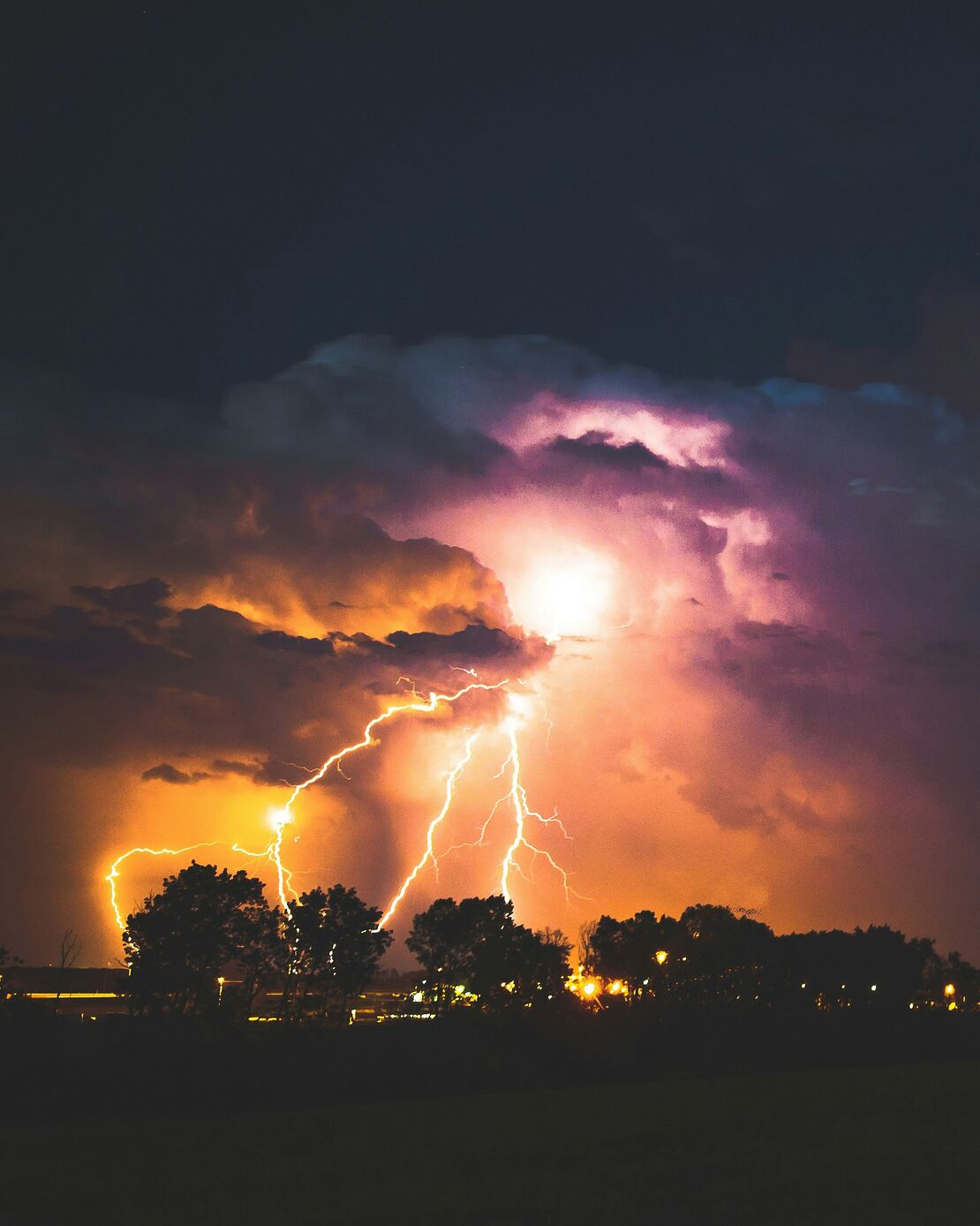
The phrase קוֹל יְהוָה appears seven times in this psalm (vv. 3a, 4ab, 5a, 7, 8a, 9a). The word קוֹל can refer to thunder (pl. קֹלֹות in Exod 9:23, 29, 33f; 19:16; 20:18; 1 Sam 12:17f; sg. קוֹל associated with "thunder" [רעם] in 1 Sam 7:10; Isa 29:6; Ps 18:14=2 Sam 22:14; Ps 77:19; 104:7; Job 37:4). In Ps 29, this association with thunder is made explicit; the first appearance of the phrase in v. 3a is followed by "the glorious God has thundered" (v. 3b). Other verses in the psalm allude to thunder (e.g., "lightning" in v. 7; deer giving birth in v. 9).
Effect
Structural: the use of קוֹל יְהוָה binds vv. 3-9 together as the body of the psalm, framed by an introduction (vv. 1-2) and conclusion (vv. 10-11).
Poetical: The seven-fold repetition of קוֹל יְהוָה (lit.: "the sound of YHWH" or "the voice of YHWH") sounds like seven peals of thunder booming throughout the psalm (cf. Rev 10:4).
Polemical: The Canaanite god Baal was associated with thunder. E.g., "Ba'lu emits his holy voice, Ba'lu makes the thunder roll over and over again. His [holy] voice [causes] the earth [to tremble], [at his thunder] the mountains shake with fear."[1] Another text associates Baal's lightning and thunder with the number seven: "Seven lightnings (he had), Eight storehouses of thunder were the shafts of (his) lightnings."[2] The seven thunders of YHWH in Ps. 29 demonstrate his superiority over Baal.[3]
Strength
If an emendation or revocalization is preferred, that emendation or revocalization will be marked in the Hebrew text of all the visuals.
| Emendations/Revocalizations legend | |
|---|---|
| *Emended text* | Emended text, text in which the consonants differ from the consonants of the Masoretic text, is indicated by blue asterisks on either side of the emendation. |
| *Revocalized text* | Revocalized text, text in which only the vowels differ from the vowels of the Masoretic text, is indicated by purple asterisks on either side of the revocalization. |

Feature
The body of the psalm (vv. 3-9) is framed by four lines on either side of it (vv. 1-2; vv. 10-11). In both vv. 1-2 and vv. 10-11, the name "YHWH" appears four times (once in each line), and the word "strength" (עֹז) appears once. In the first verse of the psalm (v. 1), the divine beings are summoned to "ascribe (lit.: 'give' יהב)... strength to YHWH." In the last verse of the psalm (v. 11), YHWH is said to "give (נתן) strength to his people." The psalm thus begins and ends with the giving of "strength."
Effect
The fact that the word "strength" frames the poem suggests that the poem is about "strength." Verses 3-9 may be summarized as a demonstration of YHWH's strength. The introduction and conclusion draw out the implications of YHWH's strength. Because YHWH is strong, all other gods ought to worship him (v. 1). And, because YHWH is strong, his people, who share in his strength, can rest secure (v. 11).
More and More
If an emendation or revocalization is preferred, that emendation or revocalization will be marked in the Hebrew text of all the visuals.
| Emendations/Revocalizations legend | |
|---|---|
| *Emended text* | Emended text, text in which the consonants differ from the consonants of the Masoretic text, is indicated by blue asterisks on either side of the emendation. |
| *Revocalized text* | Revocalized text, text in which only the vowels differ from the vowels of the Masoretic text, is indicated by purple asterisks on either side of the revocalization. |

Feature
Several verses in the psalm (vv. 1-2, 3, 5, 8, 10) exhibit a unique pattern called "staircase parallelism."[4] The pattern appears in its simplest form in vv. 3, 5, 8 – ABC//BCD. The first word of the a-line (ABC) is omitted in the b-line which adds a new word at the end of the line to compensate for the loss and expand the meaning of the verse (BCD). In vv. 1-2 and in v. 10, the pattern is slightly different and more complex. Outside of Ps 29, this this pattern is especially prominent in the Song of Deborah (Judges 5) and the Song of the Sea (Exod 15), as well as Ugaritic epics.[5]
Effect
The basic effect of this pattern is "to increase tension in the listener."[6]. In Ps 29, the pattern also has a structural effect. Each of the five strophes in the psalm opens with some form of this pattern (vv. 1, 3, 5, 8, 10). This is consistent with the fact that elsewhere this pattern appears at the beginning of poems or sections within a poem (e.g., Gen 49:22; Num 24:3; Judg 5:3, 12; Eccl 1:2).[7] The pattern may also be associated with a particular genre: that of the victory song (cf. Judges 5; Exodus 15). If so, then the pattern gives Ps 29 a triumphant feel. It may that Ps 29 functioned at one time as a victory song (cf. Story Behind of Psalm 29).
Repeated Roots
The repeated roots table is intended to identify the roots which are repeated in the psalm.
| Repeated Roots legend | |
|---|---|
| Divine name | The divine name is indicated by bold purple text. |
| Roots bounding a section | Roots bounding a section, appearing in the first and last verse of a section, are indicated by bold red text. |
 |
Roots occurring primarily in the first section are indicated in a yellow box. |
 |
Roots occurring primarily in the third section are indicated in a blue box. |
 |
Roots connected across sections are indicated by a vertical gray line connecting the roots. |
 |
Section boundaries are indicated by a horizontal black line across the chart. |
.jpg)
- There is a very high degree of lexical repetition in this psalm; 16 words/roots are repeated, and some of these are repeated more than once.
- The word קול ("voice") appears 7 times, each time as part of the phrase קול יהוה.
- Verses 3-9 are distinguished by the sevenfold use of קול; these verses are also bound (inclusio) by occurrences of the word כבוד in v. 3 and v. 9.
- The divine name (YHWH) appears 18 times.
- The name appears 10x within vv. 3-9 (distinguished by repetition of קול)
- The name appears 4x on either side of vv. 3-9; 4x in vv. 1-2 and 4x in vv. 10-11.
- The name appears in every verse except for v. 6.
- Much of the root repetition is short range and takes place in consecutive lines or verses
- יהב (vv. 1ab-2a)
- כבוד (vv. 1b-2a)
- מים (v. 3ac)
- שבר (v. 5ab)
- ארז (v. 5ab)
- לבנון (vv. 5b-6a)
- חיל (vv. 8ab-9a)
- מדבר (v. 9ab)
- ישב (v. 10ab)
- עם (v. 11ab)
- The psalm begins and ends (inclusio) with the giving (יהב / נתן) of עז ("strength") (vv. 1, 11). The divine beings are called to "give" (="ascribe") "strength" to YHWH who "gives" "strength" to his people.
- ↑ COS I:262-263.
- ↑ RS 24.245 lines 3b-4.
- ↑ See J. Day, “Echoes of Baal’s Seven Thunders and Lightnings in Psalm XXIX and Habakkuk III 9 and the Identity of the Seraphim in Isaiah VI,” VT 29, 1979.
- ↑ Watson 2001, 150-156.
- ↑ Cf. Albright 1950, 1-18. See also Ps 77:17; Hab 3.
- ↑ Watson 2001, 154
- ↑ Watson 2001, 154