Psalm 29 Semantics
The sound of YHWH
Psalm 29
About the Grammar & Semantics Layer
Semantics is the study of how language is used to represent meaning. The goal of semantic analysis for interpreting and translating the Bible is to understand the meaning of words and how they relate to each other in context. We want to understand what is implicit about word meaning – and thus assumed by the original audience – and make it explicit – and thus clear for us who are removed by time, language, and culture. The semantics layer is composed of three major branches: lexical semantics, phrase-level semantics and verbal semantics.
About the Grammar Layer
The grammar layer visually represents the grammar and syntax of each clause. It also displays alternative interpretations of the grammar. (For more information, click "Show/Hide Grammar Legend" below.)
| Visualization | Description |
|---|---|
 |
The clause is represented by a horizontal line with a vertical line crossing through it, separating the subject and the verb. |
 |
The object is indicated by a vertical line that does not cross the horizontal line of the clause. Infinitives and participles may also have objects. If the direct object marker (d.o.m.) is present in the text, it appears in the diagram immediately before the object. If the grammar includes a secondary object, the secondary object will appear after the object, separated by another vertical line that does not cross the horizontal line of the clause. |
 |
The subject complement follows the verb (often omitted in Hebrew) separated with a line leaning toward the right. It can be a noun, a whole prepositional phrase or an adjective. The later two appear modifying the complement slot. |
 |
When a noun further describes or renames the object, it is an object complement. The object complement follows the object separated by a line leaning toward the right. |
 |
In a construct chain, the noun in the absolute form modifies the noun in the construct form. |
 |
Participles are indicated in whatever position in the clause they are in with a curved line before the participle. Participles can occur as nominal, where they take the place of a noun, predicate, where they take the place of a verb, or attributive, where they modify a noun or a verb similar to adjectives or adverbs. |
 |
Infinitives are indicated by two parallel lines before the infinitive that cross the horizontal line. Infinitive constructs can appear as the verb in an embedded clause. Infinitive absolutes typically appear as an adverbial. |
 |
The subject of the infinitive often appears in construct to it. In this situation, the infinitive and subject are diagrammed as a construct chain. |
 |
The object of the infinitive is indicated by a vertical line that does not cross the horizontal line of the infinitival clause. |
 |
Modifiers are represented by a solid diagonal line from the word they modify. They can attach to verbs, adjectives, or nouns. If modifying a verb or adjective, it is an adverb, but if modifying a noun, it is an adjective, a quantifier, or a definite article. If an adverb is modifying a modifier, it is connected to the modifier by a small dashed horizontal line. |
 |
Adverbials are indicated by a dashed diagonal line extending to a horizontal line. These are nouns or infinitives that function adverbially (modifying either a verb or a participle), but are not connected by a preposition. |
 |
Prepositional phrases are indicated by a solid diagonal line extending to a horizontal line. The preposition is to the left of the diagonal line and the dependent of the preposition is on the horizontal line. They can modify verbs (adverbial) or nouns (adjectival). |
 |
Embedded clauses are indicated by a "stand" that looks like an upside-down Y. The stand rests in the grammatical position that the clause fulfills. Extending from the top of the stand is a horizontal line for the clause. If introduced by a complementizer, for example כִּי, the complementizer appears before the stand. Embedded clauses can stand in the place of any noun. |
 |
When clauses are joined by a conjunction, they are compound clauses. These clauses are connected by a vertical dotted line. The conjunction is placed next to the dotted line. |
 |
Within a clause, if two or more parts of speech are compound, these are represented by angled lines reaching to the two compound elements connected by a solid vertical line. If a conjunction is used, the conjunction appears to the left of the vertical line. Almost all parts of speech can be compound. |
 |
Subordinate clauses are indicated by a dashed line coming from the line dividing the subject from the predicate in the independent clause and leading to the horizontal line of the subordinate clause. The subordinating conjunction appears next to the dashed line. |
 |
Relative clauses also have a dashed line, but the line connects the antecedent to the horizontal line of the relative clause. The relative particle appears next to the dashed line. |
 |
Sentence fragments are represented by a horizontal line with no vertical lines. They are most frequently used in superscriptions to psalms. They are visually similar to discourse particles and vocatives, but most often consist of a noun phrase (that does not refer to a person or people group) or a prepositional phrase. |
 |
In the body of the psalm, a horizontal line by itself (with no modifiers or vertical lines) can indicate either a discourse particle or a vocative (if the word is a noun referring to a person or people group). A discourse particle is a conjunction or particle that functions at the discourse level, not at the grammatical level. Vocatives can appear either before or after the clause addressed to them, depending on the word order of the Hebrew. |
 |
Apposition is indicated by an equal sign equating the two noun phrases. This can occur with a noun in any function in a sentence. |
| Hebrew text colors | |
|---|---|
| Default preferred text | The default preferred reading is represented by a black line. The text of the MT is represented in bold black text. |
| Dispreferred reading | The dispreferred reading is an alternative interpretation of the grammar, represented by a pink line. The text of the MT is represented in bold pink text, while emendations and revocalizations retain their corresponding colors (see below). |
| Emended text | Emended text, text in which the consonants differ from the consonants of the Masoretic text, is represented by bold blue text, whether that reading is preferred or dispreferred. |
| Revocalized text | Revocalized text, text in which only the vowels differ from the vowels of the Masoretic text, is represented by bold purple text, whether that reading is preferred or dispreferred. |
| (Supplied elided element) | Any element that is elided in the Hebrew text is represented by bold gray text in parentheses. |
| ( ) | The position of a non-supplied elided element is represented by empty black parentheses. For example, this would be used in the place of the noun when an adjective functions substantivally or in the place of the antecedent when a relative clause has an implied antecedent. |
| Gloss text colors | |
|---|---|
| Gloss used in the CBC | The gloss used in the Close-but-Clear translation is represented by bold blue text. |
| Literal gloss >> derived meaning | A gloss that shows the more literal meaning as well as the derived figurative meaning is represented in blue text with arrows pointing towards the more figurative meaning. The gloss used in the CBC will be bolded. |
| Supplied elided element | The gloss for a supplied elided element is represented in bold gray text. |
About the Lexical Semantics Layer
One major branch of semantic study is lexical semantics, which refers to the study of word meanings. It examines semantic range (=possible meanings of a word), the relationship between words (e.g. synonymy, hyponymy), as well as the relationship between words and larger concepts (conceptual domains). One component of our approach involves not only the study of the Hebrew word meaning, but also of our own assumptions about word meaning in modern languages. Because the researcher necessarily starts with their own cultural assumptions (in our case, those of Western-trained scholars), this part of the analysis should be done afresh for every culture.
For a detailed description of our method, see the Lexical Semantics Creator Guidelines.
- See our growing collection of Venn Diagrams, not only for Psalm 29, but for all of the psalms.
- See SDBH on Psalm 29.
About the Phrase-Level Semantics Layer
The Phrase-level Semantics layer analyses the meaning of syntactic units which are larger than the level of the word and smaller than the level of the clause. Specifically, this layer analyses the meaning of prepositional phrases (e.g., לְאִישׁ), construct phrases (e.g., אִישׁ אֱלֹהִים), phrases formed by a coordinating waw conjunction (e.g., אִישׁ וְאִשָּׁה) and noun phrases which consist of a noun plus a determiner (e.g., הָאִישׁ) or a quantifier (e.g., כֹּל אִישׁ).
For a detailed description of our method, see the Phrase-level Semantics Creator Guidelines.
| Visualization | Description |
|---|---|
 |
The prepositional phrase is indicated by a solid green oval. |
 |
The construct chain is indicated by a solid yellow oval. |
 |
When the conjunction ו appears at the phrase-level (not clause-level), it is indicated by a solid light purple oval. |
 |
The article is indicated by a solid blue oval. |
About the Verbal Semantics Layer
This sub-layer focuses on the relationship between verbs, time and modality. These are important categories for interpretation and translation, and how one analyses a verb can have a significant effect on how it is rendered. This sub-layer has been through several iterations, as it strives to accomplish two things: (1) Transparency for the native Hebrew structures, and (2) Transparency for the interpretation necessary to translate the verbal semantics into other languages.
For a detailed description of our method, see the Verbal Semantics Creator Guidelines.
| Conjugations | |
|---|---|
| qatal | yiqtol-jussive |
| wayyiqtol (following qatal)* | cohortative |
| yiqtol | participle |
| wayyiqtol (following yiqtol)* | wayyiqtol (following participle)* |
| weyiqtol | inf. construct |
| weqatal | inf. absolute |
| *Wayyiqtol is colored a darker version of the conjugation it follows. | |
| Relative tense arrows | ||||
|---|---|---|---|---|
| Relative tense arrows (placed within the appropriate 'Fut/Pres/Past' column) are color coded according to the conjugation of the verb. The arrows in the table below are colored according to the typical uses of the conjugations. | ||||
| After/posterior/future | Imminent future | Simultaneous/right now | Recent past | Before/anterior/past |
| ← ← |
↤ | ↓↓↓ | ↦ | → → |
| Aspect | ||||
|---|---|---|---|---|
| Continuous | Habitual or iterative | Stative | Perfective | |
| Encoded in words | ⟲ | ⟲⟲⟲ | ⎯ | • |
| Inferable from context | ⟲ | ⟲⟲⟲ | ⎯ | • |
| Reference point movement | |
|---|---|
| Movement | No movement |
| ⇐ | ⇍ |
| Modality | |
|---|---|
| indicative | purpose/result |
| jussive | necessity |
| imperative | possible |
| cohortative | probable |
| wish | ability |
| (past) conditional | interrogative, etc. |
If an emendation or revocalization is preferred, that emendation or revocalization will be marked in the Hebrew text of all the visuals.
| Emendations/Revocalizations legend | |
|---|---|
| *Emended text* | Emended text, text in which the consonants differ from the consonants of the Masoretic text, is indicated by blue asterisks on either side of the emendation. |
| *Revocalized text* | Revocalized text, text in which only the vowels differ from the vowels of the Masoretic text, is indicated by purple asterisks on either side of the revocalization. |
Psalm 29 Verbal Semantics
For an overview of the Verbal Semantics of Psalm 29, click the expandable button below.
(Click diagram to enlarge)

Psalm 29 Semantic Analysis & Diagrams
The following grammatical diagrams are zoomable, and the lexical and phrasal overlays can be toggled on/off. Notes on the semantic layers can be found beneath each verse's diagram.
v. 1
| Hebrew | Verse | English |
|---|---|---|
| מִזְמ֗וֹר לְדָ֫וִ֥ד | v. 1a | A psalm by David. |
| הָב֣וּ לַֽ֭יהוָה בְּנֵ֣י אֵלִ֑ים | v. 1b | Ascribe [glory and strength] to YHWH, divine beings; |
| הָב֥וּ לַ֝יהוָ֗ה כָּב֥וֹד וָעֹֽז׃ | v. 1c | ascribe glory and strength to YHWH. |
Preferred
SimpleGrammar
DiscourseUnit [v. 1]
    Fragment
      Nominal
        noun: מִזְמוֹר psalm
    Fragment
      PrepositionalPhrase <gloss="by David">
        Preposition
          preposition: לְ of >> by
        Object
          noun: דָוִד David
    Fragment
      Clause
        Predicate
          verb: הָבוּ ascribe
          Adverbial
            PrepositionalPhrase
              Preposition
                preposition: לַ to
              Object
                noun: יהוָה YHWH
          Object <status="elided">
            noun: כָּבוֹד glory <status="elided">
            conjunction: וָ and <status="elided">
            noun: עֹז strength <status="elided">
    Fragment
      Vocative
        ConstructChain <gloss="divine beings">
          noun: בְּנֵי sons
          noun: אֵלִים divine beings
    Fragment
      Clause
        Predicate
          verb: הָבוּ ascribe
          Adverbial
            PrepositionalPhrase
              Preposition
                preposition: לַ to
              Object
                noun: יהוָה YHWH
          Object
            noun: כָּבוֹד glory
            conjunction: וָ and
            noun: עֹז strength
Notes
Note for v. 1
- The psalm opens by addressing divine beings (בְּנֵי אֵלִים).[1] If Psalm 29 is a victory song, then the "divine beings" might be the gods worshipped by the defeated enemy.[2] The victory of YHWH's people has demonstrated that YHWH is superior to their gods, and thus the psalmist summons these divine beings to acknowledge YHWH's superiority.[3]
- The psalmist summons the divine beings to Ascribe glory and strength to YHWH (הָב֥וּ לַ֝יהוָ֗ה כָּב֥וֹד וָעֹֽז), i.e., to acknowledge that YHWH is strong and glorious.[4] The NET helpfully translates the clause as, "Acknowledge the Lord's majesty and power."
v. 2
| Hebrew | Verse | English |
|---|---|---|
| הָב֣וּ לַֽ֭יהוָה כְּב֣וֹד שְׁמ֑וֹ | v. 2a | Ascribe to YHWH the glory that his name deserves; |
| הִשְׁתַּחֲו֥וּ לַ֝יהוָ֗ה בְּהַדְרַת־קֹֽדֶשׁ׃ | v. 2b | bow down to YHWH dressed in holy attire. |
Preferred
SimpleGrammar
DiscourseUnit [v. 2]
    Fragment
      Clause
        Predicate
          verb: הָבוּ ascribe
          Adverbial
            PrepositionalPhrase
              Preposition
                preposition: לַ to
              Object
                noun: יהוָה YHWH
          Object
            ConstructChain <gloss="the glory that his name deserves">
              noun: כְּבוֹד glory
              noun: שְׁמ name* >> reputation
              suffix-pronoun: וֹ him
    Fragment
      Clause
        Predicate
          verb: הִשְׁתַּחֲווּ bow down
          Adverbial
            PrepositionalPhrase
              Preposition
                preposition: לַ to
              Object
                noun: יהוָה YHWH
          Adverbial
            PrepositionalPhrase <gloss="(dressed) in holy attire">
              Preposition
                preposition: בְּ in
              Object
                ConstructChain
                  noun: הַדְרַת attire
                  noun: קֹדֶשׁ holiness
Notes
Note for v. 2
- The psalmist continues to summon the divine beings to worship YHWH, now calling on them to ascribe to YHWH the glory that his name deserves. The phrase "glory that his name deserves" (כְּבוֹד שְׁמוֹ) is, more literally, "the glory of his name," and it refers to "the glory due his name" (NIV, ESV; cf. NGÜ), i.e., the honor that his reputation deserves.[5]
- The final summons to the divine beings is to bow down to YHWH. The act of bowing down signified "submission or respect" (SDBH). "Prostration was quite common as an act of submission before a superior."[6]
- The meaning of the phrase translated dressed in holy attire (בְּהַדְרַת־קֹדֶשׁ) is disputed. A number of translations have "splendor/majesty of [his] holiness."[7] Hossfeld argues for this view by pointing out that (1) vv. 1-2 are focused on YHWH's attributes, and (2) the following verse (v. 4b) uses the related word הדר with reference to YHWH's majesty.[8] However, if the reference in v. 2 were to YHWH's splendor or to YHWH's holiness, then we might have expected a pronominal suffix (e.g., בְּהַדְרַת קֹדְשׁוֹ — "in the splendor of his holiness"), as indeed some translations feel the need to supply.[9] It is more likely that the phrase הַדְרַת־קֹדֶשׁ refers to "holy attire/array/adornment",[10] so that, as Briggs, writes, "the angels are conceived after the manner of ministering priests in the earthly temple as clothed in sacred vestments."[11] This view best accounts for the usage of הַדְרַת throughout the Bible.[12]
v. 3
| Hebrew | Verse | English |
|---|---|---|
| ק֥וֹל יְהוָ֗ה עַל־הַ֫מָּ֥יִם | v. 3a | The sound of YHWH against the water! |
| אֵֽל־הַכָּב֥וֹד הִרְעִ֑ים | v. 3b | The glorious God has thundered; |
| יְ֝הוָ֗ה עַל־מַ֥יִם רַבִּֽים׃ | v. 3c | YHWH [has thundered] against much water. |
Preferred
SimpleGrammar
DiscourseUnit [v. 3]
    Fragment
      Nominal
        ConstructChain
          noun: קוֹל sound
          Nominal
            noun: יְהוָה YHWH
            Adjectival
              PrepositionalPhrase
                Preposition
                  preposition: עַל against
                Object
                  Nominal
                    article: הַ the
                    noun: מָּיִם water
    Fragment
      Clause
        Subject
          ConstructChain <gloss="the glorious God">
            noun: אֵל God
            Nominal
              article: הַ the
              noun: כָּבוֹד glory
        Predicate
          verb: הִרְעִים has thundered
    Fragment
      Clause
        Subject
          noun: יְהוָה YHWH
        Predicate
          verb: הִרְעִים has thundered <status="elided">
          Adverbial
            PrepositionalPhrase
              Preposition
                preposition: עַל against
              Object
                noun: מַיִם water
                adjective: רַבִּים much
Notes
Note for v. 3
- Most translations render this as a verbless clause: "the voice of YHWH is over the waters." However, "the word קול followed by a genitive, is quite often used as an exclamatory particle: the sound of... !"[13] See The Syntactic Function of קוֹל יְהוָה in Psalm 29.
Note for v. 3
- The phrase the sound of YHWH (קוֹל יְהוָה) occurs seven times in Ps 29.[14] Most English translations say "the voice of YHWH" (cf. NIV, NLT, ESV, etc.), and they understand "the voice" to be the subject of each of the clauses in which it occurs. It is more likely, however, that each occurrence of the phrase קוֹל יְהוָה is a sentence fragment, referring to the sound which YHWH makes as he thunders, breaks cedars, etc. See The Syntactic Function of קוֹל יְהוָה in Ps 29 for a detailed discussion of the issue. In short, interpreting קוֹל יְהוָה as a sentence fragment throughout the psalm makes the best sense of the grammar.[15] Furthermore, the view that קוֹל יְהוָה is an exclamation is how the ancient translations (e.g., LXX) understood the grammar. Finally, the view that קוֹל יְהוָה is an exclamation in vv. 3-7 makes better sense semantically than if it were the subject. What would it mean for YHWH's voice to break cedars or to hew stone? It is better to see these as activities of YHWH himself.
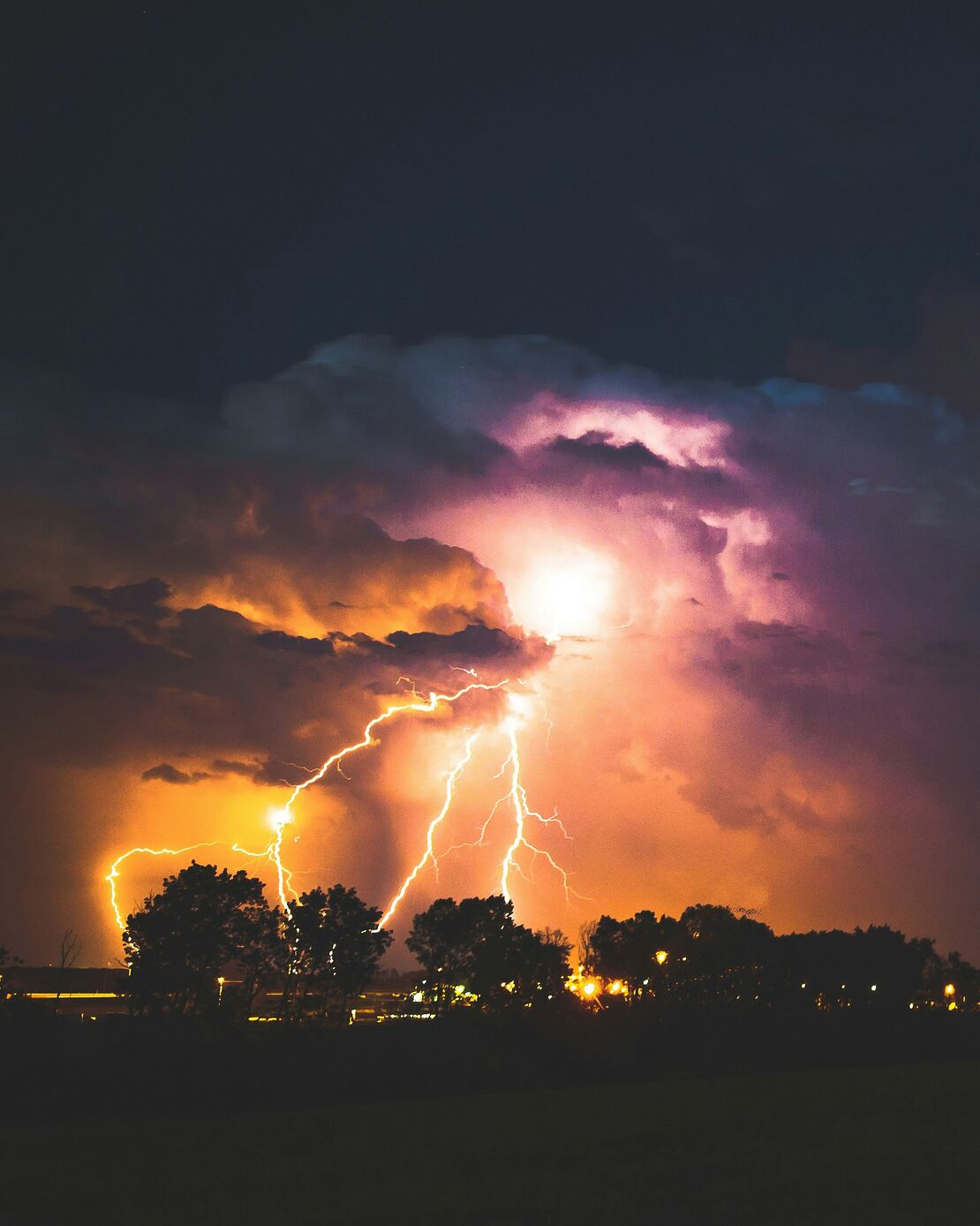
- The word sound (קוֹל) can also refer to thunder.[16] In v. 3b, the association with thunder is brought out clearly: "the glorious God has thundered" (v. 3b). Other verses in the psalm allude to thunder (e.g., "lightning" in v. 7; deer giving birth in v. 9). This word play with קוֹל has a powerful poetic effect. The seven-fold repetition of קוֹל יְהוָה sounds like seven peals of thunder booming throughout the psalm (cf. Rev 10:4). The word play also has a polemical effect. The Canaanite god Baal was associated with thunder.[17] The seven thunders of YHWH in Ps 29 demonstrate his superiority over Baal.[18]
- "The sound of YHWH" is first heard against the water (עַל הַמָּיִם). Many English translation understand the preposition עַל as indicating the location of YHWH's voice, e.g., "over the waters" (NIV) or "above the sea" (NLT). But the only other use of the phrase הִרְעִים עַל (1 Sam 7:10) refers to YHWH's thundering against his enemies.[19]
- What does the water (הַמָּיִם) in v. 3 refer to? Scholars have proposed several options, including (1) the heavenly ocean[20], the Mediterranean Sea,[21] the waters gathered together in storm clouds,[22] and the waters of the (Noahic) Flood. Kraus is probably correct to suggest that "the reference is certainly to the מַבּוּל ['flood'] mentioned in v. 10."[23] Thus, the psalmist appears to be comparing YHWH's defeat of his enemies to the time when YHWH overcame the water of the ancient flood, thundering against it and making it return its proper place.[24]
- The third line of v. 3 also refers to water of the flood, using the phrase much water (מַיִם רַבִּים). The phrase has overtones of chaos and conflict. As one scholar writes, "an analysis of certain passages in which the expression 'many waters' occurs [e.g., Hab 3:15; Ps 77:17-20] will demonstrate how the writers use it to indicate the cosmic insurgent elements which may be manifest as the enemies of Yahweh, as the enemies of Israel, or as the enemy afflicting the faithful individual. And whether in the past, present, or future, the struggle is essentially one, the battle of God against the waters which threaten his rule. And after the conflict he sits enthroned above the waters."[25]
Note for v. 3
- For the verb translated has thundered (הִרְעִים), most modern translations use a present tense form: "thunders."[26] However, as Hossfeld writes, "word order and verb conjugation [x + qatal] demand a perfect: the God of glory has thundered."[27] It may be either a simple past ("he thundered") or a present perfect ("he has thundered").
v. 4
| Hebrew | Verse | English |
|---|---|---|
| קוֹל־יְהוָ֥ה בַּכֹּ֑חַ | v. 4a | The sound of YHWH [thundering] in power! |
| ק֥וֹל יְ֝הוָ֗ה בֶּהָדָֽר׃ | v. 4b | The sound of YHWH [thundering] in majesty! |
Preferred
SimpleGrammar
DiscourseUnit [v. 4]
    Fragment
      Nominal
        ConstructChain
          noun: קוֹל sound
          Nominal
            noun: יְהוָה YHWH
            Adjectival
              verb-participle: מרעים thundering <status="elided">
              Adverbial
                PrepositionalPhrase <gloss="in power">
                  Preposition
                    preposition: בַּ in
                  Object
                    article: הַ the <status="elided">
                    noun: כֹּחַ power
    Fragment
      Nominal
        ConstructChain
          noun: קוֹל sound
          Nominal
            noun: יְהוָה YHWH
            Adjectival
              verb-participle: מרעים thundering <status="elided">
              Adverbial
                PrepositionalPhrase <gloss="in majesty">
                  Preposition
                    preposition: בֶּ in
                  Object
                    article: הַ the <status="elided">
                    noun: הָדָר majesty
Notes
Note for v. 4
- As in the previous verse, most translations render these as verbless clauses: "the voice of YHWH is in/with power..." (= "the voice of YHWH is powerful").[28] However, as in the previous, the expression קול יהוה is probably an exclamation. See The Syntactic Function of קוֹל יְהוָה in Psalm 29.
Note for v. 4
- Most modern translations understand the phrase קוֹל־יְהוָה as the subject of this clause, e.g., NIV: "The voice of the LORD is powerful; the voice of the LORD is majestic."[29] As in the previous clause, however, the phrase is more likely a sentence fragment: "The sound of YHWH in power!" >> "[I hear] the sound of YHWH [thundering] in power!" See The Syntactic Function of קוֹל יְהוָה in Ps 29.
- The words power and majesty are definite, because the definite article is sometimes used "with nouns denoting abstract ideas, esp. the names of moral qualities."[30]
vv. 5-6
| Hebrew | Verse | English |
|---|---|---|
| ק֣וֹל יְ֭הוָה שֹׁבֵ֣ר אֲרָזִ֑ים | v. 5a | The sound of YHWH breaking cedars! |
| וַיְשַׁבֵּ֥ר יְ֝הוָ֗ה אֶת־אַרְזֵ֥י הַלְּבָנֽוֹן׃ | v. 5b | And YHWH is breaking the cedars of Lebanon, |
| וַיַּרְקִידֵ֥ם כְּמוֹ־עֵ֑גֶל לְבָנ֥וֹן | v. 6a | And he is causing Lebanon to skip like a calf, |
| וְ֝שִׂרְיֹ֗ן כְּמ֣וֹ בֶן־רְאֵמִֽים׃ | v. 6b | And Sirion like a wild ox. |
Preferred
SimpleGrammar
DiscourseUnit [vv. 5-6]
  Fragment
    ConstructChain
      noun: קוֹל sound
      Nominal
        noun: יְהוָה YHWH
        Adjectival
          Clause
            Predicate
              verb-participle: שֹׁבֵר breaking
              Object
                noun: אֲרָזִים cedars
  Fragment
    particle: וַ and
  Fragment
    ClauseCluster
        Clause
          Subject
            noun: יְהוָה YHWH
          Predicate
            verb: יְשַׁבֵּר is breaking
            Object
              ConstructChain <gloss="the cedars which are in Lebanon">
                Nominal
                  particle: אֶת d.o.m.
                  noun: אַרְזֵי cedars
                Nominal
                  article: הַ the
                  noun: לְּבָנוֹן Lebanon
        Conjunction
          conjunction: וַ and
        Clause
          Predicate
            verb: יַּרְקִידֵם is causing to skip
            Adverbial
              PrepositionalPhrase <gloss="like a calf">
                Preposition
                  preposition: כְּמוֹ like
                Object
                  noun: עֵגֶל (male) calf
            Object
              noun: לְבָנוֹן Lebanon
        Conjunction
          conjunction: וְ and
        Clause
          Predicate
            verb: יַּרְקִידֵם is causing to skip <status="elided">
            Adverbial
              PrepositionalPhrase <gloss="like a wild ox">
                Preposition
                  preposition: כְּמוֹ like
                Object
                  ConstructChain
                    noun: בֶן child
                    noun: רְאֵמִים wild oxen
            Object
              noun: שִׂרְיֹן Sirion
Notes
Note for vv. 5-6
- The suffix on וַיַּרְקִידֵ֥ם (Ps 29:6a) has been interpreted in the following ways:
- See The Grammar of Psalm 29:6 for a full discussion of the grammar of this verse.
Note for vv. 5-6
- Lebanon is a "range of mountains; north of Israel; known for the cedar and other trees growing there" (SDBH). The cedars of Lebanon are a symbol of loftiness and grandeur,[33] and were used for important building projects. Solomon harvested cedar from Lebanon to build YHWH's temple. Similarly, according to Ugaritic myth, Ba'al's palace was built from the cedars of Lebanon and Sirion: "[Hurriedly] they build his house, [hurriedly] they raise his palace. (Some workers) [go] to Lebanon and its trees, to Siryon (and) its choicest cedars; [They X] Lebanon and its trees, Siryion (and) its choicest cedars" (COS I, 261). The mention of cedars in v. 5 together with the mention of hewing stone in v. 7 suggest that YHWH is gathering materials to build a temple.
- Lebanon was also known as a place where divine beings live. [34]
- Sirion is the Phoenician name for Mt. Hermon (Deut 3:9), which is "part of the Anti-Lebanon range; located north-east of Israel" (SDBH). Sirion, or Mt. Hermon, is also strongly associated with the divine realm. [35]
Note for vv. 5-6
- Like a wild ox. "A member of the class of wild oxen" >> "a wild ox" (NIV, NLT, ESV, CEV, NEB), specifically, bos primigenius.[36] According to David Mitchell, "the aurochs is now extinct. The last European aurochs died as late as 1627, in Poland. But its brothers in the Levant died out more than 2,000 years before, due to human competition for pasture-lands. Yet, to those who knew it, when it moved freely throughout North Africa, Europe, and West Asia, the aurochs was a truly fearsome beast. Their skeletons have been found standing two metres tall at the shoulder, with the tips of the great black horns rising three metres from the ground. Julius Caesar wrote of the arochsen of the Black Forest: 'They are only a little smaller than elephants, and have the appearance, colour, and shape of a bull. Their strength is very great, and also their speed. They spare neither man nor beast that they see. They cannot be brought to endure the sight of men, nor be tamed, even when taken young. The size, shape, and appearance of their horns differ much from the horns of our oxen' (Gallic War, VI.28)"[37]
v. 7
| Hebrew | Verse | English |
|---|---|---|
| קוֹל־יְהוָ֥ה חֹצֵ֗ב לַהֲב֥וֹת אֵֽשׁ׃ | v. 7 | The sound of YHWH hewing with lightning bolts! |
Preferred
SimpleGrammar
DiscourseUnit [v. 7]
    Fragment
      Nominal <gloss="the sound of YHWH">
        ConstructChain
          noun: קוֹל sound
          Nominal
            noun: יְהוָה YHWH
            Adverbial
              Clause
                Predicate
                  verb-participle: חֹצֵב hewing
                  Adverbial
                    ConstructChain <gloss="hewing with lightning bolts">
                      noun: לַהֲבוֹת flames
                      noun: אֵשׁ fire
Notes
Note for v. 7
- The meaning of v. 7 is disputed. See The Grammar and Meaning of Psalm 29:7 for a detailed discussion of the issues involved. In short, the verb translated as hewing probably refers to the act of mining stone from a mountain, not to "dividing" (KJV) or "striking" (NIV, NLT, NET) or "flashing forth" (ESV).[38]
- If the verb "hewing" is interpreted in this way, then the phrase translated as lightning bolts (לַהֲבוֹת אֵשׁ), lit. "flames of fire," which most interpret as a reference to "lightning bolts,"[39] is probably the instrument which YHWH uses to hew. Whereas human miners use man-made tools for hewing in the mountains, YHWH hews with lightning bolts.
Note for v. 7
- The meaning of v. 7 is disputed. See The Grammar and Meaning of Psalm 29:7 for a detailed discussion of the issues involved. In short, the verb translated as hewing probably refers to the act of mining stone from a mountain, not to "dividing" (KJV) or "striking" (NIV, NLT, NET) or "flashing forth" (ESV).[40]
- If the verb "hewing" is interpreted in this way, then the phrase translated as lightning bolts (לַהֲבוֹת אֵשׁ), lit. "flames of fire," which most interpret as a reference to "lightning bolts,"[41] is probably the instrument which YHWH uses to hew. Whereas human miners use man-made tools for hewing in the mountains, YHWH hews with lightning bolts.
Note for v. 7
- With lightning bolts. In Ps 29:7, the verb חצב is followed by the phrase לַהֲב֥וֹת אֵֽשׁ, which most interpret as a reference to lightning.[42] It is not clear whether this phrase constitutes the patient or the instrument of the action. The fact that "the accusative never denotes the instrument" may suggest that לַהֲבוֹת אֵשׁ functions as the grammatical object of the verb.[43] However, this is semantically difficult: what does it mean for YHWH to "hew" lightning bolts?[44] If חצב is interpreted according to its usual sense, then לַהֲבוֹת אֵשׁ is probably the instrument rather than the patient, since it is easier to conceive (especially in the context of this psalm) of "lightning bolts" as sharp and potentially deadly instruments for hewing (cf. Isa 10:15 [a pick-axe]; Hos 6:5 [as a deadly weapon]) than as the products of hewing. Psalm 18:14-15 depicts YHWH's lightning bolts as arrows, and the god Baal is depicted in Ugaritic texts and images as wielding lightning as a weapon.[45] The noun להבה ("flame") can even refer to the head of a spear (1 Sam 17:7). To be sure, the beth preposition might have been expected in this case (cf. Isa 10:15; Hos 6:5). However, adverbial accusatives are common in Hebrew and in the Psalms, and Dahood suggests that the absence of a beth "may have been prompted by the fact that ḥōṣēb ends in b."[46] The image in Ps 29:7, therefore, is that of YHWH's thunderous voice blasting craters in the mountain rock with lightning bolts. Whereas human miners use man-made tools for hewing in the mountains, YHWH hews with "flames of fire." See also notes under lexical.
v. 8
| Hebrew | Verse | English |
|---|---|---|
| ק֣וֹל יְ֭הוָה יָחִ֣יל מִדְבָּ֑ר | v. 8a | YHWH’s voice causes the wilderness to tremble; |
| יָחִ֥יל יְ֝הוָ֗ה מִדְבַּ֥ר קָדֵֽשׁ׃ | v. 8b | YHWH causes the wilderness of Kadesh to tremble. |
Preferred
SimpleGrammar
DiscourseUnit [v. 8]
    Fragment
      Clause
        Subject
          ConstructChain
            noun: קוֹל voice
            noun: יְהוָה YHWH
        Predicate
          verb: יָחִיל causes to tremble
          Object
            noun: מִדְבָּר wilderness
    Fragment
      Clause
        Subject
          noun: יְהוָה YHWH
        Predicate
          verb: יָחִיל causes to tremble
          Object
            ConstructChain <gloss="the wilderness of Kadesh">
              noun: מִדְבַּר wilderness
              noun: קָדֵשׁ Kadesh
Notes
Note for v. 8
- The wilderness of Kadesh (מִדְבַּר קָדֵשׁ): According to the MT vocalization (Qadesh; cf. LXX: Καδης) קדש is a proper noun, and מדבר קדש is probably the name of a place. The two main options for identifying this place are: (Option 1) Kadesh Barnea in the south, on the northern part of the Sinai peninsula (SDBH, DCH), or (Option 2) a place somewhere north of Israel, "in the environs of Lebanon and Anti-Libanus, perhaps near Kadesh on the Orontes."[47] Several considerations favor understanding Kadesh as an area north of Israel (option 2), especially the fact that the other places mentioned in the psalm (Lebanon and Sirion, vv. 5-6) are located north of Israel.[48] The name "Kadesh" (קדש), which is related to the word for "holy" or "sacred" (קָדֹשׁ) may imply that the place was especially associated with divine beings and divine activity (see notes under vv. 5-6 about Lebanon and Sirion).
v. 9
| Hebrew | Verse | English |
|---|---|---|
| ק֤וֹל יְהוָ֨ה׀יְחוֹלֵ֣ל אַיָּלוֹת֮ | v. 9a | YHWH’s voice causes fallow deer to give birth, |
| וַֽיֶּחֱשֹׂ֪ף יְעָ֫ר֥וֹת | v. 9b | and it strips forests, |
| וּבְהֵיכָל֑וֹ כֻּ֝לּ֗וֹ אֹמֵ֥ר כָּבֽוֹד׃ | v. 9c | and in his temple everyone is saying, "Glory!" |
Preferred
SimpleGrammar
DiscourseUnit [v. 9]
    Fragment
      ClauseCluster
        Clause
          Subject
            ConstructChain
              noun: קוֹל voice
              noun: יְהוָה YHWH
          Predicate
            verb: יְחוֹלֵל causes to give birth
            Object
              noun: אַיָּלוֹת (female) fallow deer
        Conjunction
          conjunction: וַ and
        Clause
          Predicate
            verb: יֶּחֱשֹׂף strips
            Object
              noun: יְעָרוֹת forests
        Conjunction
          conjunction: וּ and
        Clause
          Subject
            ConstructChain <gloss="everyone">
              noun: כֻּלּ all
              suffix-pronoun: וֹ it
          Predicate
            verb-participle: אֹמֵר is saying
            Adverbial
              PrepositionalPhrase <gloss="in his temple">
                Preposition
                  preposition: בְ in
                Object
                  ConstructChain
                    noun: הֵיכָל temple
                    suffix-pronoun: וֹ him
            Object
              noun: כָּבוֹד glory
Notes
Note for v. 9
- The temple in v. 9c is probably YHWH's heavenly temple, since the psalm is addressed to divine beings who have already been summoned in vv. 1-2 to worship YHWH like priests in a temple (cf. Targum: "in his sanctuary on high..."). The phrase in his temple is fronted, probably to mark the shift in scene from the forest (v. 9ab) to YHWH's temple (v. 9c).
Note for v. 9
- There is a textual issue in v. 9ab that affects the meaning of the verse. Instead of deer giving birth (v. 9a), many translations mention oak trees whirling[49] And instead of forests being stripped of their leaves (v. 9b), some translations mention mountain goats giving birth (cf. NEB, ELB). For a detailed discussion of the issues, see The Text and Meaning of Psalm 29:9. In short, we conclude, with many translations, that the first line refers to deer giving birth and the second line refers to forests being stripped.[50] The reference to "fallow deer" (rather than "oaks") is strongly supported by ancient tradition and the parallel passage in Job 39:1.[51] The interpretation of v. 9b is more difficult, though the traditional interpretation of the word as "forests" seems the most likely. The translation "forests" is well supported among the ancient translations, and the verb phrase "strip bare a forest" finds a parallel in Joel 1:7 (stripping bear a fig tree).[52]
Note for v. 9
- The word translated everyone (כֻּלּוֹ) has a pronominal suffix (lit.: "all of it") whose antecedent is not immediately clear. Since כֻּלּוֹ follows the phrase "in his temple," the pronominal suffix probably refers to "each of the beings there" [i.e. in his temple].[53]
Note for v. 9
- There is a textual issue in v. 9ab that affects the meaning of the verse. Instead of deer giving birth (v. 9a), many translations mention oak trees whirling[54] And instead of forests being stripped of their leaves (v. 9b), some translations mention mountain goats giving birth (cf. NEB, ELB). For a detailed discussion of the issues, see The Text and Meaning of Psalm 29:9. In short, we conclude, with many translations, that the first line refers to deer giving birth and the second line refers to forests being stripped.[55] The reference to "fallow deer" (rather than "oaks") is strongly supported by ancient tradition and the parallel passage in Job 39:1.[56] The interpretation of v. 9b is more difficult, though the traditional interpretation of the word as "forests" seems the most likely. The translation "forests" is well supported among the ancient translations, and the verb phrase "strip bare a forest" finds a parallel in Joel 1:7 (stripping bear a fig tree).[57]
v. 10
| Hebrew | Verse | English |
|---|---|---|
| יְ֭הוָה לַמַּבּ֣וּל יָשָׁ֑ב | v. 10a | YHWH sat enthroned over the Flood, |
| וַיֵּ֥שֶׁב יְ֝הוָ֗ה מֶ֣לֶךְ לְעוֹלָֽם׃ | v. 10b | and YHWH sits enthroned as king forever. |
Preferred
SimpleGrammar
DiscourseUnit [v. 10]
    Fragment
      ClauseCluster
        Clause
          Subject
            noun: יְהוָה YHWH
          Predicate
            verb: יָשָׁב sat enthroned
            Adverbial
              PrepositionalPhrase
                Preposition
                  preposition: לַ over
                Object
                  article: ה the <status="elided">
                  noun: מַּבּוּל Flood
        Conjunction
          conjunction: וַ and
        Clause
          Subject
            noun: יְהוָה YHWH
          Predicate
            verb: יֵּשֶׁב is enthroned
            Adverbial
              PrepositionalPhrase
                Preposition
                  preposition: לְ for
                Object
                  noun: עוֹלָם forever
            Adverbial <gloss="as king">
              noun: מֶלֶךְ king
Notes
Note for v. 10
- The word flood (מַבּוּל) occurs 13 times in the Bible: once in Ps 29 and 12 times in Genesis 6-10 where it refers to the Noahic flood. It appears, therefore, that the word is "a technical term reserved for the watery catastrophe which God brought on the earth during the days of Noah."[58] This also explains why the word "flood" is definite in Ps 29:10. Other interpreters, however, think that this word here refers not to the Noahic flood, but to the "water above the firmament,"[59] but this view does not adequately account for the predominate usage of this unique word in biblical Hebrew to refer to the Noahic flood.
Note for v. 10
- The preposition translated over (לַ) in the phrase "over the flood" (לַמַּבּוּל) is disputed,[60] but it probably indicates YHWH's position "over the flood."[61], which means that he is the "king of the flood" (CEV), the one who "rules over the deep waters" (GNT).[62] YHWH's mastery over the flood described in this verse parallels the description in v. 3 ("YHWH thunders against the waters"). A number of other passages describe YHWH's mastery over the waters.[63]
Note for v. 10
- The verb translated sat enthroned (יָשָׁב), a qatal verb, is probably past-tense.[64] The past-tense verb in v. 10 contrasts with the present tense throughout vv. 3-9. Whereas vv. 3-9 describe the flood from the perspective of someone who is there and watching the events unfold (imperfective aspect), v. 10 represents a return to the present time and describes the flood from the perspective of its having been completed (perfective aspect): "YHWH sat enthroned over the flood."
- The verb and... sits enthroned (וַיֵּשֶׁב) is a wayyiqtol verb that continues the semantics of the previous clause. The added prepositional phrase forever draws out the eternal significance of the past action. GKC notes this verse as an example where wayyiqtol follows a present perfect to indicate the continuation of the effect of the action: "he sat down, and has been enthroned ever since."[65]
v. 11
| Hebrew | Verse | English |
|---|---|---|
| יְֽהוָ֗ה עֹ֭ז לְעַמּ֣וֹ יִתֵּ֑ן | v. 11a | YHWH gives strength to his people; |
| יְהוָ֓ה׀יְבָרֵ֖ךְ אֶת־עַמּ֣וֹ בַשָּׁלֽוֹם׃ | v. 11b | YHWH blesses his people with peace. |
Preferred
SimpleGrammar
DiscourseUnit [v. 11]
    Fragment
      Clause
        Subject
          noun: יְהוָה YHWH
        Predicate
          verb: יִתֵּן gives
          Adverbial
            PrepositionalPhrase
              Preposition
                preposition: לְ to
              Object
                ConstructChain <gloss="his people">
                  noun: עַמּ people
                  suffix-pronoun: וֹ him
          Object
            noun: עֹז strength
    Fragment
      Clause
        Subject
          noun: יְהוָה YHWH
        Predicate
          verb: יְבָרֵךְ blesses
          Adverbial
            PrepositionalPhrase
              Preposition
                preposition: בַ with
              Object
                article: ה the <status="elided">
                noun: שָּׁלוֹם peace
          Object
            particle: אֶת d.o.m.
            ConstructChain <gloss="his people">
              noun: עַמּ people
              suffix-pronoun: וֹ him
Notes
<ul><li>"!IncludeInVxV" contains a listed "!" character as part of the property label and has therefore been classified as invalid.</li> <!--br--><li>The part "]]" of the query was not understood.Results might not be as expected.</li></ul>
- ↑ The phrase בְּנֵי אֵלִים occurs also in Ps 89:7. Cf. the more common Hebrew phrase בְּנֵי אֱלֹהִים (Gen 6:2, 4; Job 1:6; 2:1; 38:7) and the Aramaic phrase בַר אֱלָהִין (Dan 3:25). All of these phrases refer to divine beings. Cf. the phrase "the assembly of the sons of the gods" in the Ugaritic Ba'lu Myth (COS I, 258). YHWH's heavenly court consists of lesser divine beings (cf. 1 Kgs 22:19; Job 1:6; 2:1; 38:7; Pss 82; 89:6-7).
- ↑ Craigie argues convincingly, on the basis of the similarities between Psalm 29 and Exodus 15 as well as the use of storm imagery in connection with warfare, that "Ps 29 reflects a particular stage in the development of the Hebrew tradition of victory hymns... it is a general victory hymn, though it was probably devised for use in the specific celebrations of victories over Canaanite enemies (as implied by the Canaanite allusions). The initial setting for its use would have been in a victory celebration undertaken on the return of the army from battle of military campaign" (Craigie 2004, 246).
- ↑ "In many of these [ancient] societies, including that of ancient Israel, wars were divinely orchestrated, with the chief deity of each culture being an active participant in battle" (Schwartz 2018, 512).
- ↑ Cf. Deut 32:3; Pss 96:7-8 = 1 Chr 16:28-29.
- ↑ Cf. Olshausen 1853, 142 Cf. Pss 66:2; 96:8 = 1 Chr 16:29; cf. Ps 79:9.
- ↑ TDOT I, 619.
- ↑ NIV, NLT, ESV, NEB, NJB; cf. HFA, ELB, EÜ, ZÜR; NRSV ["holy splendor"]; cf. Aquila: εν διαπρεπεια ηγιασμενη; Symmachus: εν ευπρεπεια αγια; Quinta: εν ευπρεπεια αγιου; SDBH; Radak; cf. Prov 14:28.
- ↑ Hossfeld and Zenger 1993, 183. Similarly, Kidner argues that the use of the phrase in 2 Chron 20:21 supports reading Ps 29:2b as "worship the Lord for the splendour of (his) holiness" (Kidner 1973, 125-126).
- ↑ E.g., NIV, NLT; so both Hossfeld and Kidner in parentheses; cf. LXX, Syriac.
- ↑ BDB, DCH, HALOT; Jerome [en decore sancto]; NET, REB, RSV, LUT, NGÜ; so Hupfeld 1855, 171; Perowne 1870, 264; Delitzsch 1883, 447; Briggs 1906, 252; Craigie 2004, 242-3.
- ↑ Briggs 1906, 252.
- ↑ The noun הדרה occurs only five times, always in construct (הַדְרַת): הַדְרַת־קֹדֶשׁ (Pss 29:2; 96:9 = 1 Chr 16:29; 2 Chr 20:21); הַדְרַת־מֶלֶךְ (Prov 14:28). See DCH for an analysis of these phrases. Also, the related verb (הדר) can mean "to adorn" (cf. Isa 63:1 הָדוּר בִּלְבוּשׁוֹ). A third interpretation of the phrase is also possible. Following the suggestion by F. M. Cross (1950, 21) based on an Ugaritic parallel, some translations have "when he appears in his holiness" (e.g., GNB; cf. Dahood), but the evidence for this interpretation is dubious (see Craigie 2004, 242-3).
- ↑ JM §162e. E.g., 1 Kgs 18:41; Ct 2:8; 5:2; Isa 66:6.
- ↑ The fact that the phrase "YHWH's voice" is repeated seven times (vv. 3-9) may be significant in light of Baal's "seven lightnings" (RS 24.245, 3b-4) (see Day 1979).
- ↑ "The word קול, 'voice', 'sound' followed by a genitive, is quite often used as an exclamatory particle: the sound of ..!" (JM §162e). See the examples cited in JM §162e, GKC §146b, and IBHS §40.23. Although the grammars exclude Ps 29 from these examples, there is no basis for this exclusion. The instances of קוֹל יְהוָה in Ps 29 fit the profile for this usage. In vv. 3-7, the phrase קוֹל יְהוָה is followed either by participles (vv. 5a, 7) or by prepositional phrases (vv. 3-4), not by finite verbs. This is typical of קוֹל + genitive functioning as an exclamation (e.g., Gen 4:10; Isa 13:4; Isa 66:6; Song 5:2; etc.). By contrast, taking קוֹל יְהוָה as the subject involves grammatical difficulties (e.g., the prepositional phrases in v. 4ab and the apparently anachronistic use of the participle with present progressive semantics in vv. 5a, 7a).
- ↑ Cf. plural קֹלֹות in Exod 9:23, 29, 33f; 19:16; 20:18; 1 Sam 12:17f; sg. קוֹל associated with "thunder" [רעם] in 1 Sam 7:10; Isa 29:6; Ps 18:14=2 Sam 22:14; Ps 77:19; 104:7; Job 37:4.
- ↑ E.g., "Ba'lu emits his holy voice, Ba'lu makes the thunder roll over and over again. His [holy] voice [causes] the earth [to tremble], [at his thunder] the mountains shake with fear" (COS I, 262-263). Another text associates Baal's lightning and thunder with the number seven: "Seven lightnings (he had), Eight storehouses of thunder were the shafts of (his) lightnings" (RS 24.245 lines 3b-4).
- ↑ Cf. Day 1979.
- ↑ 1 Sam 7:10—וַיַּרְעֵ֣ם יְהוָ֣ה׀ בְּקֹול־גָּ֠דֹול בַּיֹּ֨ום הַה֤וּא עַל־פְּלִשְׁתִּים֙ וַיְהֻמֵּ֔ם. Cf. Eaton: "V. 3 refers to the thunderous word of God against (not upon) the rebellious waters" (1967, 90).
- ↑ Cf. Gen 1:7; Ps 148:4.
- ↑ Cf. Baethgen 1904; Briggs 1906, 252. As Dahood argues, "The Mediterranean is probably meant, since in its present form the poem describes a storm moving in from the west." In Ps 107:23, the phrase "many waters" refer to the sea.
- ↑ Cf. Pss 18:2; 104:3; cf. BDB, Hupfeld 1855, 172, Delitzsch 1883, 448-9.
- ↑ Kraus 1988, 349.
- ↑ Cf. Pss 104:7; 114.
- ↑ May 1955, 12. Elsewhere in the Bible, water is a symbol of chaos (Pss 74:13-14; 89:10) and threat to God's people (Pss 18:17, 32:6; 46; 124:4).
- ↑ NIV, NLT, ESV,CEV, GNT, NET, NEB, LUT, HFA, NGÜ, ELB, GNB, ZÜR, RVR-95, DHH.
- ↑ Hossfeld 1993, 183; cf. Nicacci 2006; so LXX, Jerome, EÜ.
- ↑ GKC §141c ("the voice of the Lord is with power, i.e. powerful"); De Wette (umschreibt das Adjectivum); Dahood ("is strength itself... is very splendor"). See Pss 33:4; 77:14 (De Wette).
- ↑ If this interpretation is adopted, then see GKC §141c (fn. 2) on how to interpret the beth prepositions.
- ↑ BDB 206h. This is especially common "where the art. depends on the punctuation, after preps., esp. ב" (BDB 206h). E.g., Prov 25:5 (בצדק); Isa 28:15 (בשקר); etc. Cf. בשלום in Ps 29:11.
- ↑ Cohen 2014.
- ↑ In addition to the translations cited above, this is the interpretation represented in the MT vocalization, LXX, Aquila, Symmachus, Syriac, and Targum.
- ↑ Cf. Isa 2:13; Ps 104:16.
- ↑ "In extra-biblical references Lebanon is called the home of gods." Shehadeh, 'Lebanon in Ancient Texts in Quest for Understanding: Arabic and Islamic Studies in Memory of Malcom H. Kerr, 1990, 3-13.
- ↑ "Ritual centers were located at the foot of Hermon: Baal-gad (Baal of the Oracle?) in the valley of Lebanon under Mt. Hermon (Josh 11:17), and Baal-hermon (1 Chr 5:23)." ABD III.158.
- ↑ So HALOT, DCH, UBS Flora and Fauna (1980, 63).
- ↑ Mitchell 2016, 21-22.
- ↑ The following observations argue in favor of interpreting חֹצֵב as "hew." (1) This is the usual meaning of the verb חצב (qal) in biblical Hebrew. (2) The occurrence of the verb in Psalm 29:7 comes right after the mention of mountains in the previous verse (Lebanon and Sirion). This is significant, since חצב is associated with mountains as the location where the action often takes place (e.g., Deut 8:9: וּמֵהֲרָרֶ֖יהָ תַּחְצֹ֥ב נְחֹֽשֶׁת; cf. the phrase חצב בהר in 1 Kgs 5:29; 2 Chr 2:1, 17).
- ↑ E.g., NIV, NLT, CEV, GNT; cf. Ibn Ezra, Radak, Calvin, et. al. This is the only time this phrase occurs, although similar phrases occur elsewhere: אש להבה (Isa 4:5; Hos 7:6; Lam 2:3) = "flaming fire" (DCH) אש להבות (Ps 105:32).
- ↑ The following observations argue in favor of interpreting חֹצֵב as "hew." (1) This is the usual meaning of the verb חצב (qal) in biblical Hebrew. (2) The occurrence of the verb in Psalm 29:7 comes right after the mention of mountains in the previous verse (Lebanon and Sirion). This is significant, since חצב is associated with mountains as the location where the action often takes place (e.g., Deut 8:9: וּמֵהֲרָרֶ֖יהָ תַּחְצֹ֥ב נְחֹֽשֶׁת; cf. the phrase חצב בהר in 1 Kgs 5:29; 2 Chr 2:1, 17).
- ↑ E.g., NIV, NLT, CEV, GNT; cf. Ibn Ezra, Radak, Calvin, et. al. This is the only time this phrase occurs, although similar phrases occur elsewhere: אש להבה (Isa 4:5; Hos 7:6; Lam 2:3) = "flaming fire" (DCH) אש להבות (Ps 105:32).
- ↑ NIV, NLT, CEV, GNT; cf. Ibn Ezra, Calvin, et. al
- ↑ Hupfeld 1868, 175.
- ↑ Calvin suggested that YHWH strikes the clouds with his hammer and they "burst forth into lightnings and thunderbolts" (Calvin).
- ↑ For the connection between lightning and weaponry, see also Keel 1972, 216.
- ↑ Dahood 2008, 178.
- ↑ Dahood; Hossfeld 1993, 184.
- ↑ Kadesh Barnea, by contrast, is never referred in the Bible as מִדְבַּר קָדֵשׁ. Furthermore, after mentioning Kadesh (v. 8), the next verse (v. 9) mentions "forests" (יערות) and the deer which live in them (אילות). This would not be appropriate if the reference were to the bleak desert of Kadesh in the south. Further support for identifying Kadesh as a place near Lebanon and Sirion is the fact that the phrase mdbr qds appears in an Ugaritic text: "Take up (your belongings), prepare (yourselves a place) in the holy stepped-land (mdbr qds); There you must dwell as aliens among the stones and trees..." (COS I, 282). Note that Kadesh is described as a place full of "stones and trees." The word מִדְבַּר does not imply a dry, tree-less place, but rather an unoccupied wilderness (cf. SDBH (2). Cf. also Wilson 2003, 505).
- ↑ cf. RSV, NRSV, NIV, NLT, GNT, NET, NJB, HFA, RVR95, NVI, DHH, PDV2017.
- ↑ Cf. ESV, CEV, JPS85, REB, LUT, NGÜ, EÜ, GNB, ZÜR, NBS, NVS78P, BDS, NFC, TOB.
- ↑ Although it is true that the verb יחולל (polel) is not usually causative ("cause to give birth"), this does not mean that a causative interpretation is ruled out. The piel stem is sometimes doubly transitive (e.g., ילד "cause to bring forth"). The alternative translation "oaks" is ungrammatical, relatively unsupported among ancient traditions (though Symmachus may support this reading), and based largely on the desire for v. 9a to be "synonymously parallel" with v. 9b.
- ↑ The main problem with this view is that the plural of יַעַר ("forest") is, in its two instances, not יְעָרוֹת but יְעָרִים. It may be that the noun יַעַר has both a masculine form and a feminine form (cf. e.g., חלק/חלקה and ציץ/ציצה) (cf. IBHS §6.4.3). According to Dahood, there is some support for a feminine form of this word in Ugaritic (the Ugaritic place name yʿrt and the gentilic yʿrty). Other interpretations of v. 9b (e.g., "causes goat kids to be born prematurely"; "makes goat kids wet") are attractive but have only slender evidence in their support (mostly evidence from cognate languages). For this reason, we have followed the traditional interpretation.
- ↑ Delitzsch; cf. Hupfeld (jeder der darin Wohnenden); Perowne ("all that are therein"); Kidner ("everything in the temple").
- ↑ cf. RSV, NRSV, NIV, NLT, GNT, NET, NJB, HFA, RVR95, NVI, DHH, PDV2017.
- ↑ Cf. ESV, CEV, JPS85, REB, LUT, NGÜ, EÜ, GNB, ZÜR, NBS, NVS78P, BDS, NFC, TOB.
- ↑ Although it is true that the verb יחולל (polel) is not usually causative ("cause to give birth"), this does not mean that a causative interpretation is ruled out. The piel stem is sometimes doubly transitive (e.g., ילד "cause to bring forth"). The alternative translation "oaks" is ungrammatical, relatively unsupported among ancient traditions (though Symmachus may support this reading), and based largely on the desire for v. 9a to be "synonymously parallel" with v. 9b.
- ↑ The main problem with this view is that the plural of יַעַר ("forest") is, in its two instances, not יְעָרוֹת but יְעָרִים. It may be that the noun יַעַר has both a masculine form and a feminine form (cf. e.g., חלק/חלקה and ציץ/ציצה) (cf. IBHS §6.4.3). According to Dahood, there is some support for a feminine form of this word in Ugaritic (the Ugaritic place name yʿrt and the gentilic yʿrty). Other interpretations of v. 9b (e.g., "causes goat kids to be born prematurely"; "makes goat kids wet") are attractive but have only slender evidence in their support (mostly evidence from cognate languages). For this reason, we have followed the traditional interpretation.
- ↑ TWOT; cf. BDB; Targum of Ps 29; Ibn Ezra; Perowne 1870, 265; Baethgen 1904, 83; Briggs 1906, 256; et. al.
- ↑ DCH; cf. HALOT ("celestial sea"); Hossfeld 1993, 185; Gunkel 1926, 126.
- ↑ Other options, in addition to the option presented here, include understanding the preposition in a temporal sense (enthroned "since the Flood", DCH) or as indicating purpose ("in order to bring the flood", Baethgen 1904, 83).
- ↑ NIV, NLT, ESV, NET, LUT, HFA, NGÜ, EÜ, ZÜR; Hupfeld 1868, 178; Hossfeld 1993, 185; Craigie 2004, 243
- ↑ With the verb ישב, the preposition ל can indicate the place where someone sits (e.g., Ps 9:5 [לְכִסֵּא]; Ps 110:1 [לִימִינִי]).
- ↑ E.g., Pss 77:17; 89:10; 104:6-7.
- ↑ Hossfeld 1993, 184; cf. Nicacci 2006; so NJPS, NJB, Aquila, Symmachus. Most modern translations render the verb with present tense: "sits enthroned" (NIV, ESV, NET, cf. NLT, ESV, CEV, GNT, LT, HFA, NGÜ, ELB, EÜ, GNB, ZÜR, RVR95).
- ↑ GKC §111r; cf. Ps 41:13.
- ↑ So NIV, NLT, GNT, NET, NGÜ, NVI, DHH.
- ↑ Cf. LXX, Jerome, NEB, LUT, HFA, GNB, RVR95.
- ↑ Cf. ESV, CEV, ELB, EÜ, ZÜR; cf. Gunkel 1926, 122. A modal interpretation is unlikely, since the yiqtol verbs are not clause-initial. The subject precedes the verb in both 11a and 11b.