Psalm 29 Story Behind
The sound of YHWH
Psalm 29
About the Story Behind Layer
The Story Behind the Psalm shows how each part of the psalm fits together into a single coherent whole. Whereas most semantic analysis focuses on discrete parts of a text such as the meaning of a word or phrase, Story Behind the Psalm considers the meaning of larger units of discourse, including the entire psalm.
The goal of this layer is to reconstruct and visualize a mental representation of the text as the earliest hearers/readers might have conceptualized it. We start by identifying the propositional content of each clause in the psalm, and then we identify relevant assumptions implied by each of the propositions. During this process, we also identify and analyze metaphorical language (“imagery”). Finally, we try to see how all of the propositions and assumptions fit together to form a coherent mental representation. The main tool we use for structuring the propositions and assumptions is a story triangle, which visualizes the rise and fall of tension within a semantic unit. Although story triangles are traditionally used to analyze stories in the literary sense of the word, we use them at this layer to analyze “stories” in the cognitive sense of the word—i.e., a story as a sequence of propositions and assumptions that has tension.
Summary Triangle
The story triangle below summarises the story of the whole psalm. We use the same colour scheme as in Participant Analysis. The star icon along the edge of the story-triangle indicates the point of the story in which the psalm itself (as a speech event) takes place. We also include a theme at the bottom of the story. The theme is the main message conveyed by the story-behind.
| Story Triangles legend | |
|---|---|
| Propositional content (verse number) | Propositional content, the base meaning of the clause, is indicated by bold black text. The verse number immediately follows the correlating proposition in black text inside parentheses. |
| Common-ground assumption | Common-ground assumptions[1] are indicated by gray text. |
| Local-ground assumption | Local-ground assumptions[2] are indicated by dark blue text. |
| Playground assumption | Playground assumptions[3] are indicated by light blue text. |
 |
The point of the story at which the psalm takes place (as a speech event) is indicated by a gray star. |
 |
If applicable, the point of the story at which the psalm BEGINS to take place (as a speech event) is indicated with a light gray star. A gray arrow will travel from this star to the point at which the psalm ends, indicated by the darker gray star. |
 |
A story that repeats is indicated by a circular arrow. This indicates a sequence of either habitual or iterative events. |
 |
A story or event that does not happen or the psalmist does not wish to happen is indicated with a red X over the story triangle. |
 |
Connections between propositions and/or assumptions are indicated by black arrows with small text indicating how the ideas are connected. |
| Note: In the Summary triangle, highlight color scheme follows the colors of participant analysis. | |


Background ideas
Following are the common-ground assumptionsCommon-ground assumptions include information shared by the speaker and hearers. In our analysis, we mainly use this category for Biblical/Ancient Near Eastern background. which are the most helpful for making sense of the psalm.
- YHWH's heavenly court consists of lesser divine beings ('gods') whose duty is to serve him (cf. 1 Kgs 22:19; Job 1:6; 2:1; 38:7; Pss 82; 89:6-7). The peoples of other nations worshipped these lesser divine beings (cf. Ps 96:4-10; Isa 36:18-20).
- The victory of one people over another implies the victory of their god(s) over the god(s) of the enemy (cf. Exod 12:12; 14-15; Josh 10:14; 2 Sam 5:24; Isa 36:18-20).
- Raging water is a symbol of chaos (Pss 74:13-14; 89:10) and threat to God's people (Pss 18:17, 32:6; 124:4). It could be used to symbolize foreign enemies (cf. Pss 18:17-18; 46:4, 7).
- After defeating his enemies, a god would build a temple to dwell with his people (e.g., Baal myth COS I:241ff). Such temples were prototypically made of cedar (of Lebanon) and stone (cf. 1 Kgs 5:26-32; Baal myth COS I:261).
- YHWH sent "the Flood" to destroy the earth in the days of Noah (Gen 6ff). Afterwards, he drove back the waters (Gen 8:1f) and rescued Noah and his family (Gen 8:1f).
Background situation
The background situation is the series of events leading up to the time in which the psalm is spoken. These are taken from the story triangle – whatever lies to the left of the star icon.

Expanded Paraphrase
The expanded paraphrase seeks to capture the implicit information within the text and make it explicit for readers today. It is based on the CBC translation and uses italic text to provide the most salient background information, presuppositions, entailments, and inferences.
| Expanded paraphrase legend | |
|---|---|
| Close but Clear (CBC) translation | The CBC, our close but clear translation of the Hebrew, is represented in bold text. |
| Assumptions | Assumptions which provide background information, presuppositions, entailments, and inferences are represented in italics. |
| Text (Hebrew) | Verse | Expanded Paraphrase |
|---|---|---|
| מִזְמ֗וֹר לְדָ֫וִ֥ד הָב֣וּ לַֽ֭יהוָה בְּנֵ֣י אֵלִ֑ים הָב֥וּ לַ֝יהוָ֗ה כָּב֥וֹד וָעֹֽז׃ | 1 | A psalm by David. We have won a military victory over our enemy, who serves other gods, and the victory of one people over another implies the victory of their god(s) over the god(s) of the enemy. And so I say to the 'gods' whom YHWH has defeated: Ascribe [glory and strength] to YHWH, divine beings, because of the victory he has won over you! Ascribe glory and strength to YHWH. |
| הָב֣וּ לַֽ֭יהוָה כְּב֣וֹד שְׁמ֑וֹ הִשְׁתַּחֲו֥וּ לַ֝יהוָ֗ה בְּהַדְרַת־קֹֽדֶשׁ׃ | 2 | Ascribe to YHWH the glory that his name deserves! Bowing down is a gesture of submission to a superior, and you divine beings have been shown to be inferior to YHWH. So, Bow down to YHWH dressed in holy attire like priests and Levites who wear holy attire and whose job it is to serve YHWH. You divine beings now have to serve YHWH who defeated you. |
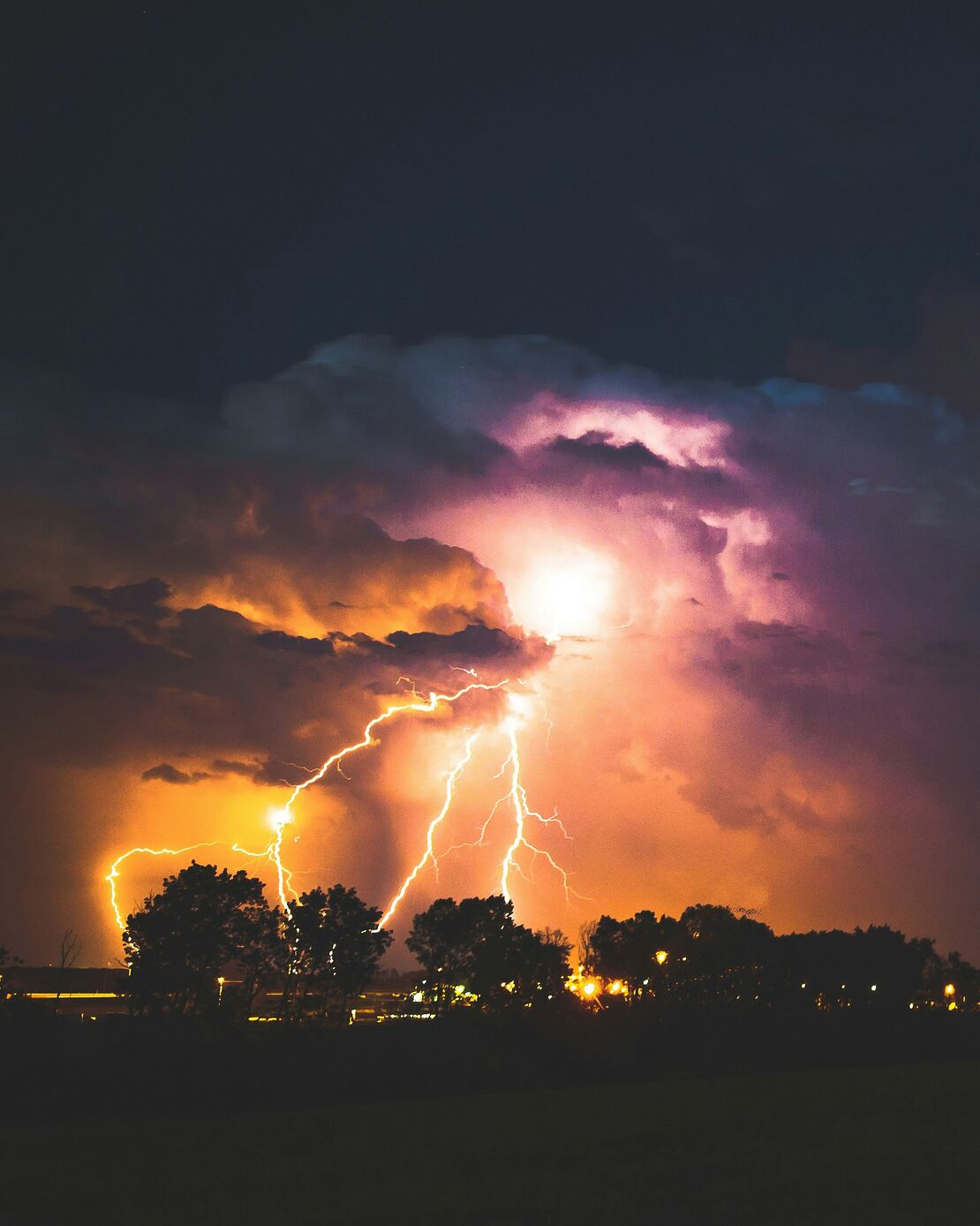
| ק֥וֹל יְהוָ֗ה עַל־הַ֫מָּ֥יִם אֵֽל־הַכָּב֥וֹד הִרְעִ֑ים יְ֝הוָ֗ה עַל־מַ֥יִם רַבִּֽים׃ | 3 | YHWH's victory over our enemy may be described in terms of YHWH's ancient victory over the waters of the Flood... The thunderous sound of YHWH is heard against the water which is a symbol of chaos and danger and is sometimes used to represent human enemies! The glorious God has thundered; YHWH [has thundered] against much water. In the Flood, the waters threatened the divinely ordered world, but YHWH appeared in power and glory to bring salvation and restore order. At his thunderous voice, the waters fled in fearful haste and YHWH's people were safe. In the same way, YHWH has thundered against our enemies, and they have fled. |
| קוֹל־יְהוָ֥ה בַּכֹּ֑חַ ק֥וֹל יְ֝הוָ֗ה בֶּהָדָֽר׃ | 4 | The sound of YHWH is heard [thundering] in power! The sound of YHWH is heard [thundering] in majesty! |
| ק֣וֹל יְ֭הוָה שֹׁבֵ֣ר אֲרָזִ֑ים וַיְשַׁבֵּ֥ר יְ֝הוָ֗ה אֶת־אַרְזֵ֥י הַלְּבָנֽוֹן׃ | 5 | It is well known that, after defeating his enemies, a god would build a temple/palace to dwell with and rule over his people. For example, after Baal was said to have defeated the Sea, he built a temple/palace. Now that YHWH has defeated the chaotic waters, he is building a heavenly temple as a symbol of his dominion. The thunderous sound of YHWH is breaking cedars a symbol of loftiness and grandeur to use in the construction of his temple, and YHWH is breaking the cedars of Lebanon which were used in the construction of temples, including Baal's and YHWH's. |
| וַיַּרְקִידֵ֥ם כְּמוֹ־עֵ֑גֶל לְבָנ֥וֹן וְ֝שִׂרְיֹ֗ן כְּמ֣וֹ בֶן־רְאֵמִֽים׃ | 6 | and he with his thunderous voice is causing Lebanon the mountain range on which the cedars are located, which is thought to be the home of many gods to skip in fear like a calf, and he causes Sirion also known as Mt. Hermon, which lies just to the east of the Lebanon mountain range and which is also thought to be a dwelling place of gods to skip in fear like a wild ox. YHWH is greater than the gods in Lebanon and Sirion, and he is forcing them to serve him by yielding materials for his temple. |
| קוֹל־יְהוָ֥ה חֹצֵ֗ב לַהֲב֥וֹת אֵֽשׁ׃ | 7 | Temples require stone as well as wood, and people hew stone in the mountains. In order to construct his temple, YHWH is hewing stone in the mountains of Lebanon and Sirion: I hear The thunderous sound of YHWH hewing stone from the mountains, not with a pick-axe, but with lightning bolts! |
| ק֣וֹל יְ֭הוָה יָחִ֣יל מִדְבָּ֑ר יָחִ֥יל יְ֝הוָ֗ה מִדְבַּ֥ר קָדֵֽשׁ׃ | 8 | As he breaks cedars and mines stone with blasts of thunder and lightning, YHWH's thunderous voice causes the wilderness, the uninhabited place where wood and stone are gathered, to tremble in fear. YHWH causes the wilderness of Kadesh, an area near Lebanon and Sirion which, like Lebanon and Sirion, is associated with other gods, to tremble in fear, thereby demonstrating YHWH's superiority over other gods and nature. |
| ק֤וֹל יְהוָ֨ה ׀ יְחוֹלֵ֣ל אַיָּלוֹת֮ וַֽיֶּחֱשֹׂ֪ף יְעָ֫ר֥וֹת וּבְהֵיכָל֑וֹ כֻּ֝לּ֗וֹ אֹמֵ֥ר כָּבֽוֹד׃ | 9 | YHWH's thunderous voice causes fallow deer which are in the wilderness to go into labor and give birth, and it (YHWH's voice) strips the leaves off of trees in the forests, and in his newly constructed temple everyone i.e., all of the divine beings whom YHWH has defeated and who now serve him, is saying, "YHWH deserves all Glory!" |
| יְ֭הוָה לַמַּבּ֣וּל יָשָׁ֑ב וַיֵּ֥שֶׁב יְ֝הוָ֗ה מֶ֣לֶךְ לְעוֹלָֽם׃ | 10 | In his newly built heavenly temple, YHWH sat enthroned over the Flood, and just as he sat enthroned then, so YHWH sits enthroned still today as king forever and he has once again demonstrated his strength by defeating our enemies and their gods. |
| יְֽהוָ֗ה עֹ֭ז לְעַמּ֣וֹ יִתֵּ֑ן יְהוָ֓ה ׀ יְבָרֵ֖ךְ אֶת־עַמּ֣וֹ בַשָּׁלֽוֹם׃ | 11 | YHWH who dwells with his people gives strength to his people so that they have victory in battle. YHWH defeats the enemies of his people, just as he defeated the chaotic waters in the days of Noah, and thus he blesses his people with peace. |
Story Triangles
(Click diagram to enlarge)

| "The sound of YHWH against the water!
The glorious God has thundered; YHWH [has thundered] against much water" (v. 3) | ||
| Water | Enemies | |
|---|---|---|
| Characteristic | Vast, powerful, dark, mysterious waters, stormy, turbulent seas, unruly, untamed, uncontrollable | Great military powers, empires, and nations that appear overwhelming (Isa 17:12–13), along with hostile, aggressive, violent, and rebellious forces, nations (Pss 46:2–3, 65:7; Isa 57:20; Job 38:8–11), and human opponents that threaten or oppose YHWH’s people
|
| Action | Floods, rises, surges, rages, swallows, and drowns (Pss 18:4–5, 46:3; Isa 8:7–8, 17:12; Jer 47:2) | Attacks, invades, persecutes, oppresses, enslaves, brings destruction, attempts to eliminate YHWH's people (Exod 15:4–12, Ps 124: 4–5)
|
| Relationship to YHWH | All things are fully subject to YHWH’s voice (Ps 29:3), for he reigns supreme above the flood (Ps 29:10) and over all chaos with unmatched authority | Fully subject to YHWH’s rule and judgment, all hostile powers are under YHWH's reign, for his kingship extends above every force that threatens his people (see Ps 89:9–10; Job 38:8–11)
|
| Outcome | Waters submit to YHWH (Pss 93:3–4; 104:7–9) | YHWH defeats enemies and delivers his people
|
| Flood | Destructive waters of chaos, which are ultimately subject to YHWH's rule. | Destructive enemies who threaten God's people yet are ultimately brought under YHWH's dominion.
|
| Threat | Flood | Hostile enemies that endanger God's people.
|
| Manifestation | Floodwaters overwhelm the land | Enemies threaten to overwhelm God's people. |
| Blend | The thunderous sound of YHWH is heard against his enemies | |
| Implicatures |
| |
| Prominence | HIGH
Although the imagery is only explicit in v. 3, it is central to the psalm's structure and message. Vv. 3–4 are bound together by similar syntax (קול יהוה followed by prepositional phrases) and similar content (description of YHWH's battle against the waters). Moreover, the imagery underscores YHWH's sovereignty over all creation; he subdues the chaotic waters and reigns enthroned above them. This same conceptual framework reappears in v. 10, where the mention of “the flood” (מַבּוּל) implicitly recalls the same chaotic waters and confirms that YHWH’s dominion extends over all manifestations of watery chaos. | |
Bibliography
- Albright, W. F. 1950. “A Catalogue of Early Hebrew Lyric Poems (Psalm Lxviii).” Hebrew Union College Annual 23 (1): 1–39.
- Andersen, Francis I. and Freedman, David Noel. 1980. Hosea: A New Translation with Introduction and Commentary. Volume 24 of the Anchor Bible series. New Haven, CT: Yale University Press.
- Baethgen, Friedrich. 1904. Die Psalmen. Göttingen: Vandenhoeck und Ruprecht.
- Barbiero, Gianni. 2016. "The Two Structures of Psalm 29". In Vetus Testamentum 66, 3: 378-392.
- Basevi, Claudio. 1990. “El Salmo 29: Algunas Observaciones Filógicas Sobre El Texto Hebreo y Griego.” Scripta Theologica 22 (January):13–47.
- Briggs, Charles A., and Emilie Briggs. 1906. A Critical and Exegetical Commentary on the Book of Psalms. Vol. 1. ICC. Edinburgh: T & T Clark.
- Calvin, John. Commentary on the Book of Psalms. Translated by James Anderson. Grand Rapids: Christian Classics Ethereal Library.
- Cohen, Chaim. 2004. "The Enclitic-mem in Biblical Hebrew: Its Existence and Initial Discovery." Pages 231-260 in Sefer Moshe: The Moshe Weinfeld Jubilee Volume: Studies in the Bible and the Ancient Near East, Qumran, and Post-Biblical Judaism. Edited by Chaim Cohen, Avi M. Hurvitz and Shalom M. Paul. University Park, USA: Penn State University Press.
- Cook, John. 2013. “Aspect: Pre-Modern Hebrew.” In EHLL, 1:201–5. Brill.
- Craigie, Peter C. 1983. Psalms 1–50. WBC 19. Waco, TX: Word.
- Cross, Frank M. 1950. “Notes on a Canaanite Psalm in the Old Testament.” Bulletin of the American Schools of Oriental Research 117: 19–21.
- Dahood, Mitchell. 1966. Psalms. Vol. 1. Anchor Bible Commentary. New York: Doubleday.
- Day, John. 1979. “Echoes of Baal’s Seven Thunders and Lightnings in Psalm XXIX and Habakkuk III 9 and the Identity of the Seraphim in Isaiah VI.” Vetus Testamentum 29 (2): 143–51.
- Delitzsch, Franz. 1883. Biblical Commentary on the Psalms: Vol. 1. Translated by Eaton David. Vol. 1. New York: Funk and Wagnalls.
- Duhm, Bernhard. 1899. Die Psalmen. Mohr Siebeck.
- Eaton, John Herbert. 1967. Psalms. Torch Bible Paperbacks. London: S.C.M. Press.
- Ehrlich, Arnold B. 1905. Die Psalmen; neu übersetzt und erklärt. Berlin: Poppelauer.
- Emerton, John A. 1996. “Are There Examples of Enclitic mem in the Hebrew Bible?” Pages 321-338 in Texts, Temples, and Traditions: A Tribute to Menahem Haran. Edited by Michael V. Fox, Victor Avigdor Hurowitz, Avi M. Hurvitz, Michael L. Klein, Baruch J. Schwartz, and Nili Shupak. Winona Lake, Eisenbrauns.
- Ewald, Heinrich. 1880. Commentary on the Psalms. Vol. 1. London: Williams and Norgate.
- Fokkelman, J.P. 2003. Major Poems of the Hebrew Bible: At the Interface of Prosody and Structural Analysis (Vol 3: The Remaining 65 Psalms). Vol. 3. Studia Semitica Neerlandica. Van Gorcum.
- Futato, Mark D. 2009. "The Book of Psalms." In Cornerstone Biblical Commentary: The Book of Psalms, The Book of Proverbs. Vol 7. Carol Stream: Tyndale House Publishers.
- Garr, W. Randall. 2022. "The Cataphoric Pronoun in Biblical Hebrew," JSS 67, no. 2: 353–393.
- Ginsberg, H. L. 1935. “A Phoenician Hymn in the Psalter.” In Atti del XIX Congresso Internazionale degli Orientalisti, Roma, 23-29 Settembre 1935 (Rome: G. Bardi, 1938), 472–6.
- Goldingay, John. 2006. Psalms: Psalms 1-41. Vol. 1. BCOT. Grand Rapids: Baker Academic.
- Gordon, Cyrus H. 1965. Ugaritic Textbook: Grammar, Texts in Transliteration, Cuneiform Selections, Glossary, Indices. Rome: Pontifical Biblical Institute.
- Gunkel, Hermann. 1926. Die Psalmen. 4th ed. Göttinger Handkommentar Zum Alten Testament 2. Göttingen: Vandenhoeck & Ruprecht.
- Hengstenberg, Ernst W. 1869. Commentary on Psalms. Vol. 1. Edinburgh: T & T Clark.
- Hossfeld, Frank-Lothar, and Erich Zenger. 1993. Die Psalmen I: Psalm 1–50. Neue Echter Bibel. Würzburg: Echter.
- Hummel, Horace D. 1957. "Enclitic Mem in Early Northwest Semitic, Especially Hebrew." In Journal of Biblical Literature; 76 (2): 85–107.
- Hupfeld, Hermann. 1855. Die Psalmen. Vol. 1. Gotha: Friedrich Andreas Perthes.
- Ibn Ezra. Ibn Ezra on Psalms.
- Kidner, Derek. 1973. Psalms 1-72: An Introduction and Commentary on Books I and II of the Psalms. London: Inter-Varsity Press.
- Kissane, Monsignor Edward J. 1953. The Book of Psalms: Translated from A Critically Revised Hebrew Text. Vol. 1. Maryland: The Newman Press.
- Kraus, Hans-Joachim. 1988. Psalms 1-59: A Commentary. Minneapolis: Augsburg.
- Loewenstamm, Samuel E. 1992. From Babylon to Canaan Studies in the Bible and Its Oriental Background. Jerusalem: The Magnes Press, The Hebrew University.
- May, Herbert G. 1955. “Some Cosmic Connotations of Mayim Rabbîm, ‘Many Waters.’” Journal of Biblical Literature 74 (1): 9–21.
- Niccacci, Alviero. 2006. “The Biblical Hebrew Verbal System in Poetry.” In Biblical Hebrew in Its Northwest Semitic Setting: Typological and Historical Perspectives, edited by Steven E. Fassberg and Avi Hurvitz, 247–68. Jerusalem: Hebrew University Magnes Press.
- Notarius. 2010. “The Active Predicative Participle in Archaic and Classical Biblical Poetry.” Ancient Near Eastern Studies 47: 241–269.
- Olshausen, Justus. 1853. Die Psalmen. Leipzig: S. Hirzel.
- Perowne, J. J. Stewart. 1870. The Book of Psalms: A New Translation, with Introductions and Notes Explanatory and Critical. London: Bell.
- Radak. Radak on Psalms.
- Ross, Allen P. 2011. A Commentary on the Psalms 1-41. Vol. 1. Grand Rapids: Kregel.
- Schenker, Adrian. 1994. “Gewollt Dunkle Wiedergaben in LXX? Am Beispiel von Ps 28 (29),6.” Biblica 75 (4): 546–55.
- Schwartz, Mark. 2018. “Warfare in the World of the Bible.” In Behind the Scenes of the Old Testament: Cultural, Social, and Historical Contexts, edited by Jonathan S. Greer, John W. Hilber, and John H. Walton, 506–14. Grand Rapids: Baker Academic.
- Shehadeh, Lamia R. 1991. “Lebanon in Ancient Texts.” In Quest for Understanding: Arabic and Islamic Studies in Memory of Malcom H. Kerr, 3–13. Beirut: American University of Beirut.
- Stec, David M., ed. 2004. The Targum of Psalms. The Aramaic Bible, v. 16. Collegeville, Minn: Liturgical Press.
- Tigay, Jeffrey H. 2008. "'The Voice of the Lord Causes Hinds to Calve' (Psalm 29:9)." Pages 399-411 in Birkat Shalom. Studies in the Bible, Ancient Near Eastern Literature, and Postbiblical Judaism Presented to Shalom M. Paul on the Occasion of His Seventieth Birthday. Ed. C. Cohen Et Al. Winona Lake, Indiana: Eisenbrauns.
- Watson, W. G. E. 1992. “Final -m in Ugaritic,” Aula Orientalis 10: 223-52.
- ________. 1994. “Final -m in Ugaritic Again,” Aula Orientalis 12: 95-103.
- ________. 1996. “Final -m in Ugaritic Yet Again,” Aula Orientalis 14: 259-68.
- ________. 2001. Classical Hebrew Poetry: A Guide to Its Techniques. London ; New York: T & T Clark.
Footnotes
- ↑ Common-ground assumptions include information shared by the speaker and hearers. In our analysis, we mainly use this category for Biblical/ANE background - beliefs and practices that were widespread at this time and place. This is the background information necessary for understanding propositions that do not readily make sense to those who are so far removed from the culture in which the proposition was originally expressed.
- ↑ Local-ground assumptions are those propositions which are necessarily true if the text is true. They include both presuppositions and entailments. Presuppositions are those implicit propositions which are assumed to be true by an explicit proposition. Entailments are those propositions which are necessarily true if a proposition is true.
- ↑ Whereas local-ground assumptions are inferences which are necessarily true if the text is true, play-ground assumptions are those inferences which might be true if the text is true.